Thursday, August 17, 2006

Tina Brooks - Back To The Tracks


Album - Back To The Tracks
Recorded - 1960

Those of you who've been reading for a while will know how much of a Tina Brooks fan i am. Very few tenormen have come close to the easy virtuosity of Harold Floyd Brooks. He recorded only a handful of times, with only 3 records as leader being released in his lifetime. 'Back To The Tracks' comes from the album of the same name, one of the many great 'lost' Blue Note LPs. This 1960 recording was slated to come out at the time and even had a catalogue number (4052) and sleeve. For some reason the release was pulled and the record didn't see the light of day until it came out in Japan in the early 1980s. I've previously written about another blue note release, Jimmy Smith's Cool Blues, that also suffered a similar fate (Brooks is featured on that LP, too). I was lucky enough to track down a recent vinyl repressing which sounds fantastic.

What marks this LP out from other Brooks releases on Blue Note is the presence of the hugely talented Jackie McLean on alto; 'Back To The Tracks' is an umptempo blues that nicely demonstrates the similarities between Brooks' and McLean's styles. Both are natural virtuosos, and despite the quick pace both create a sense of spaciousness in their playing that makes it sound easy. You know that muscians making a piece sound as easy as that just has to be very, very difficult.

Thursday, August 10, 2006

Marion Brown - Exhibition


Album - Marion Brown Quartet
Recorded - 1966

Thought i'd post another Marion Brown on the radio player. If you're not familiar with his work you might not appreciate how different 'Spooks' was from his usual style; fear not, as 'Exhibition' will show you the way. Instead of tight, controlled riffing, you get long sprawling solos along with a sense of formlessness created by the floaty rhythm section. That's why 'Spooks' is such a shock - subversive (in terms of being totally different from what the rest of the avant-garde were up to) and brilliant.

Wednesday, August 09, 2006

Marion Brown - Spooks


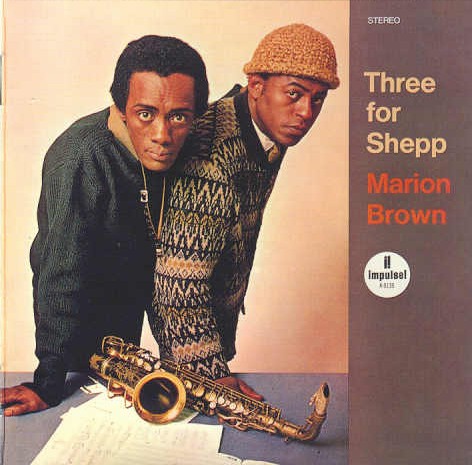
Album - Three For Shepp
Recorded - 1966

Altoist Marion Brown came to prominence with his appearance on John Coltrane's seminal 'Ascension' in 1965, but had in fact been recording at various sessions for about a year before that famous date, mostly under the leadership of Archie Shepp. Consequently, there was a great deal of gratitude felt by Brown for Shepp, and it gave rise to this 1966 album in much the same way that Archie had recorded 'Four For Trane' in 1964.

The album consists of one side of Brown originals with the other having been written by Shepp. 'Spooks' kicks off the second side and blows Brown's tunes into the weeds. The Brown side is very much in keeping with his ESP dates - long winding pieces that develop slowly while keeping up the usual free jazz exploration. But 'Spooks' fires straight in, the staccato introductory figure sounding reminiscent of a roaring twenties hot five (Shepp was always keen to explore the history of jazz in his music). The upbeat feel and rhythmic drive continues throughout the solos; Stanley Cowell on piano in excellent form, then Grachan Moncur III on trombone and finally Brown himself in his distinctive style. Shepp doesn't play, but he doesn't need to, his personality is stamped all over the track - so it's even more of a feat that Brown manages to retain some of his style through it all.

Friday, August 04, 2006

We Love You Oscar Peterson


Not sure what this is all about - read the full story at Surreality Times - but it looks as if legendary Jazz pianist Oscar Peterson is taking some stick at the moment. I can't comment on that, but it surely is a great excuse to take a look at the life of a Jazz stalwart.

Like so many Jazz musicians, Oscar showed musical ability from a young age, and had his future shaped by hardships. In Oscar's case it was tuberculosis that gave him the opportunity to develop his skills on the piano. After hearing Art Tatum (and nearly giving up, being so intimidated!) he was inspired to become a full-time jazz musician, and when he got in tow with legendary producer (and founder of Verve records) Norman Granz, he was set. Incredibly, Peterson is still going strong today despite being 80 years old and having suffered a stroke. Apparently he's still playing incredibly strongly too, as this review notes.

On record Oscar's melodic sense and lightness of touch are well known. He can come across as unassuming, but there's real passion in his playing that's unmstakable. Add to this a fearsome improvisational technique and a strong sense of rhythm and I think you've got all of the ingredients of a great pianist.

Wednesday, August 02, 2006

Jimmy Smith - Walk On The Wild Side


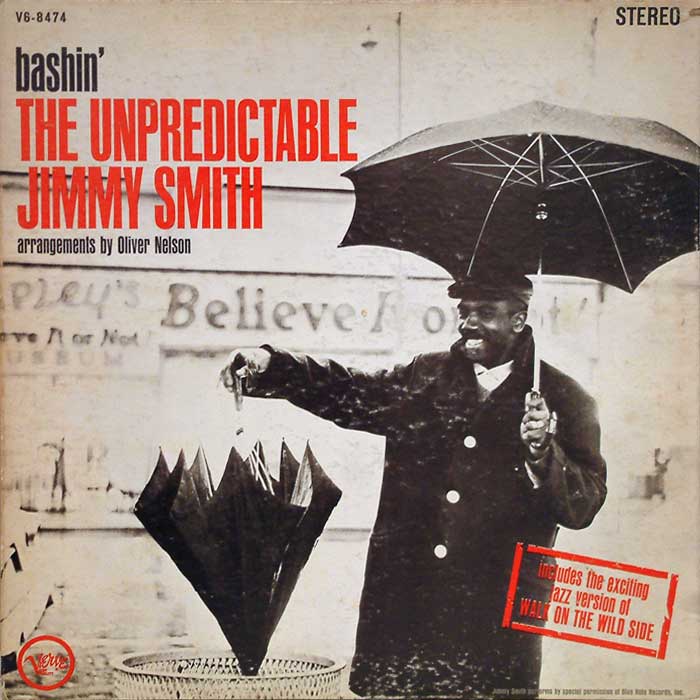
Album - Bashin'
Recorded - 1962

What better for a night when I'm in a big band mood than this? Coming right at the start of Jimmy Smith's fertile association with both Verve and Oliver Nelson, this is a lesson in both arranging and solo performance. The piece splits itself into two; the first half is the slow building band section, bringing out the original melody in a tight arrangement that has moments of high brass drama interspersed between the swagger.

Jimmy bursts in at the half way point with one of his trademark descending introductions, then proceeds to redefine the role of the organ in jazz (yet again). He manages to be melodic, inventive, funky and gritty all at once, as usual. Also featured is as fine an example of Jimmy's 2-note modulating solos that you could ever wish to hear. Then we get to hear what we all came for - Jimmy playing with the band in an exciting call-and-response section that leads up to the all-horns-blazing climax. Phew!

Somehow I don't think I've done this outstanding piece of music justice. Go listen!

Any more information regarding the Jimster is best found here.

Tuesday, August 01, 2006

Trinidad Oil Company - Feelin' Alright


Album - Blue Juice Vol. 2
Recorded - 1977

No apologies here - i'm sure some of you will complain that this "isn't jazz", but, well, it's on Blue Note, it suits my mood tonight, and that's good enough for me. The fact is that this is a damn funky take on a number by 70s rockers Traffic, played by a Dutch steel band. Now that does sound a bit odd, i'll admit, but have a listen and just try and tell me you don't like it.

It's an upbeat, funky tune that's perfect for good moods and sunny days. The first half of the track is a pretty straight take on the original, but the second half of the track is where it's at, with probably the only steel band solo anywhere in popular music. It's a proper solo, too, exploring the harmonic possibilities of the instrument as any good jazzer should.

I'd love to say more about this band but haven't found a whole lot out there. Maybe one of you knows something?

Sunday, July 30, 2006

Jackie McLean - Lights Out


Album - Lights Out (Also reissued on Contour, 1977)
Recorded - 1956

I'm a bit tired tonight after a busy weekend, so what better than a sultry, smoky blues to kick back to at the end of a hard day. Altoist Jackie McLean is probably best known for his Blue Note sides of the 1960s where he was instrumental in pushing the boundaries of hard bop well towards free jazz territory. But before any of that, he served his hard bop apprenticeship with towering Jazz figures like Miles Davis (on his early blue note sessions) and Charles Mingus (Pithecanthropus Erectus). While doing this he also found time to lead his own quintet on a set of sessions for Prestige that resulted in the LPs 'Lights Out' (Prestige 7035) and '4, 5 and 6' (Prestige 7048). Both albums saw a reissue as a single package titled 'Contour' in 1977, which is the record that I have in my possession.

As I said above, it's a smoky blues number, a McLean composition that is basically an extended jam. As is so often the case, the loose feel of the jam session brings out the best in all the players. Mclean is no exception, his soloing making up for what it lacks in pace with a performance full of emotion. Donald Byrd also makes a decent fist of a muted trumpet solo - quite a feat in my book. The rhythmic pairing of Doug Watkins (bass) and Art Taylor (drums) also excel in their steady yet shifting support for the soloists. Only pianist Elmo Hope lets the side down with a predictable solo that just doesn't engage my imagination as the horns did.

Friday, July 28, 2006

Anthony Braxton - Composition 8J


Album - Saxophone Improvisations Series F
Recorded - 1972

There's something about the saxophone that makes it sound like the most human of instruments. Actually, writing that makes me think that the same is true of all wind instruments, and the reason for that is the breath. Breathing is fundamental to who we are, but we often fail to appreciate that. Listening to a virtuoso performance on a wind instrument reminds us of the ability of our breath to communicate enormous levels of power and emotion.

I say this in introduction to an Anthony Braxton piece, as on this particular track it is impossible to escape the breath. It's part of an album of solo saxophone performances entitled 'Saxophone Improvisations Series F' (on which it is also known by the more arcane 'NBH - 7C K7' - i've never made an attempt to understand Braxton's naming convention). Such is the intimacy of the recording that the listener can hear Braxton's breath, his fingers clacking on the keys

It has a sentimental air that suits my mood tonight (slightly spent, but content that it was all for the good). This mood is present on several other tracks on the album, along with a number of squawkers, as you might expect. There's much to admire in the piece - a definite sense of melody without a theme, for example. This approach can sound aimless in the hands of lesser talents, but in Braxton's capable hands there is a real sense that the track journeys from one melodic station to the next, quite effortlessly.

Wednesday, July 26, 2006

Pharoah Sanders - Village Of The Pharoahs


Album - Village of The Pharoahs
Recorded - 1973

Pharoah Sanders' impulse! albums of the late 1960s and early 1970s are some of the best examples of the free jazz genre ever comitted to vinyl; from the full-on freak out of 'Izipho Zam' to the classic freedom-on-acid 'Karma' (home of 'The Creator Has A Masterplan'). 'Village of the Pharoahs' comes from the 1973 album of the same name. This was comparatively late in his impulse! career and as such is now relatively unappreciated. If anyone connected with impulse! records is reading, get this album a CD release now.

Stylistically the track leans more towards the funky free-jazz end of Sanders' style, with the addition of a mystical edge in the presence of tamboura and shakuhashi (a type of japanese flute that creates an otherworldly, ethereal sound). Bass and percussion set up a hard-edged groove over the tamboura's drone before the theme is stated by the piano. Sanders enters on soprano with a wailing melody - emboldened by this strong introduction, he goes on to play with great passion and intensity for the next 12 or so minutes. His style is instantly recognisable, the shreiks and wails associated with his music are very much in evidence, but are kept under control at all times and fit well within the confines of the ever-shifting rhthymic backing. Towards the end of the piece things get a bit quieter, with Sanders trading vocal lines with guest Sedatrius Brown. The piece closes with the tamboura and percussion of the opening section, but slowed down many times, continuing the mystical air of the piece right to the end.

In my opinion this is one of Sanders' finest moments, in terms both of his individual performance and the group dynamic (sound and feeling conveyed). It also has the distinction of being one of the only Quadrophonic records that I own, not that I have the music system to do that justice.

Tuesday, July 25, 2006

Candido - Thousand Finger Man


Album - Thousand Finger Man/ Best of Blue Juice
Recorded - 1969

We're basking in something of a heatwave here at dailyjazz towers, so it's appropriate that my thoughts have turned to latin jazz, in the form of this gem by cuban percussionist Candido. Originally released as part of the 'Thousand Finger Man' LP in 1969, the track came to my attention as part of Blue Note's excellent 'Best of Blue juice' compilation (also good is 'Feelin Alright' by Trinidad Oil Company - in fact the whole album is great).

As a piece of percussion driven cuban jazz this track is hard to beat. It gets it's energy from the irrepresible Candido who really does live up to his 'Thousand Finger Man' monicker by playing ever more complex and detailed rhythmic patterns on his congas. As well as all that percussion, the track has a nice funky groove - a catchy horn figure is underpinned by some great organ work and one of the deepest brass sounds you're ever likely to hear on record. But it's at it's best when it's just drums, bass and some of the finest conga in the business.

Monday, July 24, 2006

Art Blakey - Noise In The Attic


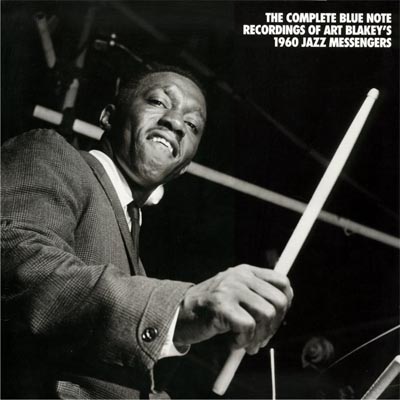
Album - The Complete Blue Note Recordings of Art Blakey's 1960 Jazz Messengers (also 'Like Someone In Love' Blue Note 4245)
Recorded - 1960

I haven't got long tonight so this is going to be a kind of edited review. Here goes...

Drums. Lee Morgan. Wayne Shorter. More drums. Bobby Timmons. More drums. Lots more drums. For a long time. 'Noise in the attic' indeed. Did I say it had drums? Listen to Blakey's solo - sublime...

I think that just about sums it up.

Sunday, July 23, 2006

Lee Morgan - Gaza Strip


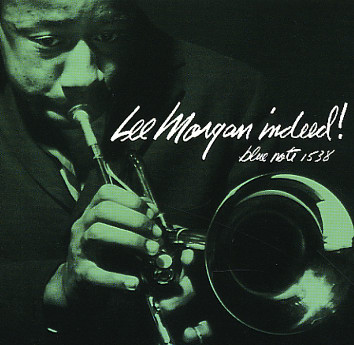
Album - Indeed!
Recorded - 1956

Credited to one Owen Marshall (about whom the internet is strangely silent), 'Gaza Strip' was the first track recorded by Morgan as a leader, and was released shortly after on his first Blue Note LP. It's also notable for featuring Horace Silver, who provides his usual funky backing on piano, and Philly Joe Jones on drums. Despite being only 18, Morgan had served his apprenticeship in various groups, most notably the Jazz Messengers, and as can be heard here, was more than ready to strike out on his own (and become a hard bop legend, though that was still to come in 1956).

After Philly Joe's intro, Morgan leads off on the theme, but then lays out and lets the band do their stuff. First up is Clarence Sharpe on alto with a passably entertaining solo, but it pales in comparison with what is to come. Silver is next, sounding characteristically louche and funky - this is more like what we can expect from ex-Jazz Messengers. Finally is Morgan, blowing Sharpe into the weeds with a fiery and well-considered solo. At times he almost trips over himself, and he's obviously moving around a hell of a lot as he moves towards and away from the microphone, at times sounding as if he's heading for the back of the studio. But somehow it all stays together and he reaches the end for another statement of the theme, the listener left breathless with excitement.

I've no idea where the title of the piece comes from. Given the turbulent history of that part of the world one might expect a combative mood to the piece, but that's evident only in the way that Morgan's solo bests everyone else's. You might even expect a slight middle-eastern feel, but if it's there, I can't hear it. As usual, answers on a postcard...

Saturday, July 22, 2006

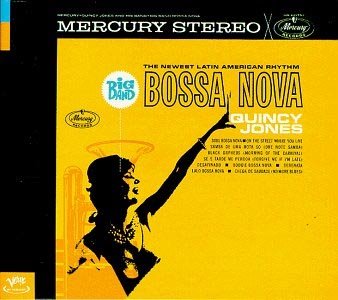
Quincy Jones - Soul Bossa Nova


Album - Big Band Bossa Nova

Recorded - 1962

It might be considered cheating, writing about this on a blog that celebrates spontaneous, improvised music. But when you've got talent Quincy Jones' magnitude with a host of jazz greats like Clark Terry, Paul Gonsalves, Lalo Schifrin and even Roland Kirk (yes, that Roland Kirk), then you just can't keep it down.

This track is rightly famous, having been used in various places including the 1998 world cup and the movie 'Austin Powers: International man of mystery', as well as having been sampled heavily. notably by Dream Warriors on their 1991 release, 'My Definition Of A Boombastic Jazz Style'. The fact that this track is so well loved is a real case of the cream rising to the top, as it's a great piece of music. Jones' tight orchestration and the irresistibe latin rhythms pull it along in the best big-band style, while it carries enough melodic hooks to drill itself into your head. In fact I've only written about it tonight as my wife has been walking about the house singing it all week, such is it's melodic insistence.

I'll say no more, it's such a well known tune that you'll all be singing it already - but if you're not then head slightly to the right and up a bit to listen to it on the radio player. Watch out for the flute solo in the second half - ohhh yesss.

Thursday, July 20, 2006

Freddie Hubbard - Keep Your Soul Together


Album - Keep Your Soul Together
Recorded 1973

A fine and funky bit of soul jazz from trumpeter Freddie Hubbard in 1973. Ron Carter provides a very funky cycling bass line which ably anchors the song, along with the support of both drums and percussion. Over this both Hubbard and Junior Cook on tenor sax solo take extended periods. Of the two, Hubbard gets the bigger space, demonstrating what he'd learned through his years: staying mostly blue and groovy, he does manage at times to throw in shades of Miles' bop playing. A light sprinkling of electric piano runs along behind this, somewhere between the rhythm and the solos.

There is not a lot of trumpeters in soul jazz, which mostly featured some combination of sax, guitar and organ. So it is a treat to hear this track, especially as it is one of the funkiest examples of the genre.

Wednesday, July 19, 2006

'Big' John Patton - The Turnaround


Album - Let 'Em Roll

Recorded - 1965

It's hard to believe that in 1965 it was considered odd to introduce a vibraphone to a soul jazz combo, but that's exactly what 'Big' John Patton did by including Bobby Hutcherson in the line-up for this 1965 Blue Note recording. Perhaps best known for his avant-garde sessions for the label, Hutcherson brought a swinging edge and tonal colour to a tried and trusted formula. That's not to say that the record would be dull without him - indeed the interplay between Patton's organ and Grant Green on guitar is nothing short of telepathic at times.

Originally a Hank Mobley tune, 'The Turnaround' started life as a blues but here it gets a new lease of life as a decidedly funky slice of soul jazz. Patton sets the tone with his opening riff before Green and Hutcherson double up on an extended reading of the theme. Then it's up to the soloists. First comes Green, spare yet funky, with some lovely harmonics coming out in Patton's inspired comping. Then there's nothing for Patton to do but steal the show with an extended organ solo that plays around with Green and stays seriously funky with a side order of jazz improvisation. Oh, and did I mention that it's got a real laid-back vibe to it? Close to perfection.

Tuesday, July 18, 2006

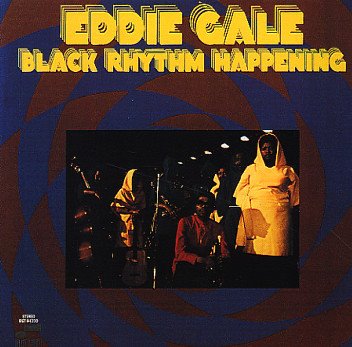
Eddie Gale - Black Rhythm Happening


Album - Black Rhythm Happening

Recorded - 1969

Trumpeter Eddie Gale recorded this in '69 in a rare headlining appearance for the man who had served his apprenticeship with some of the biggest names in avant garde jazz, including Sun Ra and Cecil Taylor. It's a bit of an over-looked album and i only got wind of it through the compliation Blue Note's Rare Grooves, which featured this title track. Not that the track is by any means a stock example of rare groove.

For starters, all of the rhythm here is panned hard left, which is a device i have always found irritating and off balance, especially when listening through headphones. However, it's fairly easy to over look this of-its-time idea and it's worth doing so, because the tune has some great elements. The most noticable of these are the joyous call and repsonse vocals, from what sounds like a whole room full of people. They seem to be having a damn fine old time, chattering away and yelling inbetween bursts of singing.

Weaving under this and through the polyrhythms is a guitar line that meanders like an off-kilter Grant Green. There are also some occasional bursts of brass that are ever so slightly atonal. It makes for an interesting fusion of soul jazz, avant garde jazz and gospel. No wonder, then, that it is said to have been one of the inspirations behind Archie Shepp's classic Attica Blues.

Monday, July 17, 2006

Archie Shepp - U-Jamma


Album - Parisian Concert

Recorded - 1977

From his straightahead period comes an Archie that might be unfamiliar to those raised on a diet of impulse! and BYG recordings from earlier in the decade. Around this time, Shepp realised that he'd taken the free thing as far as he was going to get, and rediscovered his influences with a fine set of firmly bop-influenced performances. Also worth a listen is the same year's 'Goin' Home', an album of spirituals recorded as duets with pianist Horace Parlan that are as inventive within the bounds of the source material as Shepp was in 1964 with 'Four For Trane'. This particular piece shows off his Ben Webster influence very well indeed, that broad tone shining out from in front of a fairly average French rhythm section. This track became a bit of a fixture for Shepp around this time and even made it onto 2001's 'Live In New York', such is it's staying power. It's also a great riposte to anyone that reckons Shepp was losing his chops around this time, with some frenetic yet well-controlled soloing throughout.

Sunday, July 16, 2006

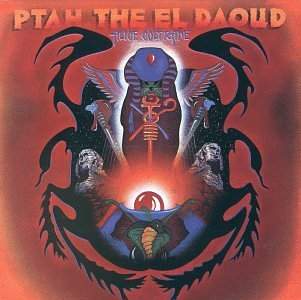
Alice Coltrane - Turiya and Ramakrishna


Album - Ptah, The El-Daoud

Recorded - 1970

What's so easy to forget, when listening to the ambient wash of some of Alice's soundscapes, is that her whole being was steeped in the blues. Her pre-Coltrane career included being taught how to play the piano by Bud Powell, no less. So it should not come as a surprise that this track harks back to a whole host of earlier jazz and blues styles while maintaining the forward momentum of her post-Coltrane vision. 'Turiya' was the Hindi name that Alice took, one can only guess who 'Ramakrishna' refers to, but given the feel of the piece i'd not be surprised if it was a reference to John Coltrane.

Although the 'Ptah...' album features the twin tenors of Pharoah Sanders and Joe Henderson, this track is a trio performance with Alice on piano, Ben Riley on drums and Ron Carter on bass, and in actuality much of it feels like a duet between Alice and Carter, such is the level of intimacy reached by the track. Imagine the Hamlet cigars ad arranged for space jazz trio and you've got a good idea what it's all about.

Saturday, July 15, 2006

Destination Out

Thought i'd post just a very short one today (i'm on holiday this week, see) to plug this great mp3 blog that features some really great avant-garde jazz. It's very much to my taste, so if you enjoy what you read and hear here, then you should check it out. And thanks to the guys behind it for supporting this blog.

Sunday, July 09, 2006

Elvin Jones/ Jimmy Garrison Sextet - Just Us Blues

Album - Illumination!

Recorded - 1963

This track dropped into my consciousness really by chance - let me explain. I own, as you may have figured out by now, rather a lot of Jazz. Now, a lot of this is on vinyl, and in order to get it out to you lovely people, it needs to be turned into mp3 files*. Now, many jazz LPs are pretty short by current standards, so for general listening purposes I tend to create an audio CD with two albums on. You can imagine the rest... "Hmmm, Elvin Jones is a drummer, I know, i'll pair him up with Max Roach." And so while listening to yesterday's 'Nommo', I also ended up hearing this beauty. It hardly stretches the talents of the leaders, but it's great nonetheless.

Jimmy Garrisson kicks off with a remarkably short (for him) bass intro, before we're treated to some down and dirty blues. It's pretty straightforward stuff, but for me what makes it stand out is the wonderfully lackadaisical tone of Sonny Simmon's sax. It's almost as if it really was the end of the night - you can imagine the house lights going up and the place being cleaned up, the band barely able to stand, but still capable of just one more jam. As such, it makes for great late night/early morning listening.


*If anyone's interested in how to do this, let me know and maybe someday i'll do a post on it.