Saturday, May 20, 2006

Bad Record Sleeves part 2

I hope all of your stomachs have recovered, as they get worse from here on in...

5.
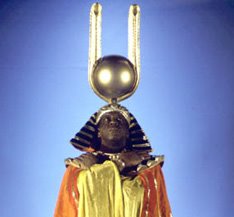
More 70s jazz-funk dodginess. What's that - a hat on a pyramid. It looks a bit like a man. Bestriding a city. With lots of 'heavy' weather going on. What a mess.

4.
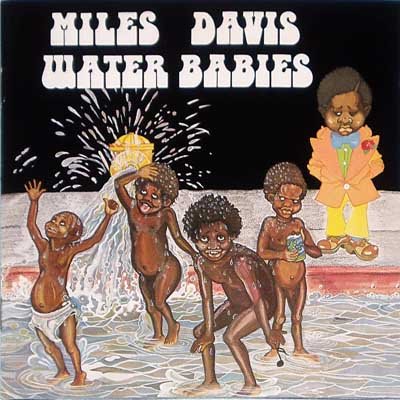
Miles again. Never tell a coked-up megastar they can draw, especially if it's the 1980s.

3.
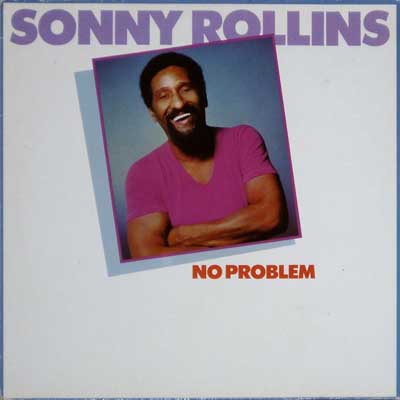
What have you got to look happy about, Sonny? Your record looks crap. (actually this is quite good, better than you would expect for a past-his-prime jazz megastar in the 1980s)

2.
I feel sick every time I look at this. Not much else to say.

1.
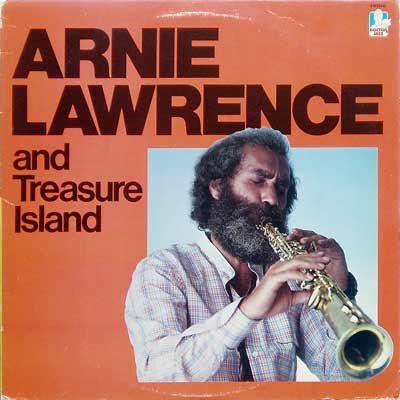
Roy Haynes was once voted as Esquire magazine's "best dressed man of the year", according to the sleeve note. Looks like he finds that almost as funny as I do. It must have been a long time ago...

So that's my top (or bottom) 10. Now over to you - feel free to send in anything that you find particularly unpleasant to look at, especially if the music within is actually quite good. Apologies to any of you who now feel unwell, rest assured this is normal and will pass with a lie down and a nice cup of tea.

Friday, May 19, 2006

Bad Record Sleeves part 1

Yesterday's post featured a sleeve picture so dire that regular reader Stewart was prompted to comment...

¡Ay Carumba! Surely this cover has got to make it into your top ten of worst Jazz album covers. Fair enough, it's not as bad as this crap, but still. I demand a top ten crap Jazz album covers. Come on.

Well, ask and ye shall recieve. Like all good top tens, this one is going to split itself up - 5 today, and 5 tomorrow. So without further ado...

10.
A gentle start with Mr Hancock looking decidedly jazz-funk on this patchy 1970s album.

9.
You can imagine the meeting in Columbia's art department. "Right then lads, we need ideas for the new Miles LP. It's called Water Babies". "I know, what about some erm.. babies playing in the um.. water?" I'm not sure if the drugs were too strong, or not strong enough.

8.
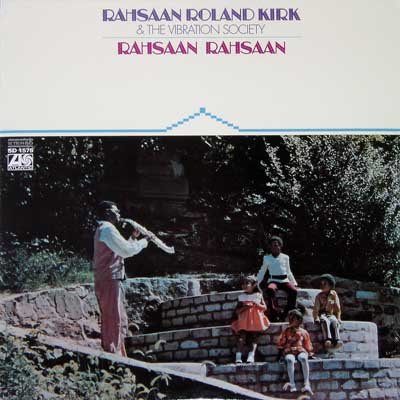
I'm not really sure that the children in this shot are really appreciating the sight of Roland Kirk in full flow, are you?

7.
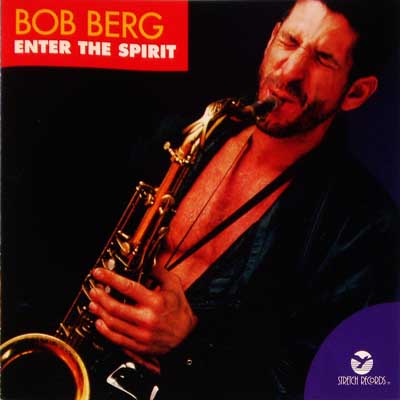
There's not a lot I can say about this one. Would you take him home to meet your mother? Read about the album here

6.
Help! There's a beaver trying to steal that man's saxophone. Ouch. Good album though. Read more here

Thursday, May 18, 2006

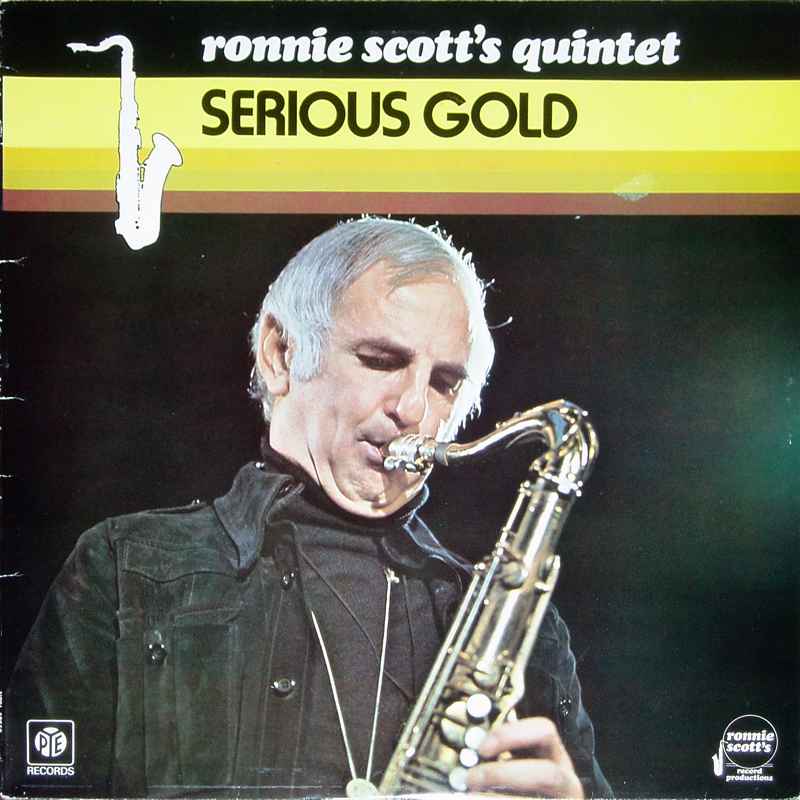
Ronnie Scott - Serious Gold


RONNIE SCOTT'S QUINTET
Serious Gold
Pye NSPL 18542

Recorded 18th October 1977


Side One

1. Invitation
2. Lazy Afternoon
3. Forty Colours

Side Two

1. Hey-Oke Ballad Suite
2. Send In The Clowns
3. Interfusion

PERSONNEL

RONNIE SCOTT; tenor and soprano sax
JOHN TAYLOR; keyboards
RON MATHEWSON; bass
MARTIN DREW; drums
LOUIS STEWART; guitar

Ronnie Scott
is one of the leading names in British Jazz, perhaps more famous for the jazz club that bears his name rather than his music. He's led a long and active career bringing the sounds of bop from to the UK. Quite literally, as early in his career he was a prominent feature on transatlantic ocean liners.

With such a history behind him, I made the mistake for many years of ignoring this album. I think it might have been the title, or maybe the picture of a hoary old Ronnie on the front that put me off. Or even the inclusion in the tracklisting of 'Send In The Clowns'. What a mistake that was! There's an old saying that goes 'you should never judge a book by it's cover' that comes to mind.

What this album is is a collection of complex post-bop tunes with more than a nod to the contemporary European avant-garde. Take the inclusion of Eberhard Weber's 'Forty Colours', for example. A gently unfolding piece with much emphasis on texture, this is a lovely listen. Or 'Interfusion', that rounds out the album and recalls nothing more than Ray Pizzi in it's groove-laden complexity.

Scott admits in his sleeve note that this music is "...representative of what I was into around this period.", and in some respects it is very much of it's time, but with enough decent tunes to still entertain.

Wednesday, May 17, 2006

More on Roswell Rudd

I just wanted to share with you this quote about the star of yesterday's review, Roswell Rudd. From allmusic, of all places.

..."In his hands, the horn became less a note-playing machine than a kind of human-powered analog synthesizer"...

That pretty much sums up what I was trying to say about his sound yesterday. Come to think of it, free jazz on analogue synths could sound pretty good (although there is a LOT of potential for things to go wrong). Does anyone know if such music exists?

Rudd's name is pretty far out, too, what with Roswell being the supposed site of some UFO-ness many years ago. His music is pretty far out too. However, he's definitely not called Rosewell, which as anyone who lives near where I come from will know is the least free-jazz town on earth (possibly).

Tuesday, May 16, 2006

Roswell Rudd - Everywhere


ROSWELL RUDD
Everywhere
impulse! A-9126 Stereo

Recorded 1966


Side One

1. Everywhere
2. Yankee No-How

Side Two

1. Respects
2. Satan's Dance

PERSONNEL

ROSWELL RUDD; trombone
GIUSEPPE LOGAN; flute, bass clarinet
LEWIS WORRELL; bass
CHARLES HADEN; bass
BEAVER HARRIS; drums
ROBIN KENYATTA; alto sax

Perhaps best known for his association with Archie Shepp, trombonist Roswell Rudd started playing in a traditional jazz context with players like Buck Clayton. He also played with another trad-cum-free jazzer that's popular on these pages, Steve Lacy. He got heavily involved with the New York avant-garde scene of the early 1960s, playing with John Tchicai in the New York Art Quartet as well as with Cecil Taylor. That led to an association with Archie Shepp that lasted for much of the 1960s, Rudd being responsible for some of Archie's finest moments, including my personal favourite, his arrangement of 'Naima' on the 'Four For Trane' LP.

This 1966 LP was Rudd's first as leader, amazingly, and features several other notable figures from the jazz avant-garde. Beaver Harris had contributed drums to several Archie Shepp recordings with Rudd, and Charlie Haden had, of course, played with the great Ornette Coleman.

The album opens with the title track, Rudd's poignant melody arising from a sea of sound dominated by the sinister tones of Haden's bowed bass. The track seems to grow from there - like a living thing rather than a classically structured jazz composition. It's most definitely a group improvisation, with no discrete solos as such, the players slithering around and occasionally bumping into each other. It's a marvellously restrained piece of music, and one of the best pieces of free jazz I've heard in a long time.

The remaining three tracks on the album are all in a similar vein, being faster paced and less controlled than 'Everywhere'. The playing is still good, but the listening is much more difficult, with some pretty intense sections. In some passages the rhythm section loses it's pulse and goes nowhere, fast, which is not good to hear. Haden comes to the rescue somewhat during 'Respects'', setting the tone with an insistent bass riff that recurs in parts throughout the piece.

Rudd continues in a free-jazz inspired vein to this day. There is a comprehensive discography available here that allows the interested listener to follow his career in great detail.

Monday, May 15, 2006

The Blues And Other Colors


JAMES MOODY
The Blues And Other Colors
Milestone MSP 9023

Recorded August 1968 and January 1969


Side One

1. Main Stem
2. Everyone Needs It
3. Savannah Calling
4. A Statement

Side Two

1. Gone Are The Days
2. Feeling Low
3. You Got To Pay
4. Old Folks

PERSONNEL

JAMES MOODY; flute, soprano sax
JOHNNY COLES; trumpet, flugelhorn
TOM McINTOSH; trombone
JOE FARRELL; alto flute, oboe, alto sax
CECIL PAYNE; baritone sax
SAM BROWN; electric guitar
KENNY BARRON; piano
RON CARTER; bass
BEN TUCKER; bass
FREDDY WAITS; drums

On Side Two tracks 1-3;

JAMES MOODY; flute
BRITT WOODMAN; trombone
JIM BUFFINGTON; french horn
LINDA NOVEMBER; voice
ALFRED BROWN; viola
CHARLES McCRACKEN; cello
KERMIT MOORE; cello
DICK KATZ; piano
RON CARTER; bass
CONNIE KAY; drums

An alumnus of Dizzy Gillespies' immediate postwar band, Moody is a talented tenor player as well as a flautist, and on this 1969 album he debuts on soprano. The record itself is a set of innovative "big-little band" jazz arranged by trombonist Tom McIntosh. Straight into the action we go with 'Main Stem', an Ellingtom tune that gets a high energy, atonal reading, cerytainly in keeping with the '...other colors' of the album title. Moody features on soprano here, displaying a rich warm tone that many try but fail to achieve from that instrument. The rhythmic accompaniment is solid (Barron in particular), and there's plenty to interest in the solo playing, but star of the show is the McIntosh arrangement. The horn textures are unusual harmoically while fitting well with the overall feel of the piece, and there's always something of interest going on behind the soloist.

Side two features a selection of smaller, more unusual ensembles from an earlier date in 1968. Moody's flute is paired with instruments that would be considered unusual in a jazz context such as the french horn or viola. 'Gone Are The Days' gets a bit twee with it's Americana leanings, while 'Feeling Low' gets a bit cocktail-jazzy. Out of the three alternate group recordings, 'You Got To Pay' is probably the best, with Moody sounding strident on flute and the whole group gelling together in a way that they just didn't do on the previous two tracks.

'Old Folks' closes out the album in subdued fashion, again with an interesting (albeit conventional) arrangement. Once again Moody dominates, on flute this time, by soloing throughout the track, but the backing is warm and supportive, and really fits in well to the lazy Sunday afternoon as I write this piece.

Moody continued to attempt different styles of music in the remainder of his career - from a stint in Las Vegas big bands, to recording with the likes of Manhattan Transfer (ouch!) he has never stood still, and indeed was the subject of a tribute album, 'Homage' in 2004.

Sunday, May 14, 2006

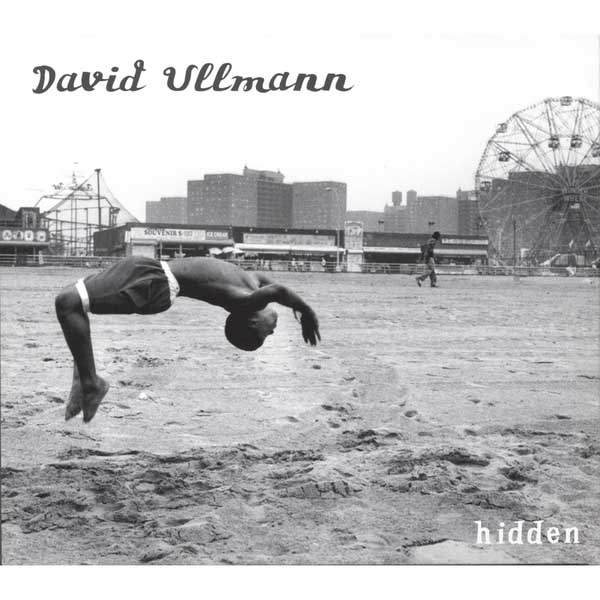
David Ullmann - Hidden


DAVID ULLMANN
Hidden
Wet Cash Records

Recorded 2005


1. Hidden
2. Astor Place
3. Memory Games
4. Make Believe
5. Waterfall
6. Lorca
7. Where Do We Go
8. You Don't Know What Love Is
9. Hightime

PERSONNEL

DAVID ULLMANN; guitar
JOE ASHLAR; piano
PEDRO GIRAURDO; bass
VIN SCIALLA; drums

I talked a few weeks ago about David Ullmann, the stylish New York based guitarist who was the allaboutjazz.com free mp3 of the day. Well I said i might get the album, and I have, and I'm going to write about it now, oh you lucky people.

I recall mentioning that Ullmann reminded me, on 'Lorca', of the late Grant Green. Well the album reveals him to be adept at many styles of jazz guitar. Running through the album is a sparseness of playing that gives his playing greater impact as well as allowing the sidemen space to play. All 3 of them are on great form too - Ashlar's electric piano solo on 'Astor Place', or the drum'n'bass rhythmic drive of 'Hidden'. These upbeat tracks with adventurous rhythmic and harmonic leanings are only half of the story. Tracks like 'You Don't Know What Love Is' demonstrate that they can handle gentler material. Several other tracks on the album are taken in a straighter style like this, and the contrast is most pleasing, at least to this reviewer's ears.

The album is available to buy from this link - I saw a comment there saying that this was a good album to listen to if you thought that jazz artists were all 80 years old - well, that sums it up very well. This is a record full of vitality, and it makes me very happy to know that there are still artists out there doing this kind of thing.

Friday, May 12, 2006

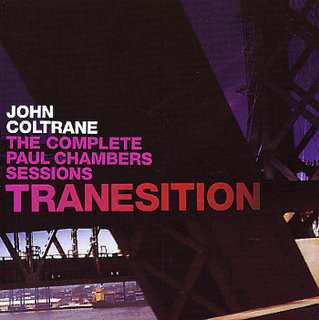
Tranesition


JOHN COLTRANE
TRANESITION: THE COMPLETE PAUL CHAMBERS SESSIONS
Gambit 69215

Recorded March (1-4)/April (5-7)/September (8-11) 1956


1. Trane's Blues
2. Dexterity
3. Stablemates
4. East Bound

5. Trane's Strain
6. High Step
7. Nixon, Dixon and Yates Blues

8. Omicron
9. Nita
10. We Six
11. Just For The Love

PERSONNEL

JOHN COLTRANE; tenor sax
PAUL CHAMBERS; bass
PHILLY JOE JONES; drums
KENNY DREW; piano (1-4)
CURTIS FULLER; trombone (5-7)
PEPPER ADAMS; baritone sax (5-7)
ROLAND ALEXANDER; piano (5)
DONALD BYRD; trumpet (8-11)
KENNY BURRELL; guitar (8-11)
HORACE SILVER; piano (8-11)

1956 was very early in Trane's career, but it can be regarded as the beginning of his search for an individual voice. Having been thrown out of Miles' quintet for his drug-fueled unreliability, Trane found work with other prominent musicians who couldn't resist jamming with a Miles Davis alumnus. Trane might have been the worst player in Miles' quintet, but that would still make him a very good tenorman indeed. Three sessions from 1956 are included on this CD They were recorded between Trane's two stays with Miles, and were essential parts of his development as a player.

Running as a theme through these sessions is bass behemoth Paul Chambers, in a foreshadowing of the classic 'Blue Train' of the following year (in fact the first session on this reissue, from March 1956, also features Kenny Drew and Philly Joe Jones. Philly Joe also pops up on the April and September sessions). If you are familiar with that great record, then the music here will not be surprising - spirited hard bop performances, given additional colour on the September session by the presence of Kenny Burrell on guitar. The music contained in these sessions was originally released under Chambers' name, hence the 'Paul Chambers Sessions' tag.

Session one is the pick of the record for me. 'Trane's Blues' kicks things off as a solid hard-bop blues with an instantly familiar theme that I can't just place... Trane is controlled and on inventive form throughout. He's not showy, with none of the searing intensity that would mark out his recordings later in the 1950s. The tune is pretty democratic too, with some nice playing from Chambers, in particular. 'Dexterity', the Charlie Parker tune, is taken at a much slower pace than Parker ever did it, this allows the band some room to breathe and they all stretch out in turn. Philly Joe is particularly good here.

The April session suffers from poor audio quality, but is worth persevering with for the fantastic Curtis Fuller (another 'Blue Train' connection) on trombone. It's largely a blues set - 'Nixon, Dixon and Yates blues' being the track that really does it for me. Coltrane wasn't the only player to connect fully with the blues and turn it into an conduit for his soul, but on his day he could be one of the best.

Fast forward to September, and things get a little more complicated with the polyrhythmic, latin influenced groove of 'Omicron'. Presumably this increase in rhythmic looseness was a direct result of Horace Silver's playing, and he can be heard prominently through the track. Donald Byrd is good too, in full-on Clifford Brown mode. The band really gel throughout the complicated opening and closing sections, and simply burn through the much more driving main part of the piece. 'Nita' sees Burrell join the ensemble with some well-considered lines that help to build the tension of this neatly constructed, driving piece of jazz. The final two tracks pale a little - they're both just run throughs of 'Nita' with different heads, basically, and add little to the album.

Thanks to Gambit Records for rereleasing these sessions. They don't have a website so I can't tell you too much about their other releases. I own one other album of theirs, 'Hard Drivin' Jazz' under Cecil Taylor's name (also featuring Coltrane).

Sunday, May 07, 2006

Gato Barbieri - Alive In New York


GATO BARBIERI
Chapter 4: Alive In New York
impulse! ASD 9303

Recorded 1975


Side One

1. Milonga Triste
2. La China Leoncia

Side Two

1. Baihia
2. Lluvia Azul

PERSONNEL

GATO BARBIERI; tenor sax, guiro, voice
HOWARD JOHNSON; tuba, bass clarinet, flugelhorn, tambourine
EDDIE MARTINEZ; piano, fender rhodes
PAUL METZKE; guitar
RON CARTER; bass
PORTINHO; drums
RAY ARMANDO; percussion, conga

Argentinian tenor Gato Barbieri came to prominence in the avant-garde jazz scene of the mid to late 1960s, playing with the likes of Don Cherry and Charlie Haden. He got funkier in the early 70s, playing with the likes of Lonnie Liston Smith while developing a heavy latin influence, best seen on his four impulse! recordings of the early 1970s. The music on these records (titled Chapters 1-4, indicating something of a stylistic unity) has been described as that of a latin Pharoah Sanders. While that may be true of the earlier records in the series, this 1975 recording finds Barbieri in less fiery mode, leaning towards the commercially oriented pop-jazz sound he would cultivate later in the decade. Thankfully it retains enough interest for the avant-garde listener.

The style of these four pieces is similar. Opening with a contemplative Barbieri, 'Milonga Triste' is as beautiful (thanks to Howard Johnson's bass clarinet backing) as it is rhythmically satisfying. 'La China Leoncia' ups the ante by getting progressively funkier throughout it's four sections. This really is the latin centre of the album, with some furious percussive later in the piece. Side two sees a return to lyrical form with 'Baihia', 11 minutes of relaxed tenor playing with the incomparable Johnson back on his usual tuba keeping things moving along. 'Lluvia Azul' keeps things moving on, being more upbeat than it's forebear and closing out the album in great style.

What more is there to say? This is hugely enjoyable music, played well, and is a good compromise between the fire of Barbieri's later work and his later smooth tones. It's certainly convinced me to track down the other 3 chapters of the series, and it should do the same with you too.

Friday, May 05, 2006

Belonging


JAN GARBAREK
KEITH JARRETT
PALLE DANIELSSON
JON CHRISTENSEN

Belonging
ECM 1050

Recorded April 24th-25th, 1974


Side One

1. Spiral Dance
2. Blossom
3. 'Long As You Know You're Living Yours

Side Two

1. Belonging
2. The Windup
3. Solstice

PERSONNEL

JAN GARBAREK; tenor & soprano saxes
KEITH JARRETT; piano
PALLE DANIELSSON; bass
JON CHRISTENSEN; drums

It wasn't always Nordic folk songs round at ECM records. The early years of the label (founded by Manfred Eicher in 1969) saw releases full of energy and colour. Jarrett and Garbarek both had significant avant-garde pedigrees by the time they came to record for the label, and both bring their distinct personalities to this 1974 session. Jarrett had played with Miles in the early 70s but was forging his own direction at this time. His sound was characterised by a strong rhythmic sensibility within the usual improvisatory framework. He really brings a sense of rhythm to the music on this record, especially the opening 'Spiral Dance' with it's circular piano figure underpinning the soloists.

Garbarek's previous few albums (like the outstanding Triptykon) mined a more avant-garde seam, with influences like Albert Ayler and late period John Coltrane to the fore. But at the time of this recording Garbarek was moving towards a greater melodic accessibility, a transformation that would be complete by the release of 1975's 'Dansere'. The only change in lineup for that album is the swapping of Jarrett for Bobo Stenson, a change that gives the later recording a far more meditative feel.

The group dynamic on this recording is thoroughly democratic. From the equal billing on the record sleeve to the sharing out of solo space, everything is shared equally. The compositions are all Jarrett's, but he doesn't dominate throughout. He'd have plenty opportunity to do that later in his career. This composition bias leads to the record often being listed under Jarrett's name, but that's just to satisfy the classifiers out there.

Thursday, May 04, 2006

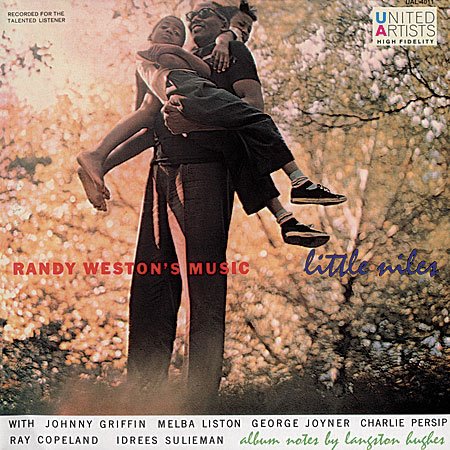
Randy Weston - Little Niles


RANDY WESTON
Little Niles
United Artists 5011

Recorded 1958


Side One

1. Earth Birth
2. Little Susan
3. Nice Ice
4. Little Niles

Side Two

1. Pam's Waltz
2. Babe's Blues*
3. Let's Climb A Hill

PERSONNEL

RANDY WESTON; piano
JOHNNY GRIFFIN; tenor sax
RAY COPELAND; trumpet
IDRIS SULIEMAN; trumpet (*)
MELBA LISTON; trombone
GEORGE JOYNER; bass
CHARLIE PERSIP; drums

Randy Weston is perhaps best known for his use of African rhythms in jazz on albums such as the 1972 CTI release, 'Blue Moses'. Prior to his first visit to Africa in the late 1950s, Weston was absorbing the rhythms of Africa and the Caribbean into his post-Monk, bop-based sound. This assimilation gives his piano playing an earthy, dense sound that is seen clearly on this excellent LP.

My copy of this is actually from a later release as part of the 'Blue Note Reissue Series' (the picture above is from the original LP issue). It's a double LP featuring the 'Little Niles' album in it's entirety along with two others sets from the period - Destry Rides Again (United Artists 5045, 1959) and Randy Weston: Live at the Five Spot (United Artists 5066, 1959). Weston bestrides several jazz genres with aplomb. He's as at home playing like George Shearing ('Let's Climb A Hill') as he is doing Monk ('Nice Ice', 'Little Susan').

The whole group plays well with Melba Liston's charts being continually inspiring. The group interplay is up there with the best, seen especially well during the ensemble passages of 'Nice Ice', or in the delicate horn backing to Weston's solo on 'Babe's Blues'. Rhythmically, the blues are prominent, with some more advanced sections on a few tracks. The sidemen on the date are also great, especially Liston (also the arranger) and Griffin, two musicians with whom I am unfamiliar, but who impress nonetheless.

The original 'Little Niles' has been repressed many times and is now pretty easy to come by. I'd recommend giving it a listen.

Wednesday, May 03, 2006

Space is the Place (via counterpoint)


Counterpoint is a major concept in western music in general, and jazz in particular. In fact in some branches of jazz (i'm thinking of you, Mr. free-jazz) it could be argued that it's the only structural element left intact after melody, rhythm and harmony have been eradicated.

i was reminded of this while talking with Stewart, author of yesterday's fine piece on the Sun Ra Arkestra. He was telling me how he spent a small part of the gig with Marshall Allen standing right next to him playing 'one of the tunes from "Space Is The Place"'. That piece is not only one of Sun Ra's finest, but it's also a great place to hear some counterpoint, if you haven't quite grasped the concept yet.

At it's most basic level, counterpoint is defined as two separate melodies playing simultaneously. The hope is, of course, that the whole will be greater than the sum of the parts. As you will no doubt realise, the opportunities for getting it very, very wrong are legion.

Listening to the Sun Ra track, it should immediately become obvious that there are several different tunes going on at once. They all stand out, and actually slightly jar with one another due to the dissonant harmonies, making the counterpoint that bit more obvious. In many other areas of jazz it's more subtle than this (the MJQ, for example, were famous for their use of counterpoint). What's great about 'Space is the Place' is that the separate parts of the tune stay separate, drifting in and out in a manner that will be familiar to fans of dub reggae or electronic music. If it wasn't recorded in 1972 you would swear that it was sequenced.

Those looking for a more detailed description of this important musical phenomenon would be well advised to read this article on Wikipedia.

Tuesday, May 02, 2006

The Sun Ra Arkestra (live in Edinburgh)


I got tickets for this a few weeks ago, with a degree of trepidation as to what the night might actually entail. Free jazz is one of those things that can sometimes go further out than my mind can handle.

So, on Friday last, The Sun Ra Arkestra descended and took the stage in their wonderfully sequinned clothes and crazy gold headgear. Ahh, Sun Ra time! It took all of about a fraction of a second to realise that there was nothing to fear. The band very quickly found a groove that came as a pleasant surprise. In fact it was this groove that was the real story of the night. They grooved so well that much of the audience was dancing for much of the night. And this they call free jazz? I don't think so. Maybe. But what do i know?

The Arkestra played jazz. Mostly of the up-tempo, big band kind. But, of course, it was so much more. There was a strong percussive element to the music, with two full-time percussionists, as well as many of the other members having their own items of percussion. It gave the sound quite an African vibe and was a good part of the groove.

Less noticeable were the unusual chords and tones the Akestra played. Almost all of it was just slightly askew, giving the surface impression of music that was fairly conventional, but which was in fact definitely not. There was also many moments when this askew vibe took over and the band became completely free. These moments where fantastic, frantic cacophonies, which never lasted long enough to take over the whole show. Marshall Allen (top photo, right), who is now the band leader, was particularly impressive at these times.

One of the strongest impressions the band gave was that they where jamming: that things were being invented as they went along. This, of course, can be a recipe for disaster, but this was not the case here. It was clear that the band where there to entertain the crowd, as opposed to each other (although they clearly did that too) and not only that but they were having a total ball. Not more so than the two occasions when half of the band left the stage and, still playing, walked through the crowd in a near conga line (imagine a single file New Orleans style funeral and you'll be close). It was an indescribable experience to be standing right next to members of the Akrestra as they played parts of Space Is The Place.

Under Allen's leadership, the band were really tight, which was very impressive considering their cosmic jam nature. Each member got good solo spaces, with more time appearing to be given to the longer-serving members. Allen, being the longest-serving (he joined in '58), probably got the most space. Playing mostly alto sax and E.V.I. (Electronic Valve Instrument apparently), his power and the sheer noise he produced was awe-inspiring. (I just found out that he is 82 and i am absolutely stunned. Last year i saw Pharoah Sanders, who is younger, and he didn't even come close to what Allen achieved on Friday.) He was particularly exciting on the encore, when he played unaccompanied for several furious minutes, before the rest of the band piled on behind him for the most free part of the evening. In fact, that is all the encore was: just crazed, free-jazz blowing, which was a great way to end the night!

I left the venue with one thought in my head: it must be great to be in the Sun Ra Arkestra.

If you ever, ever get the chance go see them. You can't possible regret it (and if you do, what on earth are you doing reading this?). For more info on the Arkestra, check out their site.

Friday, April 28, 2006

Ever had the feeling that, despite being surrounded by literally thousands of records, you don't want to listen to any of them? It happens to me a lot (which is why I've ended up with lots of records, I guess) and at these times I want to have new and exciting music suggested to me. In the old days that meant a trip to the music store, or buying a magazine, but in these high tech times there is an alternative. Several online recommendation services exist, in varying forms, but the one I've just come across and want to share with you is Pandora.

It works very simply - tell it a couple of artists that you enjoy and it scours it's database for related music. I've been playing around with it this morning and it's pretty spot on. I told it that I like John Coltrane and Archie Shepp, and so far I've had some Albert Ayler, late period Roy Haynes, and Joshua Redman, among others. Playing right now is a track called 'Gathering Of The Spirits' by Michael Brecker, Dave Liebman and Joe Lovano, and very good it is too, with it's 3-sax interplay and general air of freeness. Pandora says that it's been selected because "it features... a contrapuntal melodic presentation and mixed major and minor tonalities". Seems it knows what I like better than I do. It links through to allmusic for further info, too.

Crikey, now it's playing 'Naima' from Archie Shepp's groundbreaking 'Four For Trane', which is one of my most favourite tunes. It really does know my music taste better than I do! Go check it out and see if it knows your taste just as well.

Pandora

Thursday, April 27, 2006

Mulatu Astatqe

I've only time for a short post today, so tonight's music really does speak volumes. It's a track by Ethiopian jazz innovator Mulatu Astatqe. Click the link if you want to read more about this vastly underappreciated (in the west, at least) musician, and enjoy 'Dewel', taken from one of the many compilations featuring Astatqe's music. The track itself drifts along on an easy groove, the lead playing being sufficiently far-out to call to mind artists like Pharoah Sanders. It really is very good, and I'd reccommend checking out any of his music, or Ethiopian jazz in general.

Wednesday, April 26, 2006

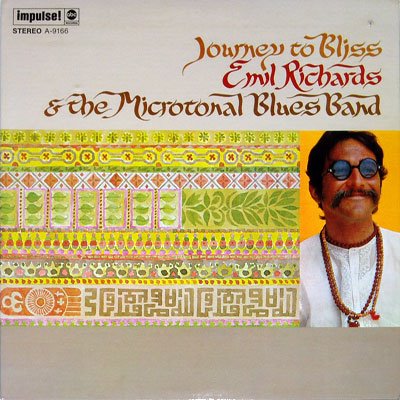
Emil Richards and the Microtonal Blues Band


EMIL RICHARDS AND THE MICROTONAL BLUES BAND
Journey To Bliss
impulse! A-9166

Recorded 1968


Side One

1. Maharimba
2. Bliss
3. Mantra
4. Enjoy, Enjoy

Side Two

1. Journey to Bliss - Part I
2. Journey to Bliss - Part II
3. Journey to Bliss - Part III
4. Journey to Bliss - Part IV
5. Journey to Bliss - Part V
6. Journey to Bliss - Part VI

PERSONNEL

EMIL RICHARDS; marimba, vibraphone, xylophone, percussion
DAVE MACKAY; piano, various percussion
DENNIS BUDIMIR; guitar
TOMMY TEDESCO; guitar
RAY NEAPOLITAN; bass
JOE PORCARO; drums
MICHAEL CRADEN; percussion
MARK STEVENS; percussion
BARBARA GESS; lyrics
HAGAN BEGGS; narration

Have you heard the music of Emil Richards? No, I hear you say. Ever seen a movie? Well in that case you probably have. One of the most prolific performers of film music ever (see this link for a complete list), and owner of possibly the world's largest collection of percussion instruments (check out the 'instruments' section on Emil's homepage), Emil Richards also had a brief career as a jazz musician in the 1960s, playing under his own name as well as on dates with Gabor Szabo and Tom Scott.

This album, recorded in 1968 and released on the impulse! label, features Emil's characteristic percussion densely layered into a set of psychedelic-pop-jazz tunes that manage to sound very much of their time, while still remaining enjoyable today. Side one is superior - the pace rather drags through side two's long 'Journey To Bliss', the unwelcome narration making it sound like a straightlaced 1970s documentary on 'hippie music' or somesuch.

Where this album is really interesting musically is in the use of percussion, and specifically microtonal percussion. Microtonal music fills the spaces between the notes used in traditional Western music (it's part of Gamelan and Indian classical music), creating sounds that are often unfamiliar to the western ear. This 'filling of the cracks' in the score leads in this case to a dense sound that really is unlike anything else in jazz. The microtonal concept was also taken up by free-jazzers, but as far as I know this is the only example of such music played on percussion in recorded jazz. For music that is very dissonant in places, it's also highly accessible due to catchy melodies and strong rhythms.

Sadly it's out of print and very tricky to track down, but keep looking on eBay for long enough and a copy is sure to come up. Meanwhile enjoy the sounds of 'Maharimba' and come back tomorrow for some more Daily Jazz.

(By the way, have you ever wanted to play a slightly out-of-tune vibraphone? - well thanks to the miracle of flash, on Emil's Homepage, you can!)

Tuesday, April 25, 2006

David Ullmann


From time to time I like to check out the free mp3 on allaboutjazz.com. Today's is 'Lorca' by David Ullmann, a New York based guitarist, and it's really hit my spot today. David plays, on this track at least, in a style that's reminiscent of the late great Grant Green, all single note runs and laid-back funkiness. His guitar leads over a backdrop that goes from latin to breakbeat and back again while managing to sound seamless - quite a feat. You should all check it out, as well as David's homepage which has some more tunes to listen to. He's got a CD out, too, called 'Hidden' which I think I might have to investigate...

Monday, April 24, 2006

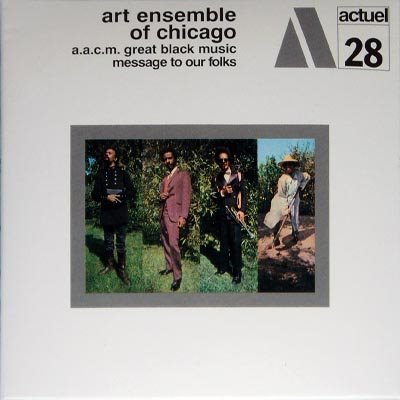
Message To Our Folks


ART ENSEMBLE OF CHICAGO
"Great Black Music" Message To Our Folks
BYG Actuel 28

Recorded 8/12/1969


1. Old-Time Religion
2. Dexterity
3. Rock Out
4. A Brain for the Seine

PERSONNEL

LESTER BOWIE; trumpet, flugelhorn, bass drum, horns
ROSCOE MITCHELL; soprano sax, alto sax, bass sax, clarinet, flute, percussion
JOSEPH JARMAN; soprano sax, alto sax, clarinet, oboe, flute, vibes, percussion, guitar
MALACHI FAVORS; bass, fender bass, banjo, percussion

Amen! Looking for a trip through the entire history of black music? Well look no further. There was a lot of this sort of thing around in the 1960s and 70s courtesy of free jazzers like Archie Shepp and the Art Ensemble. I think some of these artists were seen as marginal by the jazz mainstream, but albums like this show that great free jazz was as in thrall to tradition as any bopper. Look at the name of the album, for a start - "Message to our Folks" implies an attempt to express gratitude for musical forebears. What's more, the album was subtitled "great black music".

And there certainly is a variety of music here. From the gospel stylings of opener "Old-Time Religion", through a reasonably straight take on Charlie Parker's "Dexterity" (complete with a multitude of percussion in true Art Ensemble style) the album can't be pinned down. "Rock Out" does just that with it's heavy rhythmic feel, while "A Brain for the Seine" is a typical Paris-scene wig-out, with a real ambient, soundtrack-like feel (and a great bluesy harmonica). The whole is executed with the sense of fun-but-deadly-serious that characterises many of the Art Ensembles' recordings of this period.

Like many Art Ensemble records this sounds like nothing else in free jazz, never mind music in general - in these days of manufactured pop we should be grateful that such music exists at all. Love it or hate it you can't help but have an opinion, but come to it with an open mind and you'll find plenty to enjoy.

Sunday, April 23, 2006

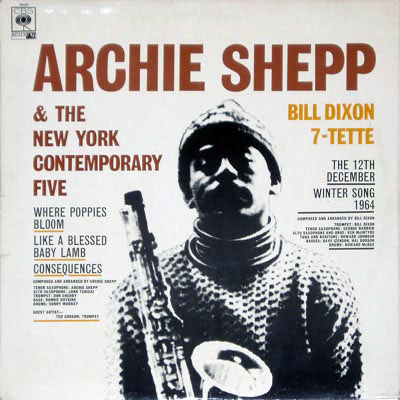
Archie Shepp & Bill Dixon


ARCHIE SHEPP & THE NEW YORK CONTEMPORARY FIVE
Savoy MG-12184

Recorded 1964


Split with Bill Dixon 7-Tette

Side One (Shepp)

1. Where Poppies Bloom
2. Like A Blessed Baby Lamb
3. Consequences

Side Two (Dixon)

1. The 12th December
2. Winter Song 1964

PERSONNEL

ARCHIE SHEPP; tenor sax
JOHN TCHICAI; alto sax
DON CHERRY; trumpet
RONNIE BOYKINS; bass
SONNY MURRAY; drums

Guest Artist TED CURSON; trumpet

This early Shepp recording catches him with the enormously influential and shockingly new 'New York Contemporary Five'. The group only stayed together for about a year, it's complete lack of commercial potential mitigating against it's survival. Sadly only one of the tracks presented here is a true NYCF performance - Don Cherry was late for the session so only plays on 'Consequences' - the other tracks feature Ted Curson in a 'guest artist' role showing himself to be more than a match for a fiery, youthful Shepp.

Something that really stands out when listening to this music is the harmonic approach - for 1964, this is pretty far out in terms of dissonance. The opening theme of 'Where Poppies Bloom' must have terrified critics and public alike with it's complete disregard for tonality. Yet, in other respects the music is relatively conventional - the standard theme-solos-theme structure of all bop based musics is adhered to, the rhythm section play in time, walking bass lines are heard prominently. There's even a pervasive blues influence on 'Like A Blessed Baby Lamb' (but then the blues are never far away in any of Shepp's music).

'Consequences' takes things a little further out, possibly due to Cherry's influence, and features Shepp's best performance on the record. He's at his best when matching his abrasive tone with searing runs that start off one way then change, mid sequence, into a totally different harmonic area.

The Bill Dixon side is interesting - in a band featuring, among others, Howard Johnson on tuba and David Izenon on bass, Dixon's compositions are presented in a much more accessible way to those of his counterpart on side one.

Friday, April 21, 2006

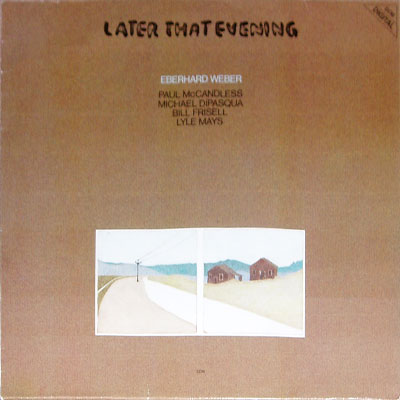
Eberhard Weber - Later That Evening


EBERHARD WEBER
Later That Evening
ECM 1231

Recorded 1982


Side One

1. Maurizius
2. Death In The Carwash

Side Two

1. Often In The Open
2. Later That Evening

PERSONNEL

PAUL McCANDLESS; soprano sax, oboe, english horn, bass clarinet
BILL FRISELL; guitar
LYLE MAYS; piano
MICHAEL DiPASQUA; drums, percussion
EBERHARD WEBER; bass

For a laid-back Friday night in, here's some really laid back music
courtesy of the excellent ECM label. This album, like so many on that label, brings together musicians from a diverse selection of musical projects to create a satisfying whole. In some respects this could be said to be the ECM house band, Weber and Frisell at least appearing on many of the label's releases.

'Maurizius' sets the tone. Introduced by Lyle Mays' piano, it expands with the help of McCandless and the others into an elegiac piece. Weber is barely noticeable at first, his bowed bass suiting the sombre mood, but soon becomes a greater presence, as does Frisell on guitar - here using a soft sound, very little attack, never letting the volume rise too high or the tension go unreleased. Despite the lack of anything appoaching a beat, DiPasqua still has an important supporting role, sticking mainly to his cymbals throughout. 'Death In The Carwash' supplies more of the same feel through it's 4 movements, the 3rd even approaching a groove that acts as backing to a superb group improvisation. This is the strength of these players having been on so many of each other's records - they're not only a tight group but can almost read each other's minds.

A lot of ECM music is rooted in the free-jazz and avant-garde musics of the late 1960s/early 1970s, and although this influence had largely been purged by 1982, Mays can't help but open side 2 with a brief snatch of free jazz, before 'Often In The Open' develops into something similar to that seen previously. The closing 'Later That Evening' showcases Weber's smooth sound on electric bass (6-string, I think) with an ambient wash of sound in the background, before being played out by McCandless' beautiful soprano.

As an ECM record, you can expect nothing less than sonic brilliance, and once again Manfred Eicher has done an outstanding production job. Many of the ECM records are worth owning for the production alone. If you've got the kit, and the inclination to find them, I can tell you that they really do sound better on vinyl than CD.