Tuesday, February 28, 2006

Doin' Allright


DEXTER GORDON
Doin' Allright
Blue Note 84077

Recorded 1961

Side One

1. I Was Doing All Right
2. You've Changed
3. For Regulars Only

Side Two

1. Society Red
2. It's You Or No One

PERSONNEL

DEXTER GORDON; tenor sax
FREDDIE HUBBARD; trumpet
HORACE PARLAN; piano
GEORGE TUCKER; bass
AL HAREWOOD; drums

This 1961 LP marks the beginning of the second phase of Gordon's career. Having scored some successes in the 1940s, 'the big man with the big sound' (he was 6'5") spent much of the 50s either under the influence of drugs or in jail, so his LPs for Blue Note in the early 60s represented something of a comeback for the veteran tenorman.

Here he teams up with some young guns; most notably the great Freddie Hubbard on trumpet and Horace Parlan on piano. The rhythm section of Tucker and Harewood are good, but firmly second division - solid players, nothing too flashy. The album splits neatly into two - slower tracks on side one and an increase in pace on side two. A relaxed air permeates throughout, though. 'You've Changed' was a future standard, and the flip's 'Society Red' sees Gordon's huge tone being shown off to great effect. That track also features a standout solo from Parlan.

All in all, it's a typical Blue Note release of the period. It doesn't take too many risks, but with music as well played and enjoyable as this is, it doesn't have to. The eagle-eyed amongst you will have spotted the discrepancy in catalogue numbers between the text and the sleeve picture above - the picture is actually of the CD issue (courtesy of amazon), while I own the LP. Ahh, catalogue confusion, don't you just hate it?

I can't resist sharing my favourite piece of Dexter trivia, courtesy of wikipedia. Apparently, when Gordon lived in Denmark, he became friends with the family of then-future Metallica drummer Lars Ulrich, and subsequently became Lars's godfather! Try playing six degrees of separation with that one!

Monday, February 27, 2006

Bending New Corners


ERIC TRUFFAZ
Bending New Corners
Blue Note 522123

Recorded 1999


Side One

1. Sweet Mercy
2. 3/4 Arroyo
3. Minaret 1

Side Two

1. Bending New Corners
2. Friendly Fire

Side Three

1. More
2. Less
3. Siegfried

Side Four

1. Minaret 2
2. Betty
3. And

PERSONNEL

ERIK TRUFFAZ; trumpet
PATRICK MULLER; piano, rhodes
MARCELLO GIULIANI; bass
MARC ERBETTA; drums, percussion
NYA; vocal

The huge amount of great classic jazz out there does occasionally make me think "what's the point of getting into anything new?", especially at a time when innovation in jazz seems to be ever-harder to find. But thinking this way is just plain wrong when considering an artist like Erik Truffaz.

Erik attended the Geneva conservatoire before forming his first quintet in 1991. By 1997 he had hooked up with Blue Note to record his first album for them, 'Out Of a Dream'. 'Bending New Corners' was his 3rd for the venerable label, 1998's 'The Dawn' preceding it. The music he presents here is a delicious mix of the old and the new. Truffaz' trumpet playing is heavily infleunced by Miles Davis in his use of space - 'More', for example, features Truffaz with the mute firmly in, playing a theme vaguely reminiscent of 'My Funny Valentine' - it's as if Miles had come back from the dead to play just one more gig, and a delicious taste of the kind of music Miles might have gone on to make had he lived a little longer.

As well as the classic Miles influence, there's a great deal of fusion going on - listen to the funked-up rhodes of Muller on 'Bending New Corners' or 'Less', for example. And something else - something distinctly contemporary is going on in the rhythm section. Many of the tracks feature rhythmic lines with a heavy drum'n'bass or trip-hop influence. This layering of contemporary rhythms with classic bop and fusion based soloists makes for an arresting performance. Several tracks also feature Nya, with his laid-back raps. I'm not sure these add much, and possibly even take away from the music as they leave less time for the soloists to perform.

This album was followed up with 2001's 'Revisite', an album of remixes which took the music from 'Bending New Corners' and threw out almost all the classic jazz references to create something truly modern and fresh; only Truffaz' trumpet surviving in many cases.

Sunday, February 26, 2006

Les Stances A Sophie


ART ENSEMBLE OF CHICAGO
Les Stances A Sophie
Universal Sounds - US 11 CD

Recorded 22nd July 1970


1. Theme De Yoyo
2. Theme De Celine
3. Variations sur un Theme de Monteverdi (i)
4. Variations sur un Theme de Monteverdi (ii)
5. Proverbes (i)
6. Theme Amour Universal
7. Theme Libre
8. Proverbes (ii)

PERSONNEL

ROSCOE MITCHELL; saxophones
JOSEPH JARMAN; saxophones
MALACHI FAVOURS; bass
LESTER BOWIE; trumpet
DON MOYE; drums
FONTELLA BASS; vocals

Best known for their unique take on free jazz, the Art Ensemble of Chicago arose from the Chicago-based Association for the Advancement of Creative Musicians. Like conceptual art, free jazz always seems to work best if supported by a strong concept, and the AACM certainly provided this to the Art Ensemble. It's not to surprising to hear that the group found themselves in Boulogne, France in July 1970 - many American free-jazz musicians were attracted to France by the lure of European intellectualism and the 1969 Festival Actuel. What is surprising is that they ended up recording the score for a low budget French domestic drama.

The album became legendary after it's release - the film was hardly an international success and it's soundtrack was never destined to be a top seller, so few copies were in circulation. Thankfully London-based Universal Sounds rereleased the album in the 1990s after copies began trading for crazy amounts of money. The reason for so much interest in an otherwise obscure record? The lead track - 'Theme de Yoyo'; tight, funky and totally unlike anything else in the Art Ensemble's extensive discography. The theme is catchy, insistent and broken up with tasteful bursts of freedom that innovate without terrifying. This would all be only mildly entertaining were it not for the outstanding vocal of Fontella Bass. Bass had scored some soul hits in the late 1960s and was later married to Lester Bowie, hence her appearance here. She's totally up to the job, belting out the vitriol of the lyric with real passion. The music matches her delivery, the band showing themselves to be extremely tight - free-jazzers are often derided as being unable to play, but there's no doubt this is a group that could turn themselves to anything.

After that astonishing beginning, the album changes direction somewhat, the rest of the tracks being in a quieter and much freer style. It's unmistakably film music, but with a definite free jazz-edge that unsettles and satisfies close listening. It's still possible to pick this up on CD, so take my advice and do so, before this cult classic becomes as unobtainable as it once was.

Friday, February 24, 2006

Cecil McBee - Mutima


CECIL McBEE
Mutima
Strata East SES 7417

Recorded 5/8/1974

Side One


1. From Within
2. Voice Of The 7th Angel
3. Life Waves

Side Two

1. Mutima
2. A Feeling
3. Tulsa Black

PERSONNEL

CECIL McBEE; bass
JIMMY HOPPS; drums
ONAJE ALLEN GUMBS; acoustic and electric piano
LAWRENCE KILLIAN; conga
DEEDEE BRIDGEWATER; vocal
GEORGE ADAMS; tenor and soprano sax
CECIL McBEE Jr; electric bass
MICHAEL CARVIN; gong and misc. percussion
JABOLI BILLY HART; cymbals and misc. percussion
TEX ALLEN; trumpet & flugelhorn
ALLEN BRAUFMAN; alto sax
ART WEBB; flute
ALLEN NELSON; drums

The bass has always been an essential component of the jazz rhythm section, simultaneously holding down the groove while marking out the changes. Bassists of the hard-bop era often got little in the way of solo space (they were too important to be allowed to wander off by themselves) but throughout the 1960s and 70s, perhaps thanks to the gargantuan presence of Charles Mingus, they began to take a more prominent role. Several highly influential figures appeared, like Ron Carter and Dave Holland along with many others. Cecil McBee is perhaps less well-known, but equally talented, having played on seminal works by the likes of Alice Coltrane and Pharoah Sanders.

This album finds him firmly placed as leader of an avant-garde group with a distinctly spiritual edge. Mutima is the key to the spirit and culture of black Africa, according to the sleevenote; McBee's compositions certainly evoke that spirit. The music is at times inspirational. The opening "From Within" is a bass solo with McBee playing two acoustic basses simultaneously. The idea of an 11-plus minute bass solo may terrify some, but this is riveting. Not only does he play the basses, but for a section he plays the feedback created by the amplification of both instruments. The sounds he creates are otherworldly and exciting, and not always easy to identify as being produced by an upright bass. "Life Waves" is an ensemble piece, but with McBee taking a prominent melodic role, and demonstrating enormous technical skill with some very fast lines.

The other standout track is "Mutima" itself, which is virtually indistinguishable from some of the work McBee undertook with Pharoah Sanders a few years earlier. Most Strata East recordings are pretty hard to come by, but thankfully this one has been made available as a reissue in recent years (although only on vinyl) so should be pretty easy to track down.

Thursday, February 23, 2006

If Only They Knew


DAVID LIEBMAN QUINTET
If Only They Knew
Timeless SJP 151

Recorded 14th July, 1980

Side One


1. If Only They Knew
2. Capistrano
3. Moontide

Side Two

1. Reunion
2. Autumn In New York
3. Move On Some

PERSONNEL

DAVID LIEBMAN; tenor and soprano sax
TERUMASA HIND; trumpet, flugelhorn
JOHN SCOFIELD; guitar
RON McCLURE; acoustic bass
ADAM NUSSBAUM; drums

Jazz in the 1980s could be pretty horrendous at times. Taking it's cue from 70s fusion, there were a lot of loud guitars, soprano saxophones and bongo drums, but often combined with slick production and shiny suits to make music that was neither good jazz nor good commercial music (whatever that is). A few artists managed to keep on bringing out quality records, though, usually those who had been closely connected with the music when it began in the early 1970s.

So it was with Dave Liebman, one time Miles Davis sideman and present day jazz educator. This record brings his fusion leanings and grafts on a slice of bop to create massively enjoyable, if not terribly original music. Fusion being much derided at the time of this LP's release, Liebman chose the title for this record as a riposte to his critics. "If Only They Knew"... how much passion and commitment, how much sheer talent went into records like these, they'd surely think differently.

The talent on show is impressive - John Scofield brings his instantly recognisable guitar sound, to great effect. Find of the record for me is the little known Terumasa Hind on trumpet, who brings a huge bop influence to tracks like 'Autumn In New York' with his Freddie Hubbard-like tone and delivery.

Revisiting his Miles Davis connection, Liebman would be instrumental in bringing Scofield to Miles' attention, leading to his association with the trumpeter on many 1980s recordings.

Monday, February 20, 2006

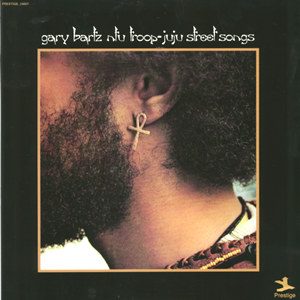
Gary Bartz - Juju Street Songs


GARY BARTZ NTU TROOP
Juju Street Songs
Prestige 10057

Recorded 1972


1. I Wanna Be Where You Are
2. Black Maybe
3. Bertha Baptist
4. Africans Unite
5. Teheran

PERSONNEL

GARY BARTZ; alto & soprano sax, percussion
ANDY BEY; electric piano, percussion, vocals
STAFFORD JAMES; bass, percussion
HOWARD KING; drums, percussion

NTU Troop was Gary Bartz' solo vehicle of the early 1970s. It was the first group he led, and allowed him the freedom to incorporate his myriad influences into the post-bop/fusion template bequeathed to him by former bosses Art Blakey and Miles Davis. This record taps into the currents of 'world-fusion' that were circulating at the time of it's birth, throws in a dash of afrocentrism, and combines them with down'n'dirty street funk to create an intriguing musical hybrid.

Opener 'I wanna be where you are' sets the pace - Bartz' sax dripping in effects and a loose-limbed rhythm section blending elements of calypso and funk into an infectious groove. Stevie Wonder's 'Black Maybe', and side 2's 'Africans Unite' get similar treatment. 'Bertha Baptist' is the beating jazz heart of the album, the point where Bartz shows us what he's learned as apprentice to the master jazzmen of the 1960s. And then my personal favourite, 'Teheran', with it's middle-eastern influence, Bartz' sax sounding like a snake charmer over the polyrhythmic backing of King.

It all sounds familiar now - world fusion has been done a few times (although not always so successfully) - but at the time Bartz took a critical pasting over music such as this. "It's not jazz", they cried (as they often do). But listen - here's an album of great, improvised instrumental music that's not afraid to think for itself and explore new sonic territories. How much more jazz can you get?

Friday, February 17, 2006

Ray Charles, The Genius


RAY CHARLES
The Genius After Hours
Atlantic 1369

Recorded 1961


1. The Genius After Hours
2. Ain't Misbehavin'
3. Dawn Ray
4. Joy Ride
5. Hornful Soul
6. The Man I Love
7. Charlesville
8. Music, Music, Music

PERSONNEL

RAY CHARLES; piano
ROOSVELT SHEFFIELD; bass (1,2,4,5,7)
WILLIAM PEEPLES; drums (1,2,4,5,7)
JOSEPH BRIDGEWATER; trumpet (2,5)
JOHN HUNT; trumpet (2,4,5)
DAVID 'FATHEAD' NEWMAN; tenor sax (2,5), alto sax (4)
EMMOTT DENNIS; baritone sax (2,5)
OSCAR PETTIFORD; bass (3,6,8)
JOE HARRIS; drums (3,6,8)

Raymond Charles Robinson, 'the only genius in the business', recorded prolifically for many years until his death in 2004. Although he had his greatest success with R&B sides like 'What'd I Say' and 'I Got A Woman, he was an accomplished pianist in styles as diverse as jazz and country music. He recorded plenty of jazz sessions for Atlantic, including some memorable work with Milt Jackson. This 1961 set sees him playing jazz, swing and R&B influenced music, but always with the blues.

As the name would suggest, this album has a laid back, end of the night feel. As music to contemplate life's troubles to at 3am it's damn near perfect. Although the tracks vary in tempo, the after hours feel persists throughout the whole album, even in a piece as frenetic as the bop-based 'Joy Ride', which also features superb alto playing from Newman and a fine muted solo from Hunt.

My favourite, though, is the title track, evocative of smoky, half-deserted clubs sometime past closing; it's slow shuffle being the perfect foil for a performance full of emotion by Charles. Given that it feels like 3am inside my head right now, this is possibly the finest thing I could wish to hear.

Wednesday, February 15, 2006

Roy Ayers - Daddy Bug


ROY AYERS
Daddy Bug
Atlantic SD1538

Recorded 1969


1. Daddy Bug
2. Bonita
3. This Guy's In Love With You
4. I Love You Michelle
5. Shadows
6. Emmie
7. Look To The Sky
8. It Could Only Happen To You

PERSONNEL

ROY AYERS; vibraphone
HERBIE HANCOCK; piano
BUSTER WILLIAMS; bass
MICKEY ROCCA; drums
RON CARTER; bass (3, 4, 6 and 7)
FREDDY WAITS; drums (3, 4 and 7)
SONNY SHARROCK (!); guitar (6)
BRUNO CARR; drums (6)

As I was preparing to write this review tonight, I was racking my brains desparately trying to remember the name of the TV show to which 'Daddy Bug', the lead track here, was the theme. A bit of research has led me to conclude that it wasn't the theme to anything, but it sounds so soundtrack-ish that I think I could be forgiven my mistake. The highlight of the album, it comes on in a 60's spy-movie style. It's impossible to listen to without imagining Michael Caine or someone similar being chased through the streets of Paris by men in trilbys and overcoats.

As i've said, it's the highlight of the album - despite being full of excellent talent (Herbie Hancock, Ron Carter, Sonny Sharrock) there's not a lot else to write home about. Most of the other tracks are ballads, with the take on 'This Guy's In Love With You' being particularly dull. 'Emmie' is notable for featuring pioneering free-jazz guitarist Sonny Sharrock, but Sharrock fans will be dissapointed to hear him take a conventional supportive role. No 'shards of glass' here.

Ayers would go on to greater things with the jazz-funk of his 'Ubiquity' in the 1970s, but this album shows that before then he was a competent, blues-based vibist with some very influential friends, even if he didn't have the tunes to match. That's the problem - great talent, but no-one's stretched by the material so the performances just don't gel.

Tuesday, February 14, 2006

Things Have Got To Change!


ARCHIE SHEPP
Things Have Got To Change!
impulse! AS-9212

Recorded 1971


1. Money Blues (parts 1-3)
2. Dr. King, The Peaceful Warrior
3. Things Have Got To Change (parts 1-2)

Archie Shepp had the knack of simultaneously sounding nothing like anything he'd done before, but at the same time sounding totally familiar. So it is with this classic impulse! session from 1971, precursor of the following year's more well known 'Attica Blues'.

The lineup is extensive, being a who's who of the players Shepp had worked with over the previous few years. That might lead you to expect more outside playing, but the emphasis here is much more rhythmic, with a strong soul/R&B flavour. It's the free-jazz album Stevie Wonder would have made in 1971, had he put his mind to it.

The theme is the Blues, of course - it always is in Shepp's music. Oppression, poverty, violence; it's all here, Shepp's socially conscious vision telling it like it is with great passion. Standout track here is the title cut; an extended jam that begins quietly with some early electronica, providing a backdrop to a tune you could hum and a steady increase in intensity, culminating in the choir's mantra "Goddammit! Things Got To Change!". From there the improvisers are unleashed, with Shepp serving up one of his characteristically savage solos, railing against the oppression of his people. Contrast this with the neat and tidy playing of "Dr. King", a duet between Shepp and Cal Massey on rhodes that manages to be tender, yet incisive at the same time, setting the listener up nicely for the main event that follows.

And 'Money Blues' - "I work all day, I don't get paid, Money, Money, Money" - not only the root of all evil but also the root of much misery. Someone pay the man (but make sure he keeps on singing).

Don't just take my word for it - read this review.

Saturday, February 11, 2006

The Ground


TORD GUSTAVSEN TRIO
The Ground
ECM 1892

Recorded 2004


1. Tears Transforming
2. Being There
3. Twins
4. Curtains Aside
5. Colours Of Mercy
6. Sentiment
7. Kneeling Down
8. Reach Out And Touch It
9. Edges Of Happiness
10. Interlude
11. Token Of Tango
12. The Ground

PERSONNEL

TORD GUSTAVSEN; piano
HARALD JOHANSEN; bass
JARLE VESPESTAD; drums

Honking free-jazz and blistering bebop are all very well, but sometimes my head needs a good long soak, and that's when this album comes out. Some of you may remember that I went to see this lot play last year sometime, and came away mesmerised (read the review here) by the passion and intensity that Gustavsen poured into his performance. Well, some of that comes across on record too.

It's like this. Right now, as I listen to 'Curtains Aside', Tord has just broken the calm mood with a dissonant solo worthy of Cecil Taylor. Yet I remain unruffled. So confident is his delivery that you can trust him to guide you through the storm and end up back somewhere more melodic, which is exactly where the following 'Colours of Mercy' puts you.

I once read that his music creates the feeling of "looking out of a window on a wet Sunday afternoon". To that I could add "when you're warm inside and Monday is a long way away". It's that kind of record. All the usual adjectives for this kind of thing - "haunting", "ethereal", "melancholic" - come to mind, but it's so much more than that. Go listen.

Friday, February 10, 2006

Click Here NOW

OK, so it's more Miles, but So What... (get it?). Just go here and check out this video. Miles and Coltrane playing together in '58. Oh Yes.

Thursday, February 09, 2006

Fire Music


ARCHIE SHEPP
Fire Music
impulse! A-86

Recorded 1965


1. Hambone
2. Los Olvidados
3. Malcolm, Malcolm-Semper Malcolm
4. Prelude To A Kiss
5. The Girl from Ipanema
6. Hambone (live version)

PERSONNEL

On #1,2,4 & 5 (February 16th, 1965, Van Gelder Studio)

TED CURSON; trumpet
JOSEPH ORANGE; trombone
ARCHIE SHEPP; tenor sax
MARION BROWN; alto sax
REGGIE JOHNSON; bass
JOE CHAMBERS; drums

On #3 (March 9th, 1965, Van Gelder Studio)

ARCHIE SHEPP; tenor sax
DAVID IZENON; bass
J.C. MOSES; drums

On #6 (March 28th, 1965, Village Gate)

VIRGIL JONES; trumpet
ASHLEY FENNELL; trombone
MARION BROWN; alto sax
ARCHIE SHEPP; tenor sax
FRED PIRTLE; baritone sax
REGGIE JOHNSON; bass
ROGER BLANK; drums

'Fire Music' was Shepp's statement of intent. It could be argued that the act of homage that was 'Four For Trane' was just that - a young lion getting famous off the back of someone else's music. So in this, Shepp's first album of his own material as leader, he had a stall to set out, a vision to express, and this is exactly what he does.

The themes are typical Shepp - the plight of African-Americans ('Malcom, Malcolm-Semper Malcolm') and reverence for the history of jazz ('Prelude To A Kiss'), as well as the sheer delight to be had in free improvisation and loose structure ('Hambone', 'Los Olvidados'). 'Hambone' is perhaps the most famous piece from this album. Following an introduction brimming with the kind of ensemble playing that made 'Four For Trane' so exciting (as well as some thrilling call-and-response moments between Shepp and the other horns), the horns find an insistent, driving riff in 13 that acts as the most surprising backdrop for soloists that you're likely to hear in recorded jazz. The CD reissue pulls in a live version of 'Hambone' from slightly later in the year (originall issued as part of 'The New Wave In Jazz' compilation LP (AS-90)), where the soloing is more concentrated. The big riff, though, loses some of it's power, the musicians losing time a little under the rigours of the complicated music. Not even the additional presence of Fred Pirtle on baritone sax can make a difference to this section, although his solo later in the piece is worth buying the CD for.

'Los Olvidados' is more tightly structured ensemble playing (the Archie Shepp big band, anyone?) with a satisfyingly complex feel. 'Malcolm...' is surely designed as a vehicle for Shepp, being a reading of his poem about Malcolm X, but the player who comes out of it best is David Izenon, with a superb bass accompaniment to the spoken word section. 'Prelude To A Kiss' stays pretty faithful, as you'd expect given Shepp's love for Ellington, though it's not quite as clean as some of the Ellingtonia he'd explore in the late 1970s. And 'The Girl from Ipanema'. Not perhaps the most obvious choice for an avant-garde jazz makeover, but it works surprisingly well, the latin rhythms of the original acting as a pleasant backdrop to more high quality ensemble playing. As expected, Shepp becomes ever-wilder as the piece progresses but soon responds to the steady rhythm and settles into the mould of the original.

As a collection of subversive avant-garde jazz, this album holds up well. But as a set it doesn't hang together quite as well as 'Four For Trane' or 'On This Night' (recorded largely at the session that produced 'Malcolm...') but it's well worth hearing nevertheless, for a glimpse of Shepp's vision. In many ways, this was the album that set his sound for the rest of the 1960s.

Wednesday, February 08, 2006

World Galaxy


ALICE COLTRANE with strings
World Galaxy
impulse! AS-9128

Recorded 1971


1. My Favourite Things
2. Galaxy Around Olodumare
3. Galaxy In Turiya
4. Galaxy In Satchidananda
5. A Love Supreme

PERSONNEL

ALICE COLTRANE; piano, organ, harp, tamboura and percussion
FRANK LOWE; saxophones and percussion
LEROY JENKINS; solo violin (on A Love Supreme)
REGGIE WORKMAN; bass
BEN RILEY; drums
ELAYNE JONES; tympani
DAVID SACKSON; concertmaster
SWAMI SATCHIDANANDA; voice
and strings

Alice Coltrane spent the first few years of her post-John solo career in some sort of public mourning, paying tribute to her late husband whilst simultaneously continuing his legacy. Nowhere is that seen more clearly than on this 1971 LP, bookended by two of John's most famous pieces with some of her own compositions separating the two.

To take the record in reverse order, 'A Love Supreme' is perhaps the most appealing track on the record for jazz fans. It mostly resembles it's esteemed forebear, but instead of the classic quartet of sax-piano-bass-drums, we are treated to a funky organ breakdown with Alice coming over "like Booker T. on acid" as one commentator put it. 'My Favourite Things' does something similar, using the familiar theme as a framework for building a solo, although it's not as wild as before. Reggie Workman gets a chance to really let loose, though, with an outstanding solo that sees him leaping all over his bass.

The central portion of the record can be taken as one, being three variations on a theme. Waves of sumptuous strings bathe the listener in a warm wash of ambient sound that sounds about as far from bop as you can go - surely something John Coltrane would have approved of. Alice was very much influenced by eastern philosphy, and was a student of the guru Swami Satchidananda (who appears on a narration at the beginning of 'A Love Supreme'). The addition of her harp and tamboura gives an impression of these spiritual influences, and although the mood is sometimes dark, the music is always tuneful and accessible to western ears.

Tuesday, February 07, 2006

We Want Miles


MILES DAVIS
We Want Miles
Columbia COL469402 2

Recorded live Boston, MA at KIX June 27th, and New York, NY at Avery Fisher Hall May 7th, and Tokyo, Japan April 10th 1981

1. Jean-Pierre 10:39
2. Back Seat Betty 8:12
3. Fast Track 15:13
4. Jean-Pierre 3:56
5. My Man's Gone Now 20:05
6. Kix 18:35

PERSONNEL

MILES DAVIS; trumpet
MARCUS MILLER; fender bass
BILL EVANS; soprano sax
MIKE STERN; guitar
AL FOSTER; drums
MINO CINELU; percussion

This was Miles' 2nd album back after his extended late 1970s layoff, and documents his live band of the time. As a document of what he was up to in the early 1980s it shows his playing off to better effect than the often overproduced studio albums that he cut in that decade. In fact the same is true of pretty much all the music Miles was to record for the rest of his life - lightweight, uninspired studio sessions interspersed by moments of pure genius like this.

The band take the jazz-rock fusion of early 70s Davis albums like 'Bitches Brew', and push further in a rock direction. Gone are the complex polyrhthyms of before, to be replaced by a more solid 4/4 underpinning. Mike Stern on guitar has a much rockier sound than previous Davis guitarists. Stern is often heard playing just with Foster and the slap-bass funkiness of Marcus Miller, and you'd be forgiven for thinking you'd walked into a Red Hot Chili Peppers gig. This is still jazz though (just), as demonstrated by the improvisational playing of the front-line.

Miles still hasn't quite got over his absence, and at times his trumpet sounds a little weak. His lyrical approach of old is gone, replaced by stabs and whoops on his horn that serve as directions for the band to follow. Bill Evans (no relation to the famous pianist) blows up a storm on soprano with some wild flights that show he's been listening to previous Davis sidemen like Coltrane and Wayne Shorter. The use of a soprano is new, though, it's hard tone fitting in well with the rock underpinnings of the music.

Two moments on this LP deserve special attention. The first is 'Fast Track' - as the title suggests it's an uptempo tune which, after some strong statements from Miles and a suitably funky intro from the rhythm section, breaks into an extended improvisational section, with everyone playing to a high standard. Mino Cinelu's long percussion solo even has the audience up on their feet, at one stage.

The second piece worthy of a mention is the version of 'My Man's Gone Now'. Originally recorded by Miles as part of the Gil Evans directed 'Porgy and Bess' sessions of the late 50s, here it's given a funk makeover with an addictive bass vamp supplying a backdrop to some lovely, lyrical muted playing by Davis. This is also the only place in this set where the band try and swing in the usual jazz way - they're not up to it, and soon head back to more comfortable rock timings - showing how effectively Miles was able to direct his musicians at this late stage in his career.

Monday, February 06, 2006

Lonely Woman

'Lonely Woman' is possibly the most famous track recorded by free-jazz pioneer Ornette Coleman. It was featured on his 1959 Atlantic LP 'The Shape Of Jazz To Come'. Coleman's band at that time included Don Cherry & Charlie Haden, although he also played with Ed Blackwell and Dewey Redman at around the same time.

So I was delighted to discover this version of the track, recorded by Cherry (cornet), Redman (tenor), Haden (bass) and Blackwell (drums). They recorded together for many years under the name 'Old And New Dreams', for several labels including ECM. In fact it was on their self-titled ECM debut in 1979 (ECM 1154) that they recorded this version of Coleman's classic (the group recorded Coleman compositions almost exclusively).

As you may expect given the lineup, it sounds remarkably similar to the original. Haden's ominous presence on the bass and Blackwell's rolling and tumbling polyrhythms act as a backdrop to Cherry, who reprises his supporting role from 1959 while also getting considerably more solo space. Redman is on good form - he's no Coleman - but consistently invents throughout. Man of the match, though, is Haden, with an outstanding solo from around 8:00 onwards.

The piece is stretched out from it's original 5 minutes to over 12, but you'd hardly notice - so compelling is the performance that it's over too soon. If there is a criticism, it's that there is a little less rhythmic drive than on the 1959 version - although with the intervening developments in the jazz avant-garde, the concept of rhythm was more flexible 20 years on. In addition, there was no longer any need to try and pander to the hard-bop mainstream in order to get heard, as Coleman must have had to do in the 1950s.

Saturday, February 04, 2006

I never thought I'd say this but...

I never thought it would come to this, but i actually heard a piece of music today by Wynton Marsalis... and enjoyed it. Often derided as nothing but a Miles Davis imitator, it's been forgotten somewhere that Mr. Marsalis plays a mean trumpet. I'd have been unlikely to listen, had it not been for this post on the 'Jazz Portraits' blog, reporting on Mr. Marsalis' appearance in an iPod ad.


The man over there at Jazz Portraits has got it about right. Here's something that shows off jazz as a living, breathing force. Never mind that the music could have been recorded in Rudy Van Gelder's studio in 1960 - just enjoy it for what it is. OK, you can hardly form an opinion on an artist from a 30-second clip, but on the basis of this ad i'll be seeking out more of his music.

Click here to watch the video.

Friday, February 03, 2006

Put that rhythm section down Wayne, you don't know where they've been.


WAYNE SHORTER
Night Dreamer
Blue Note 4173
Recorded 1964


1. Night Dreamer
2. Oriental Folk Song
3. Virgo
4. Virgo (alternate take 14)
5. Black Nile
6. Charcoal Blues
7. Armageddon

PERSONNEL

LEE MORGAN; trumpet
WAYNE SHORTER; tenor sax
McCOY TYNER; piano
REGINALD WORKMAN; bass
ELVIN JONES; drums

Of course, Shorter knew exactly where messrs Tyner, Workman and Jones had been, and on his debut session as leader for Blue Note records, he wanted to pick a team that could follow him in his post-bop vision as far as he wanted to go. It would be safe to assume that John Coltrane's rhythm section could, by 1964, handle just about anything. Shorter is often thought of as one of Trane's successors, and this choice of sidemen goes a long way to confirming that, but his style here is all his own. While Coltrane's music was often dense, with notes squeezed in tightly, Shorter is more adept at using space in his compositions, and to good effect, too.

As a member of The Jazz Messengers, Shorter had become an important composer and respected tenor player, but it's not until these early Blue Note session sthat we see him moving on from the hard-bop style of that band to his distinctive style - which would become such a major feature in Miles Davis' mid to late 60s quintet.

'Brooding' can be defined as "pensiveness: persistent morbid meditation on a problem", and could have been coined to describe Shorter's music. Haunting, dark and very cleverly constructed, his use of atmospheric passages in addition to the more usual theme-solos-theme structure predated much of so-called 'post-bop'. Arguably he was the first significant jazz figure to move to this meditative style, which would be such an enormous influence on late 60s and beyond European jazz (think ECM).

That Shorter was a man determined to present his vision is clear from the inclusion of take 14 of 'Virgo'. While most musicians of the time would record a handful of takes, there is no doubt that Shorter wanted to go over pieces repeatedly until he got exactly what he wanted.

Thursday, February 02, 2006

The Magic of Ju-Ju


ARCHIE SHEPP
The Magic of Ju-Ju
impulse! AS-9154

Recorded April 26, 1967

Side One


1. The Magic of Ju-Ju

Side Two

1. You're What This Day Is All About
2. Shazam
3. Sorry 'bout That

PERSONNEL

ARCHIE SHEPP; tenor sax
MARTIN BANKS; trumpet, flugelhorn
MICHAEL ZWERIN; trumpet, trombone
REGGIE WORKMAN; bass
BEAVER HARRIS; drums
NORMAN CONNORS; drums
EDDIE BLACKWELL; rhythm logs
FRANK CHARLES; talking drums
DENNIS CHARLES; percussion

For me, Shepp's impulse! discography splits into two - there are the currently available albums - the deluxe, 20-bit digitally remastered CDs - and the rest. Someone has made a decision what to reissue, and I'll bet it's been done on the grounds of commercial potential. "At least," says the impulse! marketing department, "Four For Trane has some tunes you can hum".

Well if that's the basis on which reissue decisions are made, then, in light of the lead track here, we won't be seeing this album on CD anytime soon. Shepp was (and remains) committed to the idea of Jazz as an African music, and here he makes the ultimate statement by fusing his own brand of free improvisation with an African-influenced percussion section. The 18 1/2 minute 'The Magic of Ju-Ju' that takes up the whole of side one is basically a duet between Shepp on his customary tenor, and the rhythm section of Harris, Connors, Blackwell, Charles and Charles on various percussion. The effect is gloriously primal in both sound and intensity. Shepp wails from the bottom of his soul; deep gulps of air lead into huge torrents of sound, while the percussion hits a steady groove and stays there, anchoring Shepp to his African roots.

After the onslaught of side one, the listener is either ready for anything or totally worn out, and some playful interpretations of more sttraightforward themes on side two is exactly what's called for. 'You're What This Day Is All About' is almost lyrical in parts (impulse! execs. take note!), with some poppy changes that act as a real counterpoint to side one's unhinged free exploration. Coming at this point in the record it's a breath of fresh air (in much the same way that 'Mama Too Tight' is on the album of that name). 'Shazam' continues in an avant-bop fashion, with odd harmonics aplenty within a typical bop framework. Workman is amazing here, holding the whole piece down while playing fast, high runs on his bass with great skill and even greater presence - enough, almost, to match Shepp, who becomes wilder as the track progresses - and even getting space for a showstopping solo just before the final theme statement. 'Sorry 'bout That' comes over like some kind of mutant soul jazz, with a funky groove from the percussion section underpinning a relatively restrained front line. Once again the changes have a real pop feel, and sit surprisingly well with the freedom that has preceeded them.

Wednesday, February 01, 2006

Leviathan Brothers

I had an email from a guy connected with Leviathan Brothers directing me over to their site, and I thought i'd say a few words, because what I found there was very good indeed. From what I can glean, they're a piano trio based in the US with a sense of humour and some nice tunes. Their site has a few mp3s to download, which are a damn fine listen, so go there and download them now.

The music is not unlike the previously featured Jacob Fred Jazz Oddyssey, being a mix of virtuoso jazz playing and popular tunes. So thanks to Miguel Sawaya (bass), Sean O'Connell (piano) and Miles Senzaki (drums) for some great music.

You can also find the band at MySpace where there are more mp3s as well as this description of their sound, which kind of sums it up for me - "a piano with a bass. Then there are some drums. And songs. Some sort of organized songs are definitely making themselves heard. And coughing. Is someone coughing in there? It sounds like. Bring up the drums a little. That's better. Do you hear that sound? It's like "rhhrrrrr". You don't hear it? Left side. See. Sounds like yellow."

Makes perfect sense, right?

Tuesday, January 31, 2006

Complete Communion


DON CHERRY
Complete Communion
Blue Note BST 84226

Recorded December 24th, 1965


1. Complete Communion - a. Complete Communion; b. And Now; c. Golden Heart; d. Remebrance
2. Elephantasy - a. Elephantasy; b. Our Feelings; c. Bishmallah; d. Wind, Sand and Stars

PERSONNEL

DON CHERRY; cornet
LEANDRO 'GATO' BARBIERI; tenor sax
HENRY GRIMES; bass
EDWARD BLACKWELL; drums

'Complete Communion' was Don Cherry's debut as leader for the Blue Note label, at a time when the company was expanding it's avant-garde roster (which was to eventually include such luminaries as Ornette Coleman and Cecil Taylor). He had co-led a session for Atlantic in 1961 with John Coltrane ('The Avant-Garde') but this was his first time in the spotlight.

Cherry had already made a name for himself as an integral component in Ornette Coleman's group alongside Charlie Haden on bass and Ed Blackwell (also featured here) on drums. Cherry's own music at this early stage of his career was a direct outgrowth of his work with Coleman. Although his style was still rooted in hard-bop, on this record he inhabits a totally different harmonic territory to contemporary mainstream jazz. To the ear the themes often seem odd, passages seem dissonant, or totally out of place. But everything is tightly structured. You can hear this in the playing of Cherry and Barbieri. They often take lines together - not quite in unison but acting as a sort of contrast to each other and ultimately being quite melodic, despite the dissonance. This is backed up by superb bass playing from Grimes - his solos show him to be both a melodic and percussive player. Blackwell reprises his role with Coleman with a strong performance that swings as often as it inhabits regions of polyrhthymic complexity.

Cherry would go on to record a further two albums for Blue Note - 'Symphony for Improvisers' and 'Where Is Brooklyn' in 1966, both pushing back the boundaries of rhythm and harmony well beyond what's heard on his Blue Note debut. To the uninitiated, that makes 'Complete Communion' a better record to start with; it's closer adherence to standard bop based structures and it's sense of swing make it more accessible.

Take the time to have a read at this article on Cherry that explores the many facets of this wonderful musician.

Monday, January 30, 2006

Under The Jasmin Tree


THE MODERN JAZZ QUARTET
Under The Jasmin Tree
Apple SAPCOR4
Recorded 1968

Side One


1. Blue Necklace
2. Three Little Feelings, Pts. 1-3

Side Two

1. Exposure
2. Jasmine Tree

PERSONNEL

JOHN LEWIS; piano
MILT JACKSON; vibes
PERCY HEATH; bass
CONNIE KAY; drums

This 1968 LP from the longest lived group in jazz remains one of their more unusual, as much for the circumstances surrrounding it than the music itself. It's the first of 2 records they recorded for The Beatles' Apple label in the late 1960s. The MJQ found themselves on Apple more by accident than design - Ron Kass, Apple's business manager was a closet jazz fan and saw an opportunity to bring one of his favourite groups to a wider audience by association with The Beatles. That plan was a failure, this album being released in such small numbers that rock fans couldn't make the discovery, and even jazz fans found it difficult to get hold of. The same was true of the follow up, 1969's 'Space', meaning that original pressings of both now go for significant amounts of money (see this link for an example). Thankfully both LPs saw a rerelease (and remaster) on both vinyl and CD in 1993, and are now a little easier to find.

The music is in the main typical MJQ - studied and delicate collective improvisation based around John Lewis' piano figures forming a contrast to Milt Jackson's bluesier approach on vibes. Of special note is the three part suite, 'Three Little Feelings' that makes up side one - three tracks in very different moods linked by a haunting minor chord theme by Lewis. Their music always made good use of space, and this approach is clearly seen here - perhaps this aspect of their music suited the psychedelic surroundings of Apple records better than the busier free-jazz or hard-bop of the period.

That said, psychedelia doesn't seem to have touched the MJQ here (apart from that sleeve). It's more a case of the times catching up with them than the other way around. This is an LP well worth seeking out for any modern jazz fan, just be wary of paying inflated prices.

The Daily Jazz is 100

Yes, you read that right, today is The Daily Jazz's 100th birthday! That's 100 posts, of course, not years. Some readers may be able to remember a time before the internet, and they'll soon tell me it's not that old. Some readers might even be able to remember when some of the music I've been writing about was new, and even they aren't that old.

What does this mean? Not a lot, but in a world where many blogs fall by the wayside after a few months, rest assured that The Daily Jazz will carry on for some time to come.

Friday, January 27, 2006

Intermission

The daily jazz isn't feeling too well today, so is going to leave all the hard work to someone else and suggest that you have a look at the recently updated INCREDIBLE JIMMY SMITH. See you all tomorrow!

Oh, as a special treat, listen to Miles' 'Great Expectations' on the radio player. It's good stuff, I promise. Ohhh Yessss.

Thursday, January 26, 2006

The Cellar Door Sessions... Again!


MILES DAVIS
The Cellar Door Sessions 1970

PERSONNEL


MILES DAVIS; trumpet
GARY BARTZ; soprano sax, alto sax
KEITH JARRETT; electric piano, piano, organ
MICHAEL HENDERSON; electric bass
JACK DEJOHNETTE; drums
AIRTO MOREIRA; percussion
JOHN MCLAUGHLIN; guitar

I know i've blogged about this before (here) but i was listening to it again and was blown away again by how good the music is here.

Miles' electric music was often heavily mixed - much of the success of albums like 'In A Silent Way', 'Bitches Brew' and 'Jack Johnson' was down to the inspired editing of producer Teo Macero. The musicians would head into the studio, jam in an often directionless way for a few hours, then Teo and Miles would get to work selecting the best passages and cutting them together. A real example of the whole being greater than the sum of the parts, as can be seen from the sometimes poor quality of the music on the 'Complete In A Silent Way Sessions' and 'Complete Bitches Brew Sessions' sets.

So the listener never had the chance to hear a real Davis electric band at work on some of his more memorable themes of the period. 'Live-Evil' went some way towards alleviating this but it too was heavily edited. Here, though, are six discs of a sextet/septet working out in a live setting with Teo twiddling the knobs but doing precious little else.

And the results are amazing, with real energy in the playing and some radically different versions of well known Davis tunes. The band are pretty much perfect here - Bartz has a lightness of tone that outshone Wayne Shorter, in my opinion, making him a perfect counterpoint to the often darkly heavy grooves of Henderson and DeJohnette, two players with that uncanny ability to drive and invent simultaneously. Jarrett is more in the front-line mode of Herbie Hancock than a simple rhythm player, and is consistently entertaining.

It's a great set. I suspect it might be coming out again in the coming weeks...

Good link - Miles Beyond - tells you pretty much everything there is to know about electric era Miles.

PS Have a listen to 'What I Say' on the radio player. It sounds very familiar - I think someone might have sampled the bassline. I'm not sure, but I think it might have been the Prodigy. Let me know if you can spot who it was.

Wednesday, January 25, 2006

Lou Donaldson Sextet Vol. 2


LOU DONALDSON
Lou Donaldson Sextet Vol. 2
Blue Note 5055

Recorded 22nd August 1954

Side One


1. After You've Gone
2. Caracas

Side Two

1. The Stroller
2. Moe's Bluff

PERSONNEL

KENNY DORHAM; trumpet
MATTHEW GEE; trombone
LOU DONALDSON; alto sax
ELMO HOPE; piano
PERCY HEATH; bass
ART BLAKEY; drums

Here we go then, with the first of yesterday's haul of LPs. I use the term LP loosely, as this is anything but long-playing (clocking in at around 20 minutes), but what it lacks in quantity it more than makes up for in quality (how often can you say that nowadays?). This appears to be a second volume of tunes from a single session, although try as I might I can't track down a volume 1. Please let me know if you know anything about the existence of such an LP.

The practice of issuing sessions in several volumes seems to have come about due to the limitations in timing imposed by the 10" vinyl format used by Blue Note at that time. This particular copy of the LP is actually a later Japanese 12" reissue.

The music is very much in the hard-bop style that was then becoming popular. It was a real surprise to me to discover that Donaldson, later to record such soul-jazz classics as 'Alligator Boogaloo', started out as a dyed-in-the-wool hard bopper. The record kicks off in superb style with a short Blakey solo that acts as a real statement of intent - here is a group that's going to play fast and hard all the way to the end. And that's what they do - all 4 pieces are taken at furious tempos, the energy being maintained throughout. Donaldson is the first to solo in his typical lyrical style, with stabs from the other horns providing an exciting backdrop. The close of 'After You've Gone' is a showcase for Donaldson's alto as the band lay out and let him have his say. The rest of the record remains in a similar style. Special mention must go to the underrated Matthew Gee who cooks up a storm on trombone throughout.

Donaldson never moved far from Blue Note, and there's a useful discography of his work at this site. Currently available CDs by Lou are to be found at his Blue Note page, and of course for an overview of Blue Note in general you could do worse than to check out the wonderful Vintage Vanguard, with sleeve pictures for just about every Blue Note release.

Tuesday, January 24, 2006

Revealing my Sources

OK, it's time to let you all in on a secret (shh, don't tell anyone). I might live to regret this if you all suddenly pile in and buy up the good records, but I thought it was about time to credit the record store that does more than most to empty my wallet while giving me plently to write about here. It's called 'The Diskery' and is full of fine jazz LPs. If you live anywhere near Birmingham, head on over some time (address and map) for some great jazz (and maybe even a cup of tea!).

I've just come back from another record buying trip in posession of the following excellent LPs - more on these soon.


Monday, January 23, 2006

Maiden Voyage


HERBIE HANCOCK
Maiden Voyage
Blue Note 84195

Recorded 1965


1. Maiden Voyage
2. The Eye Of The Hurricane
3. Little One
4. Survival Of The Fittest
5. Dolphin Dance

PERSONNEL

HERBIE HANCOCK; piano
FREDDIE HUBBARD; trumpet
GEORGE COLEMAN; tenor sax
RON CARTER; bass
TONY WILLIAMS; drums

Of the early Hancock Blue Notes, this 1965 LP is often regarded as the best realised in terms of Hancock's post-bop vision. Actually, it's simply his least funky of the period, and the one most influenced by Hancock's parallel existence as a member of Miles Davis' group.

It's actually a concept album based around the idea of the sea - Hancock's intention was to "evoke everything in the ocean: the flow of the current; the creatures, great, small and mythical, who live in the water; the response of voyagers, who experience it for the first time". He certainly gets close to that on several tracks - the furious "Eye Of The Hurricane" suggests an angry storm brewing, while the meandering, pretty 'Little One' might be a shoal of brightly coloured tropical fish swimming past.

The whole quintet produce great performances - hardly surprising, since four-fifths of this line-up had played together many times along with Miles Davis a few years earlier. If the group is a meant to be all at sea, then Coleman is the anchor - his steady tone and lyrical, bop-based solos anchoring the ensemble to jazz tradition. The others take it in turns at the helm, with Hancock and Hubbard the captain and first mate respectively. Hubbard blows with intensity in many places, making an especially good job of 'Eye Of The Hurricane' with torrents of notes pouring out like Coltrane on the trumpet. Down in the engine-room, Carter and Williams keep up the forward propulsion, for the most part at least - in 'Little One' the engine is ticking over, Williams especially losing momentum and letting the piece drift a little too much. Hancock's piano comes to the rescue and closes out the tune beautifully, but the damage has been done, and it's the lowpoint of the album for me (if that tune was released today on ECM records, it would fit very well).

Otherwise, Williams acquits himself well (as usual). I'm constantly amazed at how he can keep momentum and drive going while being inventive enough never to revisit anything he's already played. I've spent a lot of time listening to his playing of this period, and up until about 1969 I don't think he repeats a phrase even once (OK, that's a bit of an exaggeration).

Simply put, this is a superb listen. Another milestone on the post-bop highway which should be a cornerstone of any jazz collection.

Sunday, January 22, 2006

Blue Note

Ahh, blue note. Possibly the single most famous label in Jazz, and home to many great artists over the years. Almost as famous as the music was the sleeve art, produced by and large under the direction of Reid Miles. A great selection of sleeves can be found here, and a selection of my own here.

I'm currently stuck between these two outstanding records...


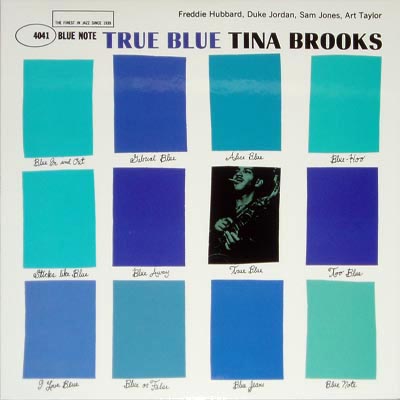
They're both in a very similar style and feature almost the same personnel - the front line of Freddie Hubbard and Tina Brooks is unchanged on both sessions. These two were recorded only about a week apart in June 1960, and it shows, in the music as well as the catalogue numbers. They're both in the classic hard-bop mould, with impeccable soloing from both Hubbard and Brooks throughout. The pieces are generally taken at a fast tempo with a swinging rhythm section, although things do slow down a little from time to time, and another couple of tracks feature the latin rhythms that were so popular at that time.

What's more, they're both available on CD too, as well as reissue vinyl like my copies (200g vinyl!). You can read about them both on the current Blue Note site, here's a link for the Hubbard and here's another for the Brooks.

You would not believe how much difficulty I've had finding information about Reid Miles, but this article on Blue Note's influence on design fills in a little background on the man.

Thursday, January 19, 2006

Hard Driving Jazz

Despite my near-addiction to avant-garde jazz, it's always great to return to some down home hard-bop. I really love some of those 1950s Blue Note sessions - Lee Morgan, Jimmy Smith et al. And Miles & Coltrane's late 50s Columbia recordings, too. So here's a hard-bop album (almost!) with only a tinge of the avant-garde about it. Yes, it's an album under the leadership of none other than...


CECIL TAYLOR & JOHN COLTRANE
Hard Driving Jazz
Gambit records 69221

Recorded 1956-1958


1. Shifting Down
2. Just Friends
3. Like Someone In Love
4. Double Clutching
5. Charge 'Em Blues
6. Song
7. Bemsha Swing
8. Azure
9. Rick Kick Shaw
10. Sweet and Lovely

PERSONNEL

Tracks 1-4 (13/10/1958)

KENNY DORHAM; trumpet
JOHN COLTRANE; tenor sax
CECIL TAYLOR; piano
CHUCK ISRAELS; bass
LOUIS HAYES; drums

Tracks 5 & 6 (14/9/1956)

STEVE LACY; soprano sax
CECIL TAYLOR; piano
BUELL NEIDLINGER; bass
DENNIS CHARLES; drums

Tracks 7-10 (14/9/1956)

CECIL TAYLOR; piano
BUELL NEIDLINGER; bass
DENNIS CHARLES; drums

This CD issue of several of Taylor's late 1950s sessions includes not only the music that made up the original release under Taylor's name (also issued later by Blue Note as 'Coltrane Time') but also goes the extra mile by including music from two other late 50s sessions featuring the misunderstood piano genius. This is actually a great place to sample Taylor for the first time if you haven't already done so - his playing - particularly his comping behind the soloists - is a little less angular than it would become, the atonality a little less pronounced. Some have even gone as far as to compare his playing on this date to that of Thelonius Monk - a pretty accurate reading of it, in my view.

In fact in many ways the original 1958 session is straightforward hard-bop. That's certainly what everyone else plays, anyway. Coltrane is on good but unspectacular form - this would be recorded at pretty much the height of his heroin addiction, so getting any performance out of him at all would have been a success. Dorham, a straight-down-the-middle trumpeter, does exactly what you'd expect, and the rhythm section do what's expected of them and no more.

Having said that, there's an exuberance about these early tracks that charms the listener. Perhaps it's just that they were all having a great time laying down some music. Maybe they were getting paid well (!). Or maybe it's got something to do with Taylor's bold approach to the piano. It sounds a little tame now, but at the time critics and audiences alike couldn't believe what he was playing - they thought he couldn't play, but this is not the sort of untutored banging away that my 2 1/2 year old son would produce if let loose with a piano. Taylor's been listening, and seems to pick the least obvious notes and chords, but they still fit harmonically. Being able to think outside of the norm and then being brave enough to go on and play it on record shows great skill and tenacity.

The other sessions on the CD are interesting too. Steve Lacy is always good to listen to, and it's interesting to hear him at the transition in his career - prior to playing with Taylor he was a noted dixieland player! Buell Neidlinger also crops up with some typically excellent bass playing, though his partnership with Taylor is not as well-formed as it would become on the Candid recordings of 1960-61.

Wednesday, January 18, 2006

Tina Brooks


A few words about the obscure, talented and tragic Tina Brooks. I first became aware of Brooks' playing through his work with Jimmy Smith - the session that produced 'The Sermon' and 'House Party' being one of his strongest. More recently I 'rediscovered' Brooks on Smith's album 'Cool Blues' where he plays some of the best hard-bop tenor solos I've had the privelege of hearing.

Brooks recorded pretty much exclusively on Blue Note during his short career. He led only 3 sessions of his own for the label, and appeared on albums by the likes of Freddie Hubbard and Kenny Burrell. Sadly, Brooks was one of the many jazz musicians of his era who succumbed to heroin addiction, and the consequent ill health and periods of imprisonment meant that he didn't record after 1961. A listen to any of his music will confirm what a loss that was to Jazz.

There's a nice tribute with discography available on the Hard Bop Homepage, have a read, it's well worth it.

Tuesday, January 17, 2006

Miles In Berlin


MILES DAVIS
Miles In Berlin
Columbia CBS (G) SBPG 62976

Recorded at the Berlin Philharmonie on September 25, 1964


1. Milestones
2. Autumn Leaves
3. So What
4. Stella By Starlight
5. Walkin'
6. Go-Go (theme)

PERSONNEL

MILES DAVIS; trumpet
WAYNE SHORTER; tenor sax
HERBIE HANCOCK; piano
RON CARTER; bass
TONY WILLIAMS; drums

This is a 1964 date at a large concert hall in (West) Berlin, another European date for Miles. So what? Well, it marks the first appearance on disc of Miles' exalted 'second great quintet', Shorter, Hancock, Carter and the incomparable Williams.

Sadly Miles comes out of the affair pretty badly. The group storm through three Davis 'classics' and two standards in a boppish vein. Miles certainly doesn't sound like he's moved on from the 1950s recordings of these pieces, and Shorter is far too much in thrall to John Coltrane to add anything original to the ensemble. It's left to the rhythm section to provide colour and excitement. The best example of this has to be 'So What' - taken at a furious tempo, the sheer presence of Davis and Shorter is overwhelming, even if what they're playing doesnt't pass muster. But listen closely and the rhythm section really shine. Carter and Williams, particularly, appear to share some sort of telepathic communication, so sympathetic are they to each other's changes. And there are a lot of changes - Williams hardly repeats himself for more than about 8 measures out of this 10 minute piece. The level of invention and stylistic flair on show form the 18-year-old drummer is simply staggering - and better was to come!

Hancock also comes out well, with some intelligently placed chords, not always conforming to the harmonies that you might expect given the slightly creaky material. Every note makes me wish I could hear the group playing one of their original compositions. I'm not sure the audience on this date agree, though, being enthusiastic in their support for Davis and Shorter while giving the rhythm section short shrift. I suppose in 1964 this sort of post-bop playing was pretty far out, though remember that this was also the year of 'A Love Supreme' and 'Four For Trane', both far more advanced than what's played here.

This has to fall into the category of yet another 'transitional' album for Davis, but as a snapshot of the genesis of one of the outstanding small jazz groups it has historical interest.

Sunday, January 15, 2006

Three For A Quarter, One For A Dime


ARCHIE SHEPP
Three For A Quarter, One For A Dime
impulse! AS-9162
Recorded February 19th, 1966 at the Both/And Club

Side 1


1. Three For A Quarter

Side 2

1. One For A Dime

PERSONNEL

ARCHIE SHEPP; tenor sax and piano
DONALD GARRETT; bass
BEAVER HARRIS; drums
ROSWELL RUDD; trombone
LEWIS WORRELL; bass

Recorded at the same gig as 'Live in San Francisco', this 1966 recording reveals the darker side of Shepp's 1966 group. This period was Shepp's angriest, anger about the plight of African-Americans that gave him such creative drive.

Sometimes, though, his creativity became blurred by his furious worldview. This album stands as one of his most passionate, but subtle it is not. The loud, intense blowing of side one of this album stands as the wildest in his discography.

The track names given above are superfluous - this is one piece of music split into two by the imperatives of the LP format. Much of side one is taken up by the type of free blowing described above - torrents of 16th notes expressing Shepp's rage at the difficulties faced by his people. As he says in the liner note for sister LP 'Live In San Francisco' - "This music has to get back to the people because it is the people who produced it". Unfortunately, few of the people would be inclined to listen to this type of free expressionism. Perhaps this failure to communicate effectively with his intended audience was one of the reasons for Shepp's exploration and subsequent appropriation of the history of black music.

Side two is a little lighter in tone; after completing his solo (running for an amazing 20 minutes!), some entertaining interplay heralds the entry of Rudd with a more lyrical effort than i'd usually associate him with. Shepp features on piano as accompaniment to Rudd, pushing him farther out with each passing moment.

This is incredible music, full of life - anger, passion, rage, and some of the most intense ever recorded by Shepp.

Tuesday, January 10, 2006

The "Very Best" Of Charlie Parker


CHARLIE PARKER
The Very Best Of Charlie Parker


1. A Night In Tunisia
2. Dizzy Atmosphere
3. Groovin' High
4. Confirmation
5. Ko-Ko
6. Mambo
7. Lament For The Congo
8. April In Paris
9. 'Round About Midnight
10. Out Of Nowhere
11. Little Willie Leaps/52nd Street Theme

PERSONNEL

CHARLIE PARKER; alto sax
Plus other uncredited musicians

The trouble with being a legend is that everybody wants a piece of you. And the trouble with being a legend in jazz is that everybody has got a piece of you. Or one of your recordings, at any rate.

So it is with Charlie Parker, who recorded prolifically throughout his short career. I guess if you've got a monstrous sax talent and a heroin habit you'll record for just about anyone offering you money. Of course the upshot of this is that your recordings end up spread far and wide, making the gathering together of a 'definitive' best-of very difficult indeed.

This album claims to be a 'Very Best Of' and falls short of that perhaps, but is worth a mention for it's first five tracks, where Bird gives a bebop masterclass together with an uncredited band comprising trumpet, piano, bass & drums. I'd love to tell you more but the sleeve gives track names and nothing else.

The music contained within is all taken from live performances. The first 5 tacks are nicely recorded (in a large venue, given the sound of the between-track applause), with Bird's alto and the bass being particularly well presented. His lines are perfect examples of what he could do at his best - fast and furious yes, but with a flow and a harmonic sense that few others could match. That he could go on in this vein for many minutes at a time, improvising chordally but never repeating himself, is truly staggering.

Sadly the rest of the album is an object lesson in exploiting a legend. The tracks are so poorly recorded as to be unlistenable, and feature an indifferent Bird who can hardly be bothered to step up and solo for more than a few bars at a time. Even the trumpeter gets in on the act, forgetting to play much of 'Round About Midnight' while the rhythm section steam on unimaginatively. What a shame we have to be presented with this when there's so much good stuff around. Calling it 'The Very Best Of' has to be against some sort of law.

For quality Parker sessions, try and get your hands on the Savoy or Dial recordings of the late '40s - nicely recorded music (for the time) and a consistently high standard of playing throughout.

Monday, January 09, 2006

Domination


CANNONBALL ADDERLEY (with orchestra arranged and conducted by Oliver Nelson)
Domination
Capitol ST 2203


Recorded 26th April 1965
Produced by DAVID AXELROD

Side One

1. Domination
2. Cyclops
3. Introduction To A Samba
4. Shake A Lady

Side Two

1. Interlude
2. Mystified
3. I Worship You
4. Gon Gong

PERSONNEL

Cannonball Adderley; alto saxophone
Nat Adderley; cornet, trumpet
Jimmy Maxwell, Jimmy Nottingham, Clark Terry, Snooky Young; trumpets
Jimmy Cleveland, Willie Dennis, J.J. Johnson; trombones
Don Butterfield; tuba
Marshal Royal, Phil Woods: alto saxophone;
Budd Johnson; tenor saxophone, clarinet, flute
Bob Ashton; tenor saxophone, bass clarinet, flute
Danny Bank; baritone saxophone, bass clarinet, flute
Joe Zawinul; piano
Richard Davis (1,2,7,8), Sam Jones (3-6); bass
Grady Tate (1,2,7,8), Louis Hayes (3-6); drums
unknown percussion (3,4,6)

15 horns playing Oliver Nelson arrangements... Sold, to the man from the Daily Jazz. How could anyone fail to like a record that features a line up like this, especially when you consider the identities of both arranger and producer? There's so much to like before you hear it that you'd be forgiven for having my reaction when I first heard about this LP. "Where's the catch?", I thought, "surely it can't be as good as it looks?".

Oh, but it is, and then some. Anyone who knows Oliver Nelson's work with Jimmy Smith will be familiar with the music presented here. Huge stabs of horn serve as a backdrop to some excellent solo blowing by the brothers Adderley. Indeed, they really do come across like brothers here, able to read each others minds through some complicated traded passages, and playing perfectly in unison at breathtaking speed on many tracks. The listener is left gasping for more at the end of each track, so fine is the playing.

The critics don't think much of this, but then they never did like music that was there just for the sheer fun of playing it. You get a real sense of fun here, that everyone was getting right into it. The ecstatic horn bursts of the two frontmen are enough to tell you that.

Unlike some of the albums I review here, this one's actually been released on CD, so you all have no excuse for not getting your hands on this wonderful album.

The Cellar Door Sessions


I've been listening to quite a bit of Miles this past couple of weeks, and have been really getting into his early 1970s music particularly. So how delighted was I to come across this gem from 1970. The music here will be familiar to anyone who's heard 'Live-Evil', being a development of Miles' fusion sound into what I'd call a 'free-funk' domain. Of particular note is hornman Gary Bartz and the searing lines of guest John McLaughlin on the final two sessions. I'll get a tune on the radio player later, but for now have a read at this review and interview with bassist Michael Henderson from allaboutjazz that really sums up everything that's good about this recording.

Saturday, January 07, 2006

Archie Shepp Live


ARCHIE SHEPP
Live At The Donaueschingen Music Festival
MPS 21 20651-3
Stereo

Recorded 21st Octobert 1967

Side One


1. One For The Trane (part I)

Side Two

2. One For The Trane (part II)

PERSONNEL

Archie Shepp; tenor sax
Roswell Rudd; trombone
Grachan Moncur; trombone
Jimmy Garrison; bass
Beaver Harris; drums

It's been a few weeks since I wrote anything about Archie Shepp, so it's time for another piece in praise of my favourite tenor player, the high priest of free jazz himself.

This 1967 live recording from the Donaueschingen Music Festival has sadly never seen a CD release - I say sadly because it's a superb album, rated by critics and fans alike as one of Shepps' finest of the 1960s. This is in no small part due to the quality of his quintet, which features the dual trombone attack of Roswell Rudd and Grachan Moncur - two Shepp regulars who were also pioneering free jazz players in their own right. Jimmy Garrison needs no introduction, having made his name as a member of Coltrane's era-defining 1960s quartet. Beaver Harris is perhaps less well known, but again stands as one of the best drummers in free jazz, appearing regularly on Shepp's recordings of this period

The music here is defiantly free - but you're definitely listening to one band. There is a musical telepathy here, with the ensemble chasing each other through the 'changes' and trading lines in a fast and furious manner. It's not just an ensemble piece - both sides of the record open with solos by key members of the group. Side One begins with Garrison reprising his role with Coltraane's quartet of opening a piece with an extended bass solo. A full 7 minutes, it lasts, 7 minutes that you will spend entranced by the possibilities of the instrument. Side 2 opens with a Shepp solo in his typical wailing, reaching style. The record features well-recorded sound that really brings out Shepp's hard edged tone to it's full effect. It also makes it simple to differentiate the trombonists - the flowing, relaxed Moncur and the angry, hard jabs of Rudd. Two trombones might seem a little unusual, but so wide is the tonal range presented that you really don't miss any higher-pitched brass.

The whole piece proceeds in a suitably engaging manner until the closing section, where the band wind down the pace and slip into a suitably unhinged reading of 'Shadow Of Your Smile', greeted warmly by the audience. Indeed, the audience reaction is so well reproduced on the record that you get the sense Shepp didn't get back to the hotel that night...

Beg, borrow or steal a copy of this record today, you will not be disappointed.

Friday, January 06, 2006

May I invite all of my readers to head on over to my new website, devoted to the high priest of free jazz himself, Archie Shepp. Regular readers will know that i'm a massive Shepp fan, so in an attempt not to swamp this blog with Shepp reviews, they'll all go up there now. I'll be kept busy - he's put out 88 albums by my reckoning, although i'm sure there'll be more. Rest assured the Daily Jazz will continue in it's present format, and some Shepp might even make it over here too...

Thursday, January 05, 2006

Cool Blues


JIMMY SMITH
Cool Blues
Blue Note 84441
Recorded April 7th, 1958
Recorded Live at Small's Paradise, New York City


1. Dark Eyes
2. Groovin' At Smalls
3. Announcement by Babs Gonzales
4. A Night In Tunisia
5. Cool Blues
6. What's New
7. Small's Minor
8. Once In A While

PERSONNEL

Lou Donaldson; alto sax (1-6)
Tina Brooks; tenor sax (1-4)
Jimmy Smith; organ
Eddie McFadden; guitar
Art Blakey; drums (1-3)
Donald Bailey; drums (4-8)

This might just be the quintessential Blue Note album - the best ever if you will. Look at that line-up. Two of the greatest names in music - Jimmy Smith and Art Blakey, paired up with the hugely underrated talent of Tina Brooks on tenor, and Lou Donaldson when he was still worth a listen. Eddie McFadden, a regular name on Jimmy Smith recordings of this era, is present also and rounds out the band for this exciting live set.

Amazingly, despite the quality of the music within, this album wasn't released at the time - it had to wait until 1980 for a release (as Blue Note LT-1054). Reproduced here is the original 1980 sleeve, at least one aspect of the album that has been improved with the current issue (as part of Blue Note's 'RVG Edition' series). Also improved for the reissue is the sound - Rudy Van Gelder has done a stunning remastering job, tidying up some of the pitching problems of the 1980 release to create a sound that puts the listener right in the heart of Small's Paradise on that April night, 1958.

One thing the 1980 issue did get right was it's tracklisting - in those pre-CD days, we were more limited in album length, so only 'Dark Eyes', 'Groovin' At Smalls', 'Cool Blues' and 'A Night In Tunisia' were included. These remain the key tracks on the expanded edition - although it's interesting to hear the trio playing alone on the final two tracks (with 'Small's Minor' being particularly special owing to Jimmy's amazing soloing - he never played a better solo), without the horns something is missing.

The first 4 tracks really are where it's at. Blues with a funkiness unmatched anywhere else in Smith's Blue Note catalogue, accompanied by some of the best hard bop tenor playing there has ever been. Oh, and some bloke by the name of Art Blakey on the drumstool. It doesn't get any better than this. What's more, unusually for a Smith record of this period, his organ sounds right on the money - none of the roller rink/seaside wurlitzer vibrato that gave a schmaltzy feel to much of his Blue Note output.

Of interest is this biography and discography of Tina Brooks. Don't just trust me - read the reviews submitted to the official Blue Note 'Cool Blues' page to find out what others think of this magnificent LP.

Wednesday, January 04, 2006

Balladyna


TOMASZ STANKO
Balladyna
ECM 1071
Recorded 1975


1. First Song
2. Tale
3. Num
4. Duet
5. Balladyna
6. Last Song
7. Nenaliina

PERSONNEL

Tomasz Stanko; trumpet
Tomasz Szukalski; tenor and soprano saxophones
Dave Holland; bass
Edward Vesala; drums

Another ECM album for today, this is Tomasz Stanko's first recording for the label and sees him paired up with the ECM heavyweight rhythm section of Holland and Vesala, and the less well known but equally talented Szukalski on saxes. In many ways this is a fine companion record to yesterday's Dansere, the classic 1975 session from Jan Garbarek & Bobo Stenson's quartet.

Like it's companion, this album features two principal sounds - driving, melodic jazz which nods at Stanko's free-jazz roots (with Krystof Komeda) and otherworldly, almost ambient compositions, where the bass and drums drift, providing colour and texture to the sound but little in the way of propulsion. When done well, as it is here, this can be intoxicating, and tracks like 'Balladyna' showcase this effect very well indeed.

I'll always be a fan of a more propulsive rhythm section, though. 'First Song' is an excellent example of this. From it's bass led opening (recalling Pharoah Sanders' Black Unity) through the horn theme to it's dramatic percussive closing section the piece is carried along by Holland and Vesala. Stanko sounds like a whole orchestra of trumpets, somehow (some studio trickery, maybe - but then ECM didn't go in for that sort of thing) and plays with enormous passion and intensity. If only the whole album could be like this...

tomaszstanko.com, his official site, is well worth a look - you can listen to music from throughout his career as well as find out more about this excellent trumpeter. Nowadays he's moved to playing in a very Miles Davis-influenced post-bop style, as shown on his recent UK tour. I was lucky enough to get a ticket for his Birmingham show, and he kept us all entertained with 2 hours plus of moody post-bop blues. The following is an extract from a review of another show on that tour, from the Financial Times' arts section, giving you a flavour of the music presented.

"The penultimate gig of the festival, referencing Europe and the rhythms of three continents, opened with arco bass, swishing cymbals and haunting trumpet, but veteran Polish trumpeter Tomasz Stanko and his young acoustic rhythm section soon changed the pace to deliver a fine set of acoustic modern jazz, loosely modelled on the Miles Davis bands of the 1960s. Stanko's focused, breathy sound, spacious phrasing and occasional free-form flourish are all his own. Ebullient pianist Marcin Wasilewski matched the leader."

Tuesday, January 03, 2006

Dansere


JAN GARBAREK/BOBO STENSON QUARTET
Dansere
ECM 1075
Recorded 1975


Side One

1. Dansere
2. Svevende

Side Two

1. Bris
2. Skrik and Hyl
3. Lokk
4. Til Vennene

PERSONNEL

Jan Garbarek; saxophones
Bobo Stenson; piano
Palle Danielsson; bass
Jon Christensen; drums

Recorded in 1975, this album sees the Norwegian hornman (and the ECM label) at a junction. Prior to this for Garbarek were such Ayler/Coltrane influenced albums as the unsettling 'Triptykon', to follow were a slew of new-age easy listening records, with 1976's 'Dis' being a prime example. Here, though, Garbarek finds the middle ground betwen these extremes and presents an album of inventive jazz that's also accessible and easy on the ear.

Recorded in partnership with the great Norwegian pianist Bobo Stenson, this is as much Stenson's album as it is Garbarek's; perhaps it is this influence that gives the recording it's character. Lead track 'Dansere' sums up what the album is all about. It opens with Garbarek's soprano trills, sounding uncannily familiar to Coltrane's work on that instrument. I'm reminded, for some reason, of the opening to 'A Love Supreme' - that's the kind of exalted company this record keeps, in my opinion.

The theme, with it's variations on an arpeggiated line is stated as Stenson provides a backdrop that is at once an aid to Garbarek's horn and a melody in it's own right. Stenson is melodic throughout, even when the music is at it's most searching. The rhythm section takes it's lead from Stenson, providing creativity and support simultaneously. As the piece progresses, Stenson begins to exert his influence more strongly, until at around 6 minutes his is the only voice heard. This allows him to state a new theme, one with more rhythmic impetus that what's come before. Soon the rest of the band fall in, and we're into much more conventional territory. Stenson recedes a little, although is still a strong presence behind Garbarek's impassioned wailing.

The bass of Palle Danielsson is heard prominently here too, and provides strong support to Stenson's and Garbarek's increasingly wild flights of imagination. Danielsson also exhibits a strong melodic sensibility, trading places with Garbarek and spending some time as lead soloist with the hornman comping on the theme in the background. Danielsson's solo really mars the end of the piece, with the theme returning for a short time prior to things being wound up.

The track leaves an impression of great beauty with the listener, helped in no small part by the typically excellent recording quality of the release. The other tracks do pale a little in comparison to 'Dansere' but they fall into two main categories - more of the same, and some of those wonderfully drifiting pieces that crop up from time to time on ECM - those where bass and drums are prominent, but not in their ususal role of providing a propulsive beat. Instead they are played as solo instruments, providing layers of sound to the piece and giving an impression of formlessness which, at it's best, can sound liberating.

Wikipedia has a brief biography of Garbarek and an even briefer one on Bobo Stenson. Aside from the occasional discography there's not a lot of information about Garbarek on the web, although this review of his 'selected recordings' album from allaboutjazz.com gives a good impression of what his music is all about.

Monday, January 02, 2006

Chasin' The Jazz Gone By


THE FIVE CORNERS QUINTET
Chasin' The Jazz Gone By
Ricky-Tick Records RTCD01

Recorded 2005


1. Blue Cycles
2. Trading Eights
3. Interlope
4. This Could Be The Start Of Something
5. Straight Up
6. Three Corners
7. Case Study
8. Lighthouse
9. Before We Say Goodbye
10. Unsquare Bossa
11. The Devil Kicks
12. Jamming (with Mr. Hoagland)

PERSONNEL

MARK MURPHY; vocals (4, 9 & 12)
OKOU; vocals (1 & 7)
EERO KOIVISTOINEN; tenor sax
TIMO LASSY; tenor sax, baritone sax, flute
JUKKA ESKOLA; trumpet & flugelhorn
SEVERI PYYSALO; vibes
MIKAEL JAKOBSSON; piano
KIM RANTALA; piano
ANTII LÖTJÖNEN; bass
TAPANI NEVALAINEN; bass
TEPPO MÄKYNEN; drums & percussion
PEKKA JACLIN; drums & percussion
ABDISSA ASSEFA; percussion

For the new year, here's an album which is bang up-to-date. The Five Corners Quintet are a loose collective of (at times more than) 5 players from Helsinki, Finland. They bring a modern production and sensibility to classic 60s straightahead and latin jazz, melding that music with electronics to create something that suggests the past without being a mere pastiche. They've also built up a fearsome live reputation as one of the best straightahead acoustic jazz bands playing at the moment.

The vocal tracks are good, with vocalists Okou and Mark Murphy doing a fine job, but the real standout tracks are the instrumental cuts. 'Trading Eights' is a good example of what they're all about. The latin feel of the piece is complemented by the sequenced rhythm section, on top of which the horns exchange thematic lines. The feel is very modern - it could almost have been entirely sequenced - but any impression that this is just studio trickery is lost once the soloists get going around halfway through the track. Most of the other tracks go along in a similar vein, the overall effect being uplifting and enjoyable. Sometimes that's just what you need - and even if this isn't a showcase for the most radical jazz playing around, it still comes highly reccomended.

You can read a bit more about the band at their (small) official site.

Sunday, January 01, 2006

Happy New Year from The Daily Jazz

The Daily Jazz would like to wish you all a very happy 2006. For the new year, we also have a new look - let me know what you think!

On a jazz note, today I have been mostly listening to... Miles Davis' 'The Complete Blackhawk Sessions', an outstanding live recording from 1961 featuring his 'transitional' quintet on smokin' form. It stretches over 4 CDs and comprises 4 sets - 2 from each night of the engagement. On stage with Miles for these Friday & Saturday night San Francisco dates are Hank Mobley on tenor, Wynton Kelly on piano, Paul Chambers on bass and Jimmy Cobb on drums. No Coltrane - so what! Mobley is more than up to the job and matches Miles note for note on his solos. He has a lovely fluid style, too, with none of the abrasive textures that sometimes made 'Trane hard work. Kelly, Chambers and Cobb had of course played with Miles on previous dates, and are made to work hard by the furious tempos of some of the pieces played here (especially the opening 'Oleo' and Saturday night's 'So What'). Monk's 'Well, You Needn't' is given a thorough going over late on in Saturday's first set, and very good it is too.

This is Miles at his best, and well worth 4 hours of anyone's time to listen to.