Thursday, November 24, 2005

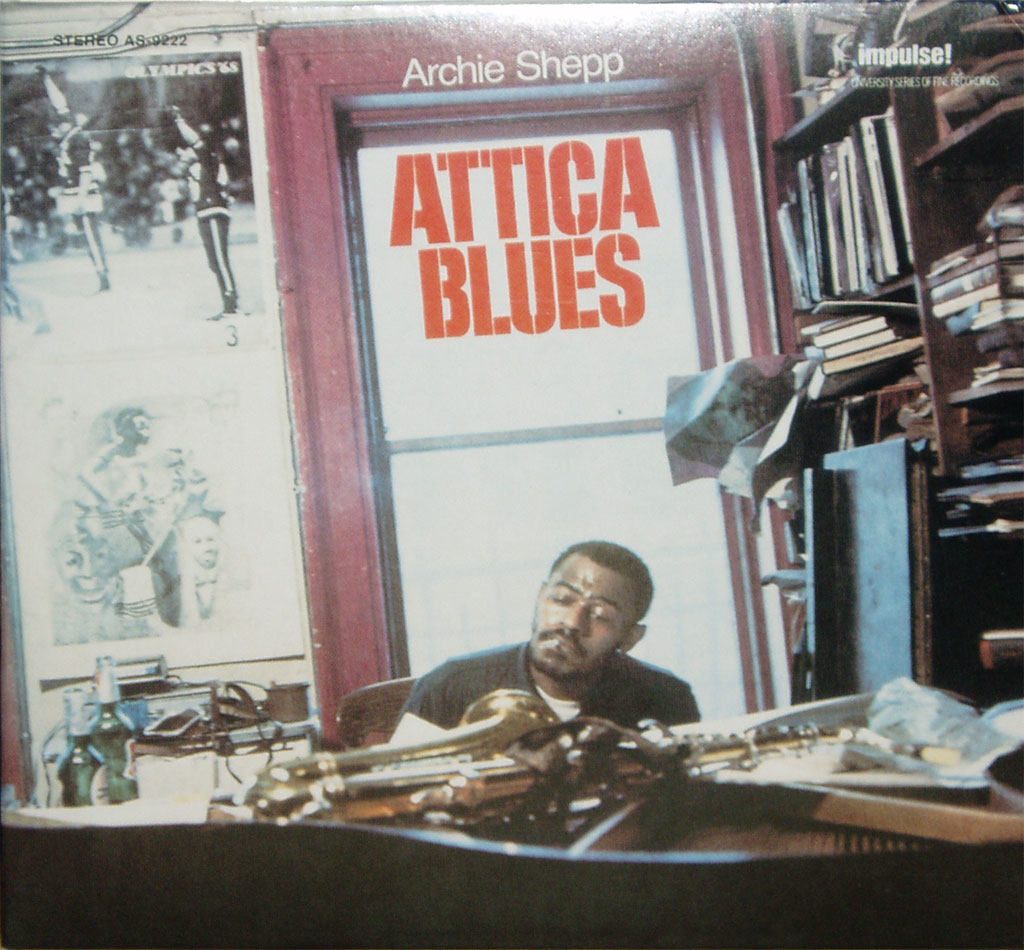
Attica Blues


ARCHIE SHEPP

Attica Blues

impulse! AS-9222

Recorded 1972

1. Attica Blues
2. Invocation - Attica Blues
3. Steam, pt. 1
4. Invocation to Mr. Parker
5. Steam, pt. 2
6. Blues for Brother George Jackson
7. Invocation - Ballad for a Child
8. Ballad for a Child
9. Goodbye Sweet Pops
10. Quiet Dawn

Collective Personnel

ARCHIE SHEPP; tenor sax, soprano sax
WILLIAM KUNSTLER; narration
BARTHOLOMEW GRAY; narration
WAHEEDA MASSEY; vocal (on 'Quiet Dawn')
JOE LEE WILSON; vocal (on 'Steam')
HENRY HULL; lead vocal (on 'Attica Blues', 'Ballad for a Child')
JOSHIE ARMSTEAD; backup vocal
ALBERTINE ROBINSON; backup vocal
CAL MASSEY; flugelhorn
ROY BURROWES; trumpet
MICHAEL RIDLEY; trumpet
CHARLES McGHEE; trumpet
CLIFFORD THORNTON; cornet
CHARLES STEPHENS; trombone
KIANE ZAWADI; trombone
CHARLES GREENLEE; trombone
HAKIM JAMI; euphonium
MARION BROWN; alto sax, bamboo flute, percussion
CLARENCE WHITE; alto sax
BILLY ROBINSON; tenor sax
ROLAND ALEXANDER; tenor sax
JAMES WARE; baritone sax
LEROY JENKINS; violin
JOHN BLAKE; violin
LAKSHINARAYANA SHANKAR; violin
RONALD LIPSCOLM; cello
CALO SCOTT; cello
JIMMY GARRISSON; bass
WALTER DAVIS JR.; electric piano
CORNELL DUPREE; electric guitar
GERALD JEMMOTT; fender bass
ROLAND WILSON; fender bass
BEAVER HARRIS; drums
OLLIE ANDERSON; percussion
JUMA SATAN; percussion
NENE DeFENSE; percussion
ROMULUS FRANCESCHINI; conductor

‘Attica Blues’ was Shepp’s response to the Attica prison riots of 1971, where over 40 inmates and prison officers were killed when the national guard stormed the jail to put an end to a siege started by the prisoners as an attempt to improve the standards of living in the prison. As a human being, Archie was profoundly angry at this example of man’s inhumanity to man, and set about transforming his rage into recordings that stand today as some of the greatest of his career.

Perhaps in an attempt to get his message heard, but perhaps also as a product of the natural evolution of his sound, ‘Attica’ is further from his free jazz roots than any of his recordings up to 1972. Or at least it seems to be – there are moments of very clever subversion, as we shall see.

First up, though is the title track, one of the triumvirate of great tracks that makes this album special (the others being ‘Steam’ and ‘Blues for Brother George Jackson’). From the off, you can see how far Shepp’s sound has come, as the piece opens with a blast of funky wah-wah guitar before a rousing female vocal takes the roof off. This is the hardest funk in Shepp’s discography, and it’s a killer. The lyric perfectly encapsulates the anger felt at what happened in Attica; “I got a feeling that something ain’t goin' right/and I’m worried ‘bout the human soul”.

‘Steam’, in contrast, is a much mellower affair, sounding at first listen like something straight out of Duke Ellington’s big band. The lyric seems to speak of love, and as the strings tug at the heartstrings, you would be forgiven for thinking this was a commercial ballad. But listen closely, and there is a definite undercurrent of subversion here. Those strings? Do they seem out of tune from time to time? But wait – there’s a pattern here – yes, it’s free jazzery rearing it’s head, but subtly. Also subtle is Shepp’s soprano playing, buried low in the mix beneath the vocalist, but still free. This is, to me, the moment of genius on this album – taking a sentimental ballad and loading it with furtive free jazz references in an attempt to unsettle the mainstream audience. Unfortunately, it’s unlikely that mainstream America had the opportunity to hear this recording at the time.

The other great piece of music here, ‘Blues for Brother George Jackson’ is a raunchy slice of R&B/funk with a killer horn riff (George Jackson was an influential figure in the Black Panthers, which he joined in prison prior to his death in 1971 - read more here). These players can turn their hands to any musical style, such is the talent on show here. Listened to alone, ‘Blues…’ is incredible, but it rather pales next to the preceding tracks. Allaboutjazz.com declare it to be “one of jazz’s finest moments caught on magnetic tape”, and it is good, just not that good.

Unfortunately, the remainder of the album is forgettable – lots of lush strings and little blowing. ‘Quiet Dawn’ closes the album out with some interesting soul playing, but the vocal of Cal Massey’s 7-year-old daughter Waheeda spoils it somewhat. Mind you, her weak, faltering voice does have a ghostly quality all of it’s own which gives the whole piece an uneasy feel – perhaps this was the intention all along.

Shepp’s next album, ‘The Cry of my People’, takes the whole sentimentality thing even further, but thankfully a lot more successfully than the closing tracks of ‘Attica’, and is another recommended album.

Wednesday, November 23, 2005

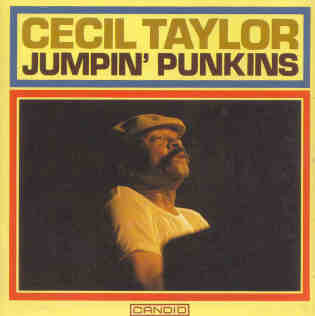
Jumpin' Punkins


CECIL TAYLOR
Jumpin' Punkins
Candid 9013

Recorded January 1961


1. Jumpin' Punkins
2. O.P.
3. I Forgot
4. Things Ain't What They Used To Be

PERSONNEL

Cecil Taylor: piano;
Archie Shepp: tenor saxophone;
Billy Higgins: drums;
Buell Neidlinger: bass;
Clark Terry: trumpet;
Roswell Rudd: trombone;
Steve Lacy: soprano sax;
Charles Davis: baritone sax

I've always been intrigued by the idea of Cecil Taylor, but have never really known where to start. Like other so-called 'free jazz' artists, the critics are terrified of him, writing about how difficult they find the music, but then handing out 5 star ratings just in case they're missing out on something. Usefully, Cecil recorded several sessions with other jazz giants, notably John Coltrane (recently reissued on Gambit under the title 'Hard Drivin' Jazz'), and here, a young Archie Shepp. In fact it was Taylor who gave Shepp his first big break, and over the time they worked together, Shepp absorbed many of Taylor's musical ideas which he then took forward into his career as leader.

Shepp is not the only outstanding sideman on this album. Steve Lacy's contributions are minimal but excellent - it still amazes me that he went straight from working in a dixieland style to a session with players such as this. Roswell Rudd is excellent as ever, and of all the players here, is probably the only one who really matches Taylor for sheer invention.
Taylor's playing really is the big story on this album. He dominates the recording in a way that few musicians are able to do. It all gets off to an easy start with "Jumpin' Punkins", with it's fairly conventional post bop sound. Cecil's playing is certainly straining at the outer limits of the form, but stays generally well-behaved throughout. Shepp gets significant space here and shows himself to be a competent tenor player, very much in the Coltrane mould, but really nothing special. It's fun to listen to Cecil's solo around the 5 minute mark - a fairly dissonant effort, though not as far out as some of the other tracks on offer here - and then hear Shepp try to follow. It's as if something is holding him back from going totally out. We know from later works how indebted Shepp was to jazz tradition, and perhaps this is the strong pull of the weight of history keeping a young player in check. We can only be thankful that Shepp stayed with Taylor for a little longer, time enough to mature and develop his own unique sound.
"O.P." comes next, and is basically a trio piece with Taylor, Higgins and Neidlinger. Despite the fairly conventional bass and drum introduction, Taylor's playing is in a different league to the title track from the off. He slips quietly into an extended exploration of the possibilities of the keyboard - there is atonality here, he plays often in free time, but yet it all makes sense. The rhythm section keep driving away, and it always seems to fit, no matter how far outside Taylor tries to get. You can understand why critics and fans alike would have been aghast at the time, as this sounds like nothing that had come before in piano playing.

"I Forgot" gives Shepp a chance to shine again, and this time there is a glimmer of the sort of sound that he would be producing on a regular basis just a few years hence. The tone is instantly recognizable, being big and brazen (too much for a ballad, like this?) and his use of overtones is familiar. The second half of the tune is given over to Taylor, until he and Shepp duet towards the end, creating one of the album's finest moments.

The closing "Things Ain't What They Used To Be" gives the whole ensemble a chance to blow again. Taylor initially sounds like he's playing in a different band to the rest of them, but on closer inspection it all fits into place. This track is also where Rudd gets his chance to show off, and follows Taylors lead in playing exactly what he wants to without being limited by traditional jazz constructs. Of course Taylor is ever present, with his unexpected interjections and sharp stabs of dissonance lending an uneasy feel to the piece. The track closes with a brief period of ensemble playing where everyone manages to be totally free yet completely together at the same time.

Remarkable music.

Cecil Taylor Links

The Music Of Cecil Taylor - worth a read if you can stomach unformatted text on a green background
Cecil Taylor Sessionography - this looks to be exhaustive, the level of detail is certainly very high (much higher than the production values, anyway!)
A brief biography - courtesy of Wikipedia

Tuesday, November 22, 2005

All About Archie


To celebrate the 'launch' of my new website featuring the wonderful Archie Shepp (not much content yet... perhaps I could celebrate having the idea of creating an Archie Shepp site?) here are a few interesting things to read about him. He has some interesting opinions on matters such as why Europeans seem to 'get' his music, and why young people are no longer listening to jazz. Best of all, he says exactly what he wants, which is almost unheard of these days but a quality that I have the greatest admiration for.

A dialogue with Archie Shepp - an interview from his official site. Lengthy, but well worth a read.

Another interview - from allaboutjazz.com, covers some of the same ground as above, but a bit shorter for the terminally busy.

Archie's Wikipedia entry - the condensed biography/discography for the even busier!

Another interesting interview - though for the wrong reasons. This has been translated from the original French by google. "They were thus autodidacts". "I also smell myself at ease". Righto.

A review of a 2003 show - seems like he's still got it.

Two reviews of the seminal 'Attica Blues' - here and here.

A comprehensive discography, from the official site.

And finally, did you know that Archie played with Frank Zappa? Nor did I, but it's on the internet, so it must be true!


Monday, November 21, 2005

Pharoah's Elevation


PHAROAH SANDERS
Elevation
impulse! AS-9261

Recorded September 1973

1. Elevation
2. Greeting to Saud (Brother McCoy Tyner)
3. Ore-Se-Rere
4. The Gathering
5. Spiritual Blessing

PERSONNEL

PHAROAH SANDERS; tenor sax, soprano sax, bells, shaker, percussion, vocal
MICHAEL WHITE; violin
JOE BONNER; piano, harmonium, cow horn, wood flute, percussion, vocal
CALVIN HILL; bass, tamboura, vocal
LAWRENCE KILLIAN; bell tree, congas, percussion, vocal
JIMMY HOPPS; percussion
KENNETH NASH; percussion
JOHN BLUE; percussion, vocal
MICHAEL CARVIN; drums, percussion, vocal
SEDATRIUS BROWN; vocal

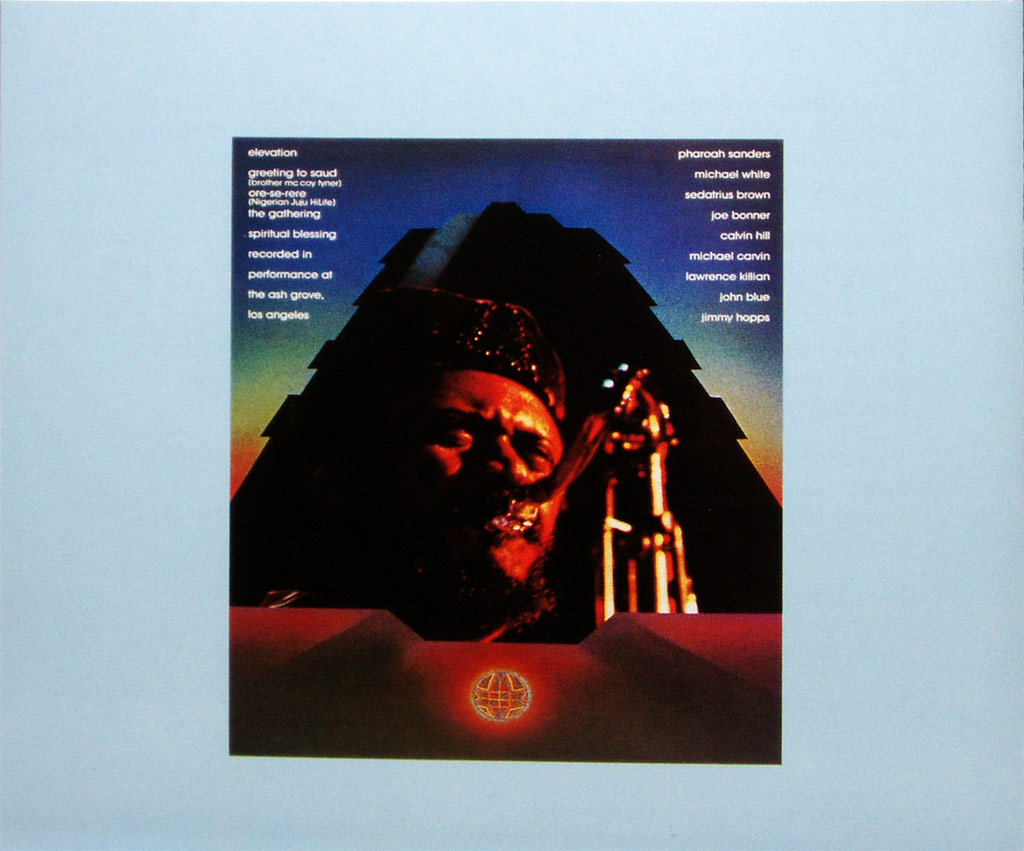
The thing that constantly amazes me about Pharoah Sanders is just how many great records he put out - and how obscure some of them are. Hardly a day goes by without me finding yet another record by him that I've never heard of. That's exactly what happened with this album, which has recently been reissued on CD by Verve as part of their ongoing rerelease program of classic impulse! recordings. The sound of the CD is lovely, but they have skimped a bit on the packaging, unfortunately - no more lovingly assembled gatefolds with booklets replicating the original liner notes and photographs, just a few words on the back and some lineups. Still, you only have to listen, and you can imagine the scene in the studio. Or should I say on stage, as much of this album was recorded live - indeed tracks 1 and 3-5 were recorded live at the Ash Grove in Los Angeles on the 7th and 9th September 1973. Track 2 was recorded a few days later in the studio.

The title track is another of Pharoah's finest, and is a piece of funky free jazz in the vein of 'The Creator has a Master Plan' or 'Black Unity'. In fact, like those tracks, it once again borrows heavily from John Coltrane's 'A Love Supreme' for it's main theme. This gets passed around and reinterpreted by the whole band, the intensity increasing all the time, until around the 6 minute mark when all hell breaks loose. Literally. It's a squall of noise, with a man screaming. You feel as if you've reached some kind of barrier that you have to break through - and you do, to a fantastic place where the whole band with the exception of Calvin Hill have laid down their instruments, picked up the first pieces of percussion they could lay their hands on, and started playing in a weird, polyrythmic, very free percussion and bass 'solo' which winds on for several minutes before Pharoah's horn brings you back to the real world. The effect is simply stunning on record. I can only dream about how amazing it must have sounded in performance.

'Greeting to Saud' is in a more meditative vein, and the uplifting 'Ore-Se-Rere' prepares you well for the album's other treat, 'The Gathering'. It's sharp edged and highly melodic piano intro gives no hint of the sonic mayhem that is to come. Somewhere around 4:30 there is a subtle shift in style towards free improvisation, which culminates in some of the most intense, honking, squealing playing of Pharoah's career, suitably backed up by another display of intense power from Joe Bonner's piano. Bonner's is another obscure name, but his playing here is first class - at turns precise and melodic, at times modal, and at others frighteningly intense. Again, bass and percussion follow the freedom, with Calvin Hill's playing being similarly inspired as the title track. He puts me very much in mind of Cecil McBee, another compatriot of Sanders from his days playing with Alice Coltrane. Who comes to mind when listening to the closing 'Spiritual Blessing', with it's drone provided, i think by the harmonium playing of Bonner and it's generally blissed-out mood.

It's worth checking out allmusic's review of this album, if only for their inspired invention of the verb "to choogle", which appears to mean "to head off on one in a free jazz style". Also of note is this sessionography of what Sanders was up to in 1973 (and other years, for that matter). These 7th-9th September sessions have obviously been recorded for this album to exist - how about someone releasing the 48-minute version of 'Elevation'? Go on, impulse!, I dare you!

Sunday, November 20, 2005

Blue Train


OK, so i've had a look at the preceding posts, and it's fair to say that there are one or two obscurities in my jazz collection judging by the reviews i've been writing. So, then - a jazz classic for today...

JOHN COLTRANE
Blue Train
Blue Note 53428
Stereo

Recorded September 15th, 1957

1. Blue Train
2. Moment's Notice
3. Locomotion
4. I'm Old Fashioned
5. Lazy Bird

PERSONNEL

LEE MORGAN;
trumpet
CURTIS FULLER; trombone
JOHN COLTRANE; tenor sax
KENNY DREW; piano
PAUL CHAMBERS; bass
PHILLY JOE JONES; drums

It doesn't get much better than this. John Coltrane only ever recorded one session as leader for Blue Note, and what a session it was. He lined up a veritable who's who of hard bop and set off on a musical journey which stands as one of the finest recordings of his career, as well as one of the finest albums Blue Note has ever released.

If I can get personal for a moment. This was essentially the album that got me into jazz, and it's all my dad's fault. I don't remeber quite when it was, but Blue Train arrived in the house around the same time as his first CD player, and it would be fair to say that, had it been on vinyl, we would have listened to it until the groove was worn out. Sunday mornings, especially, for some reason, were Coltrane time, and we'd both sit there open-mouthed, marvelling at the incredible display of talent on show here.

You really do get it all. This is a record where the whole band get a chance to stretch out. You get the feeling that there was little planning when this was cut; once the theme was dispensed with, the soloists would blow for all they were worth in a bid to outdo the previous player. The sleeve note suggests that there's some free blowing going on here - and there is, in the 1957 sense - whilst the music is firmly in tempo and the harmonic structures of the pieces are adhered to (if a little stretched by Coltrane from time to time), the whole band uses that backdrop as a chance to explore their instruments. It's a bit like what I imagine a club gig of the time would have been like - fast tempos and even faster playing, with a definite air of competition between the soloists.

First prize goes to the title track - it's such a shame it was sequenced first as the album never quite reaches those dizzy heights again. The theme is well known now, and Coltrane's statement of intent that begins his first solo is followed by him launching into the sort of exploration that he's famous for, but that just didn't happen on hard bop records in those days. The band soon bring him back to earth (briefly), but the damage is done - you know by now that you're in for something special. Special mention must also be made of Lee Morgan, who is outstanding here. Only 19 years old, his playing is second only to Trane's for inventiveness. Curtis Fuller is also on good form here with some considered playing. And of course, Paul Chambers and Philly Joe Jones, the rhythm section made in heaven. I've recently discovered another CD featuring the combination of Chambers, Jones and Coltrane (have a look at this) which I highly reccomend.

This is one of those records that the critics love, and for once I'd have to agree - it really is fantastic and no jazz collection should be without a copy. Bop fans will love it's adherence to the hard bop principles, free jazz fans will see it as a vital stepping stone to the Coltrane material of the 1960's - it's worth remembering that he didn't play like this for long - soon after recording this LP he was back in Miles Davis' band playing modal jazz, and then he headed off in a freer direction with his classic 1960's quartet.

Read more about this album at allmusic, allaboutjazz and inkblot.

Saturday, November 19, 2005

Archie Shepp - Black Gypsy


ARCHIE SHEPP
Black Gypsy
America 30 AM 6099
Stereo

Recorded November 9th, 1969

Side 1

1. Black Gypsy

Side 2

1. Epitaph Of A Small Winner
a. Rio de Janeiro
b. Casablanca
c. Chicago

PERSONNEL

ARCHIE SHEPP; soprano sax
SONNY MURRAY; drums
CLIFFORD THORNTON; trumpet
CHICAGO BEAUCHAMP; vocals
JULIO FINN; harmonica
NOAH HOWARD; alto sax
LEROY JENKINS; viola
DAVE BURRELL; piano
EARL FREEMAN; bass

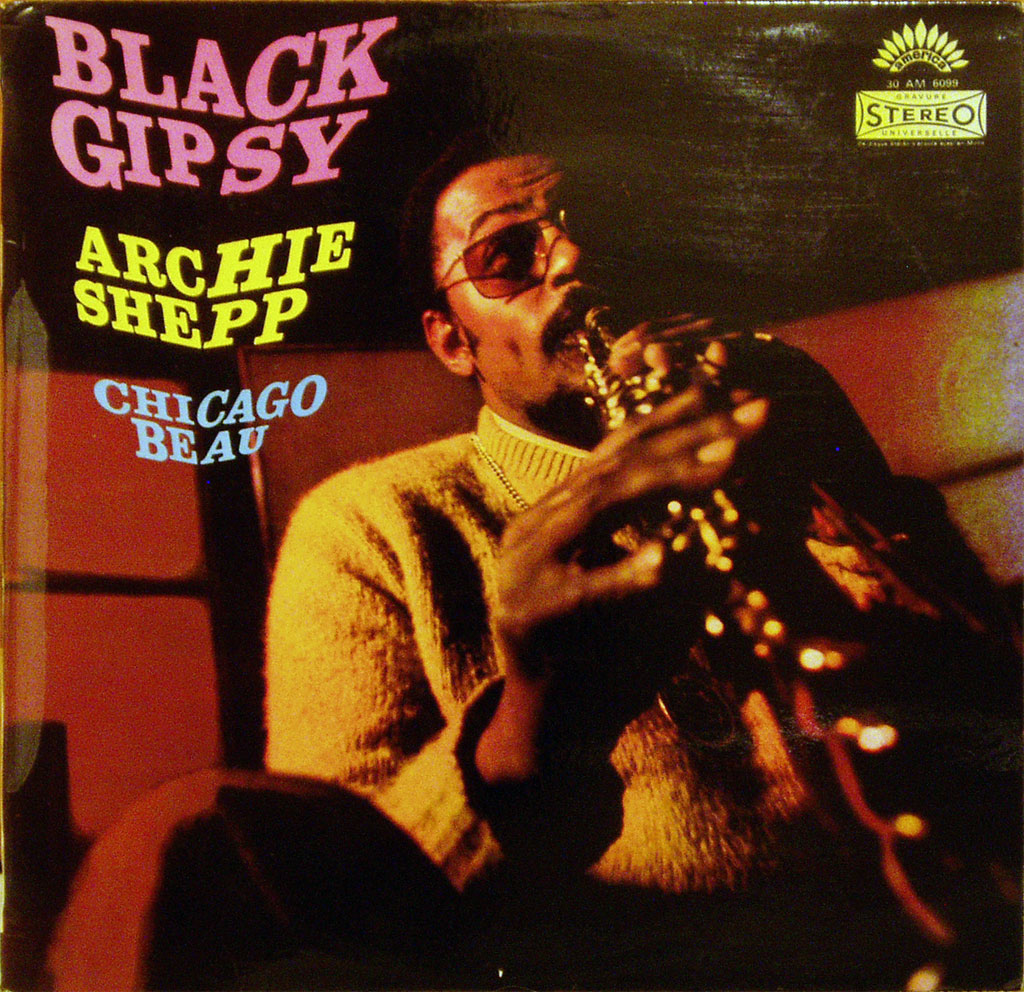
Archie Shepp never stood still. Having spent most of the 1960's earning a reputation as a leading free player, he both consolidated his position and broke new ground with this recording from the tail end of the decade. This copy of that LP is the original French issue on the America label, which has been reissued recently on Free America.

This album is one of his first to head in the direction he would take later, in the 1970's, and acts as a useful signpost for those trying to trace the route from his powerful free jazz statements of the preceding decade to the bluesy, heavily orchestrated "Attica Blues" and "The Cry Of My People". Although both sides of this album stay firmly in the free jazz idiom, the blues are beginning to creep in, along with other influences - notably African on side 2. This movement away from free jazz probably began in 1966, with "A Portrait of Robert Thompson (as a young man)" from that year's "Mama Too Tight", an 18 minute journey through the history of black music, from Africa to New Orleans seen through the eyes of the high priest of free jazz.

'Black Gypsy' starts out with the plaintive violin of Leroy Jenkins, then the rhythm section set up a steady groove before the ensemble enter, piece by piece. Shepp is immediately noticeable on his entry, being featured here on soprano throughout. The playing is free, certainly, but there's not the confusion of noise that sometimes exists. It's always clear who's the soloist, with the other players providing back-up from time to time. Sometimes two soloists trade lines in a call and response fashion, sometimes they play simultaneously; but the playing always feels well organised. The track builds continuously throughout it's 26 minutes, with more and more players coming on stream, and the incessant and increasingly urgent groove backing it all up. Interspersed throughout the piece is the conscious poetry of Chicago Beauchamp, lending the music yet more urgency with his exhortations on love and freedom.

Side 2 takes us on a round the world trip of the mind, starting out in much the same vein as 'Black Gypsy' before picking up a hint of samba, morroccan gnawa, and ultimately blues, as evinced by Julio Finn's harmonica riff on the closing 'Chicago' section. It's an incredible feeling, listening to the band build from meditative free jazzery in the morroccan section to the climax of raw earthy blues. You'd be forgiven for thinking that another band had slipped onto the record while you weren't looking, but it's this section more than any that points forward to Shepp's great works of the 1970's.

Ultimately, as with most other Shepp LP's, there's much to enjoy here with great performances from all concerned. Ignore the critics, who just didn't 'get' this fine LP, and go and out and grab a copy. There's no excuse now that it's available on CD, get it here.

Friday, November 18, 2005

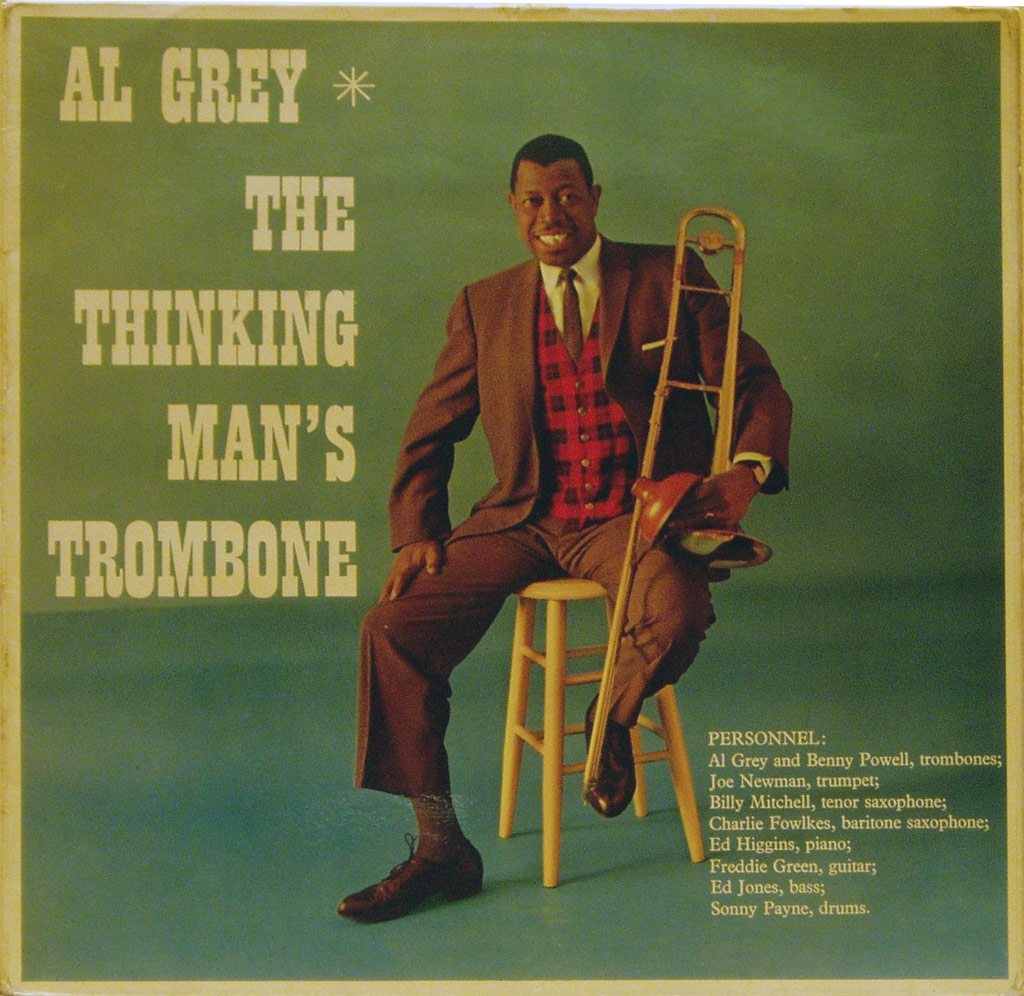
Al Grey - The Thinking Man's Trombone


AL GREY
The Thinking Man's Trombone
Pye Jazz NJL31
Recorded August 23rd-25th, 1960

Side One

1. Salty Papa
2. Don't Cry Baby
3. Stranded
4. Rompin'

Side Two

1. King Bee
2. When I Fall In Love
3. Al-Amo
4. Tenderly

Personnel

AL GREY; trombone
BENNY POWELL; trombone
JOHN NEWMAN; trumpet
BILLY MITCHELL; tenor sax
CHARLIE FOWLKES; baritone sax
ED HIGGINS; piano
FREDDIE GREEN; guitar
ED JONES; bass
SONNY PAYNE; drums

Wah-Wah. It's a staple of several musics, but wasn't really in use in jazz in 1960. It might be best known as a guitar effect, but brass players had been using it since the 1920's (see this excellent article on wikipedia). And it's the first sound Al Grey makes on this great 1960 LP. This seems to be a UK release, the US version being on the Argo label, according to the sleevenotes.

At the time of recording, Al was playing with Count Basie, so no prizes for guessing what kind of a sound this record has. Big stabs of horn! Swinging tempos! Great tunes! It's also got some first class arrangements courtesy of Nat Pierce (Basie's pianist at the time). And of course, Al's trombone. He's got a great sound, a huge bear hug of a noise that shines through the crackles on my beat-up vinyl. And that wah-wah effect! It's so simple, basically created by wiggling a mute around in the horn, but it sounds sooo good. It's a real shame the guitarists picked up on it, can you think what funk would sound like if composed entirely of trombones...

After reading the above, you'd be forgiven for thinking that this is yet another swing LP, but there's much more to it than that. The overall feel is much more boppish, with lots of improvisatory play by the whole band, especially on side two's opener, "King Bee". It's not a million miles away from the up-tempo numbers on Miles Davis' "Birth of the Cool", in fact. Powell more than keeps up with Grey's trombone playing, but with a much more regular sound - there's certainly no difficulty in telling those two apart.

Al Grey first came into my life as part of an outstanding Bobby Hutcherson CD which i'd highly reccommend to anyone who likes either the trombone or vibes in jazz. If you want to read more about Al, check out this biography.

Thursday, November 17, 2005

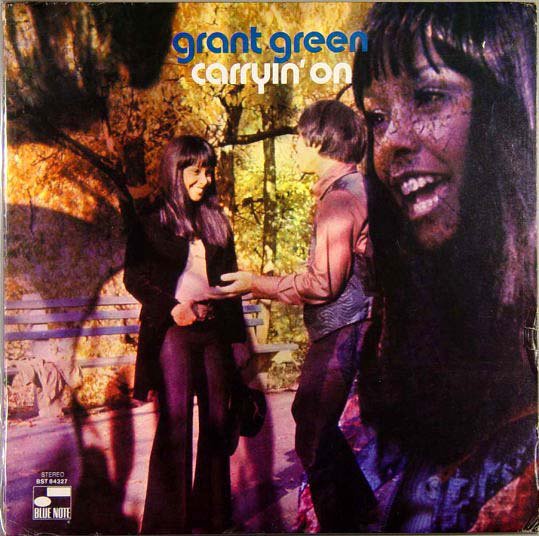
Carryin' On with Grant Green


GRANT GREEN
Carryin' On
Blue Note BST-84327

Recorded 1969

1. Ease Back (5:43)
2. Hurt So Bad (6:45)
3. I Don't Want Nobody To Give Me Nothing (Open Up The Door I'll Get It Myself) (6:07)
4. Upshot (9:58)
5. Cease the Bombing (8:50)

Personnel

Grant Green: Guitar
Claude Bartee: Tenor Sax
Willie Bivens: Vibes
Clarence Palmer: Electric Piano
Earl Neal Creaque: Electric Piano (on “Cease the Bombing” only)
Jimmy Lewis: Fender Bass
Idris Muhammad: Drums

Imagine being Grant Green in 1969. So long the second best, second most well-known, second most successful jazz guitarist (behind Wes Montgomery), and now thrust into the limelight as Wes's successor following his untimely death in 1968. How would you react? Carry on playing straight soul jazz as you had been doing, or attempt to broaden your appeal?

Grant decided to do the latter, and in the process delivered one of his best recordings, as well as one of the finest jazz-funk records of all time. He achieved this by incorporating a strong funk element into his music, based on his appreciation of artists such as James Brown (marked by his cover of '
I Don't Want Nobody To Give Me Nothing (Open Up The Door I'll Get It Myself)'). This change in his sound didn't sit well with some - the jazz purists deriding it as 'selling out' - but to my ears, Green's playing sits well with the laid-back funk backdrop created by Jimmy Lewis and the ever-wonderful Idris Muhammad. I've always admired Green's light touch and 'slippery' lines that seem to glide over the rhythm section, and this quality is enhanced by the elastic properties of the funk.

The album has two standout tracks - a cover of the Meters' 'Ease Back' (which also features some great playing by the relatively unknown tenor, Claude Bartree) and
Earl Neal Creaque's 'Cease The Bombing'. The latter stands as one of Green's more overtly political pieces, with it's title directly referencing the war in Vietnam. It's also one of his best - a melodic slice of laid-back funk whose mood of relaxed contemplation (and catchy tune) perfectly fits the anti war sentiment. Green was to continue in this vein for the rest of his career, in albums such as 'Green Is Beautiful' and 'The Final Comedown'.

Looking for a comprehensive Grant Green discography? You could do worse than start here. This site has a nice biography as well as details about many of his recordings. It's also had the seal of approval from Grant Green Jr.!

Wednesday, November 16, 2005

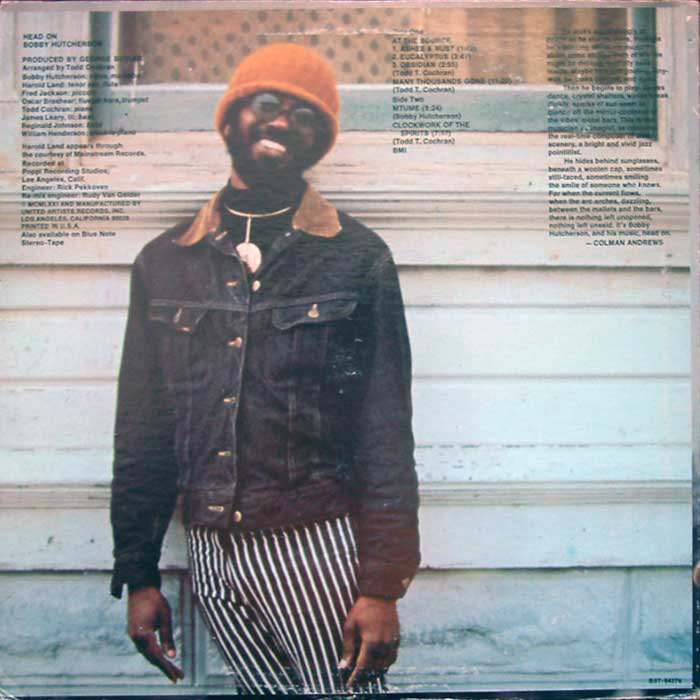
Bobby Hutcherson - Head On


Bobby Hutcherson

Head On
Blue Note BST–84376
Released 1971
Side One
1. At The Source: 1. Ashes And Rust
2. At The Source: 2. Eucalyptus
3. At The Source: 3. Obsidian
4. Many Thousands Gone

Side Two
1. Mtume
2. Clockwork Of The Spirits

Personnel
Bobby Hutcherson – vibes, marimba
Harold Land – tenor sax, flute
Fred Jackson – piccolo
Oscar Brashear – fluegel horn, trumpet
Todd Cochran – piano
James Leary, III – bass
Reginald Johnson – bass
William Henderson – electric piano
(unknown) – drums
(unknown) – percussion

Bobby Hutcherson worked with saxophonist Harold Land over several albums during the latter half of the 60s. As is evident from the recording, the pair effectively worked as joint bandleaders and, even though this recording is under Hutcherson’s name, he shares space evenly with Land. The sessions they recorded, many of which were not released for over a decade, were all moving in a post-bop style towards the avant-garde. This was probably the furthest they got. Afterwards, Hutcherson turned towards the prevalent fusion sound and only once more paired up with Land.

Head On opens with At The Source, a three-part track written, as was most of this recoding, by pianist Todd Cochran. Beginning with layered horns and reeds playing in slight discord, there is a feeling of space that has become better associated since with certain European styles of jazz. Hutcherson first is heard in part 2 of At The Source, where his low-key vibes intertwine with Cochran’s piano. The feeling of open space is continued and at times has remarkable similarities to MJQ recordings of the period (notably Space). At The Source ends with a low-key solo by Land, played around a slight African theme.

‘Many Thousands Gone’ is the centrepiece of this recording. Stretching out longer than any of the other tracks, it is also more free and features some of the most accomplished playing. Starting from another pseudo African theme played by the horns, this gives way quickly to a frantic bass run that continues the next 10 minutes. The unnamed drummer then catches up, before Hutcherson starts a frenzied run up and down his vibes in a very hard, post-bop style. Land’s solo afterwards owes plenty to Coltrane, although his sound is more soulful, playing in a lower register and more slowly without quite the technical ability of the Trane. Brashear solos next in a similar, if far faster, vein, followed by Henderson. Even though Henderson’s solo holds with the piece, due to the very nature of the electric piano, it just sounds funkier. Unfortunately for us, the length LP format means the track is faded, leaving only speculation as to what happened next. The bass player is quite clearly not ready to give in and, noticeable, there has been no solo by the song’s composer.

Side two opens with a track composed by Hutcherson, the only non-Cochran composition. As its very title ‘Mtume’ suggests, there is again a distinct African theme, this time emphasised by an unnamed percussionist and by the bass figure, which repeats throughout the track. Hutcherson, who as usual solos first, switches from vibes to marimba mid-solo, a change that not only further enhances the African theme but also is quite hard to spot. Next up is Land, followed by Cochran, neither of whom play particularly remarkable solos. Happily, the prominence in the mix of some complex drumming patterns more than make up for this deficiency.

The LP ends on a mellow vibe with a wonky, off-kilter bossa piece. The soloing here is all much more laid back, with some nice comping throughout by Cochran.

This is a more challenging LP than I had expected from my previous knowledge of Hutcherson’s work. However, its blend of post-bop with African themes and a feeling of space throughout have left me wanting more.

Tuesday, November 15, 2005

Jazz Blogs, part 3

Still obsessed with the idea of finding a jazz blog worse than this one, once again I have set off on my travels through cyberspace to select the finest jazz writing for your delectation. There's a bit of a twist, though, in that this time i've only selected blogs with podcasts, so you can listen to what all these lovely people are recommending.

Jazz With Tiger

Appears to be a hoary old man talking about Jazz. Great! There seems to be two podcasts here, music and talk, guess which one's the best? In particular, check out music no. 6 featuring Eric Dolphy and Booker Little, Ohhhhh Yes!

Night Passage Jazz Podcast

An Italian show (in english) with some very nice laid back sounds, but with a slight propensity towards vocals and dodgy advertising. Oh well, can't have everything.

Bending Corners


An eclectic selection of music. Some large files to download, but well worth it, I think.

As ever, if you know of a good site, then leave a comment or send an email.

Monday, November 14, 2005

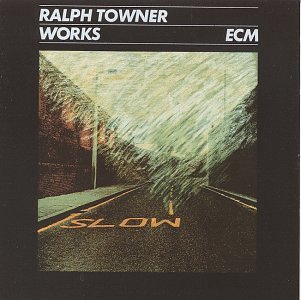
ECM Part 1; Ralph Towner


RALPH TOWNER
Works
ECM Records
ECM 823268-1
Released 1984; recorded 1975-1983

Side One

1. Oceanus (1975)
2. Blue Sun (1983)
3. New Moon (1979)

Side Two

1. Beneath An Evening Sky (1979)
2. The Prince and the Sage (1983)
3. Nimbus (1975)

It’s about time I started writing about some of my ECM records. Right now I’m listening to Ralph Towner’s “Works” LP (well, a CD copy of that LP, recorded from the original vinyl using my mac). The incredible thing is how good it sounds. The production values on those records were so high. Even though it was recorded in 1975 (and probably in analogue, or so I should think), and then played back on my suspect record deck, the sound is fantastic. Rich and warm, with some lovely detail – the individual notes picked out on Ralph’s guitar right at the beginning of the opening ‘Oceanus’ being a prime example. So good does it sound that it actually stopped me in my tracks when i first listened to it on CD. I was walking across the lounge to sit down and... 'barrarrabum'. Had to go straight back and put it on again.

That track, and the closing ‘Nimbus’ are both from the same 1975 session featuring Jan Garbarek on saxophone. That period was a great time for European jazz, and these two tracks are no exception. Momentum is kept up by the insistent pattern of the cymbals, while a great deal of free playing goes on up top. Free acoustic guitar? Sounds like it should be a recipe for diaster, but it works beautifully.

The meditative mood is enhanced by the inclusion of two tracks from a 1980’s session featuring Ralph on his own, accompanied only by some synths (which he plays). It’s a great chance to hear his guitar playing close up. There's not an enormous amount of variety on this album - the mood doesn't really change much throughout; but if quiet and slightly free jazz (a compliment!) is your thing, then you can do worse than start here.

There's an interesting biography of Ralph on this site. He also has his own official website with details of his many recordings.


Sunday, November 13, 2005

Awards Night, part 2


The “Better Than It Has Any Right To Be” Award, Part 2

Let me tell you a story…

Regular readers of these pages will no doubt of worked out by now that I’m a bit of an Archie Shepp fan, ‘a bit’ being somewhat of an underestimation. The only problem is how difficult it can be getting your hands on his records through conventional channels here in the UK. Now, for some time I’ve had a great affection for the track “Le Matin Des Noire” from the “Red Hot on impulse!” compilation (that got me started on this road, but that’s another story). It’s a lovely track, with some fascinating playing from Shepp, totally different from anything else I’ve heard from 1965. And it features fine support from Bobby Hutcherson on vibes… Stop! this is for another review…

Anyway, the astute amongst you may be aware that “Le Matin Des Noire” is from 1965’s “The New Thing At Newport”, which also features a couple of live tracks from John Coltrane. This is an album I’ve always wanted to acquire, but it’s been rather difficult. Although still a current impulse! release, according to the official website, and although it’s available on the iTunes music store (but I’m not buying it there), finding a CD has proved impossible. None of the music stores near me carries a copy. Hunting on the web has proved fruitless.

Imagine my excitement, then, when I discovered it for sale through an American organisation who’s name I shall not mention. And imagine my surprise when I finally received the package containing my CD, opened it, and saw what was inside…

BOB BERG

Enter The Spirit
Stretch Records
Recorded 1993


AARGH! I was disappointed, I can tell you. One look at the sleeve tells you that this is not Archie Shepp, or indeed anything like him (other than the sax, of course). Albums with sleeves of such an incredibly dodgy nature are sadly all too common in jazz. It doesn’t have to be this way – look at Blue Note, for example.

You can’t judge a book by it’s cover, so they say, so I decided to give this a try, since it was here. And, you know, from my vantage point of a few weeks on, this is a fantastic album. Think melodic hard bop, but in a good way. Then add a dash of tenor, some interesting keys, and the excellent Chick Corea, and you’re almost there. Oh, and plenty of fine unison playing – always a favourite of mine, as regular visitors will know.
I’d never come across Bob Berg before this CD landed on my doormat, but a little research has thrown up some interesting facts. Although he was initially attracted towards free jazz in the 1960’s (while playing with Jack McDuff?) he went on to perform in a hard bop style with such legendary names as Horace Silver in the 1970’s, and Miles Davis in the 1980’s. His sound is not particularly new, but the overall feel of the album is great and the playing from all concerned is solid. That might sound like faint praise, but this really is a fine recording, and all the more enjoyable for the serendipitous way it arrived in my life.

Wondering about part 1? Click here.

Saturday, November 12, 2005

The Cat Project

Levi French’s The Cat Project
11/11/05
CBSO Centre, Birmingham


1. Organ Grinder Swing (Quartet)
2. Blue Bash (Quartet)
3. Who’s Afraid Of Virginia Woolf? (Big Band)
4. Walk On The Wild Side (Big Band)
5. Blues In The Night (Big Band)
6. Got My Mojo Working (Big Band)
7. The Cat (Big Band)
8. Back At The Chicken Shack (Quartet)

(I think this is right – Stewart and I were so excited about the gig that we forgot what we had heard. Let me know if I’ve made a mistake. And sorry guys, but I forgot your names – except for Levi, of course!)
Levi with his quartet (no big band, unfortunately)

This was an awesome gig. As ‘The Cat Project’ name suggests, it was a tribute to the late great Jimmy Smith, the finest exponent of the Hammond B3 organ that music (not just jazz) has ever known. After Jimmy’s passing earlier this year, legions of his fans were denied the opportunity of seeing his greatest works performed live. Well not any more. Now there are a bunch of guys dedicated to keeping his flame alive, and burn they certainly did tonight.

This was the first time that Levi and his band had performed these arrangements of Jimmy Smith’s classic Verve period big-band repertoire, and it was a privilege to be one of the first to enjoy the results of what must have been very hard work. The rest of the audience certainly thought so, with the big band numbers earning rapturous applause as well as a standing ovation at the end of the night. It was then quite something to see Levi come back out onto the stage and sheepishly announce that he had no more arrangements to play. He more than made up for this, though, by storming through an incredible quartet version of ‘Back At The Chicken Shack’. That track has never really done anything for me before – until now, at least.

They say that enthusiasm is infectious, and that was true of this performance. It was wonderful to see the musicians really enjoying themselves, and there was a real sense that you were witnessing the culmination of a dream.

It’s amazing to see such great chemistry between the band members, especially so when you consider that this was the first performance this material. Levi and his drummer and bassist appeared telepathic, anticipating each other’s every move. It was great to see the smiles on their faces during the first big band number – smiles that just got broader as the night went on. It’s impossible to describe the impact created by the opening horn riff of ‘Who’s Afraid of Virginia Woolf?’. The opening quartet tracks had been pretty good, but this just blew everyone away. And that was just the start…

The horn section started out a little nervously, but the incredible alto sax solo on ‘Blues In The Night’ (where was that on the original?) brought such a reaction from the audience that everyone’s confidence skyrocketed. They also put in a stellar performance on ‘Got My Mojo Working’, with the baritone sax taking over Jimmy’s vocal melody; it’s gruff tone perfectly representing his singing style. Talking of representing Jimmy’s style – Levi proved himself to be an outstanding organ player. He had Jimmy’s sound and style perfected, and after a slightly shaky start on ‘Organ Grinder Swing’, showed that he more than deserves to carry the great Jimmy Smith’s flame into the 21st century.

There's talk of this show being toured, if funding can be obtained. Someone please give this man a fiver right now!

Check out Levi's website, which has some excellent mp3's to download.

Jimmy Smith At The Organ

Friday, November 11, 2005

The Duke Goes East


DUKE ELLINGTON
The Far East Suite
Bluebird LPRCA3782

Recorded 1966

1. Tourist Point Of View
2. Bluebird of Delhi (Mynah)
3. Isfahan
4. Depk
5. Mount Harissa
6. Blue Pepper (Far East of the Blues)
7. Agra
8. Amad
9. Ad Lib On Nippon

10. Tourist Point Of View (alternate take)
11. Bluebird of Delhi (alternate take)
12. Isfahan (alternate take)
13. Amad (alternate take)

Personnel:
Cat Anderson - Trumpet
Mercer Ellington - Trumpet, Flugelhorn
Paul Gonsalves - Clarinet, Reeds, Tenor Sax
Johnny Hodges - Clarinet, Reeds, Alto Saxophone
Cootie Williams - Trumpet
Lawrence Brown - Trombone
Rufus "Speedy" Jones - Drums
Russell Procope - Clarinet, Reeds, Alto Saxophone
Chuck Connors - Trombone
William Cat Anderson - Trumpet
Harry Carney - Clarinet, Reeds, Baritone Saxophone
Buster Cooper - Trombone
Duke Ellington - Piano
Jimmy Hamilton - Clarinet, Reeds, Tenor Saxophone
Herb Jones - Trumpet
John Lamb - Bass
Chuck Conners - Trombone
Herbie Jones - Trumpet, Flugelhorn
Lawrence D. Brown - Trombone


If you care to cast an eye over some of the previous entries in thus blog, you’ll no doubt notice a bit of a free jazz influence there. Today we’re going somewhere a little bit different, but not entirely…

Talk of world music in jazz, and I think of the “world fusion” of Don Cherry’s “Eternal Rhythm”. But he wasn’t the only jazz artist plundering the globe in a search for new sounds in the late 1960’s, as this recording ably demonstrates.

The influences are many – Indian, middle-eastern, oriental – but this remains swinging big band jazz throughout, with some fantastic playing from both ensemble and soloist throughout. It's worth mentioning that, though this is called the 'far' east suite, with the exception of 'Ad Lib On Nippon', the tracks all have middle eastern names. It's even more worth mentioning that, at the time of recording, Duke was 65! 65! If I can swing half as hard as this when i'm 65 i'll be a very happy man..

Highlights include the clarinet playing on “Bluebird Of Delhi (Mynah)” (an underrated jazz instrument, unfairly associated with Dixieland jazz. Only the bass clarinet has received much notice in modern jazz, thanks mainly to the work of Eric Dolphy).

Also worthy of a mention is the hard swinging “Depk” – although I must admit to having no idea what country that one is supposed to represent, but it’s got an infectious piano riff that keeps you coming back for more. “Mount Harissa” is not dissimilar – great piano part, swings like a monkey in a tree, but middle eastern? Well, maybe…

Actually it’s all great. Just ignore the idea that you’re going to be treated to the musical equivalent of a round-the-world cruise, and enjoy some of the finest playing and arranging the jazz world has ever known.

Read more about this album here. And when you've done with that, have a look at this review of the album. That's how I want this blog to be...

Thursday, November 10, 2005

Jimmy Smith - The Sermon


JIMMY SMITH

The Sermon

Blue Note 4011

Stereo

Side One

  1. The Sermon

Side Two

  1. J.O.S. (*)
  2. Flamingo

Personnel

JIMMY SMITH; organ

LOU DONALDSON, GEORGE COLEMAN (*); alto sax

TINA BROOKS; tenor sax

LEE MORGAN; trumpet

KENNY BURRELL, EDDIE McFADDEN (*); guitar

ART BLAKEY, DONALD BAILEY (*); drums

Jimmy Smith, the finest organist Jazz has ever known, had his first taste of fame recording for blue note in the 1950’s and 60’s. He recorded a string of classic albums, giving the organ a definite place as a solo instrument in jazz, while at the same time almost single-handedly inventing the genre of soul jazz. Many of his Blue Note recordings were trio affairs, but this 1957 recording brings in the horns to great effect.

The highlight is the 20-minute plus “The Sermon”. Smith kicks it off in typical style before Brooks and Donaldson get in on the act with some great trading of lines over the next few minutes. Everything happens when it’s meant to – the changes are predictable, but Blakey keeps the the groove going and provides great support for the extended solos. Of particular note is Lee Morgan’s trumpet solo, which manages to be funky and explorative at the same time. His unison playing with Jimmy towards the end of the piece is excellent, too.

This is as fine an example of Blue Note-era Jimmy Smith as you could hope to find, being the perfect synthesis of jazz and groove. The only problem is, it very much set the pattern, and there was little development in Smith’s sound until his move to Verve and the classic big band sessions of the 1960’s.

None of that matters listening to this LP, though – just let the groove take you through, and this turns out to be enjoyable music, and great jazz too.

THE INCREDIBLE JIMMY SMITH

Wednesday, November 09, 2005

Creed Taylor!


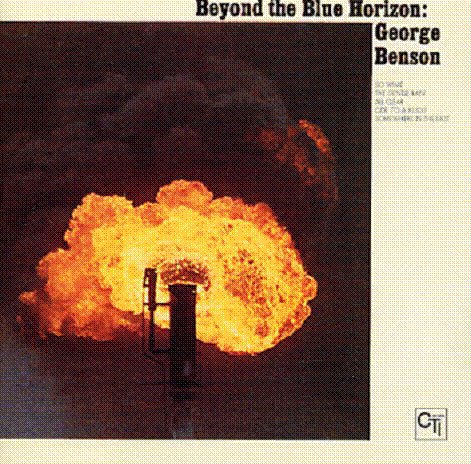
Creed Taylor was the man! No, i'm not going daft with exclamation marks again - I mean the man who set up impulse! records. This must make him one of the most important producers/label bosses in jazz. He went on to great things with Verve and his own label CTI, amongst others, producing some of the greatest names in jazz. He was also responsible for possibly my favourite soul jazz LP, George Benson's "Beyond The Blue Horizon", a classic date also featuring Ron Carter & Jack DeJohnette.

If you fancy salivating at some of his finest productions, check out this feature - part 1 and part 2. There's also an official CTI records site and an interview on allaboutjazz.com, in 3 parts - part 1, part 2, part 3.

Tuesday, November 08, 2005

Beyond The Blue Horizon


GEORGE BENSON

Beyond The Blue Horizon
CTI 6009
Stereo

Recorded at Van Gelder Studios by Rudy Van Gelder February 1971

Side one

  1. So What?
  2. The Gentle Rain

Side Two

  1. All Clear
  2. Ode to a Kudu
  3. Somewhere In The East

Personnel

GEORGE BENSON; guitar
RON CARTER; bass
JACK DeJOHNETTE; drums
CLARENCE PALMER; organ
MICHAEL CAMERON, ALBERT NICHOLSON; percussion

This 1971 session is one of Benson’s finest. After releasing a string of well regarded soul jazz LP’s in the late 1960’s, some with big band arrangements, here he is seen in a small group setting. This is still soul jazz, but with the emphasis very much on the Jazz – of course, he was known as a decent jazz player, having collaborated with Miles Davis (on ‘Miles in the Sky’) several years before.

The opening ‘So What?’ is clearly a nod to Miles. The well-known theme of this classic tune serves as a jumping off point for some excellent playing by both Benson and Palmer. The rhythm section keeps things swinging here, managing to remain funky and support the soloists while indulging in a little experimentation of their own. ‘The Gentle Rain’ repeats the formula, to rather less effect, but side two is much more successful.

‘All Clear’ showcases Benson’s playing on both lead and rhythm beautifully, ably backed by Palmer, and Carter’s bowed bass. He really is at home either being lyrical and smooth in the theme, playing rhythm, or getting angular (see the arpeggios towards the end of the piece for a great example of this). This one track is not enough for Benson to demonstrate his full range of skills, so he continues, on ‘Ode to a Kudu’ to show his mastery of his instrument. Despite the presence of the rhythm section, it’s basically a one-man show with Benson providing his own support in an extended piece of gentle and well-considered playing. His way of playing chords here, with each note played out for all to see, is captivating here. You wish that Carter and DeJohnette would lay out (that’s how good this is) and let you enjoy some of the best guitar playing in Jazz in peace. Yet another stylistic change arrives with the closing ‘Somewhere In The East’, with it’s exotic rhythms and the eastern feel, enhanced by the use of what sounds like a pentatonic scale in the opening figure.

Read another review of this outstanding album on the BBC website. You can also check out George's official website.

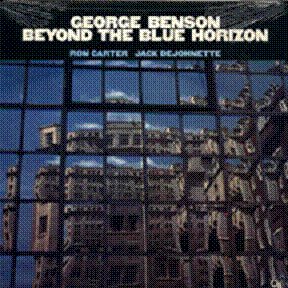
At the top is the original CTI 6009 sleeve, the lower picture is a reproduction of the sleeve of the reissue (which I have).

Monday, November 07, 2005

The Jacob Fred Jazz Odyssey

THE JACOB FRED JAZZ ODYSSEY

Live 25/08/2005 Café-Du-Nord

Set List

  1. Halliburton Breakdown
  2. Improvisation
  3. Happiness Is A Warm Gun
  4. The Maestro
  5. Nibbles
  6. Isobel
  7. The Spark That Bled
  8. Son Of Jah
  9. Wonderful
  10. Tomorrow We’ll Live Today
  11. Santiago
  12. Don’t Let It Bring You Down
  13. The Slip
  14. Sean’s Song
  15. The Time Is Now
  16. Naima
  17. In Your Own Sweet Way
  18. Fables Of Faubus

Personnel

Brian Haas; Electric Piano
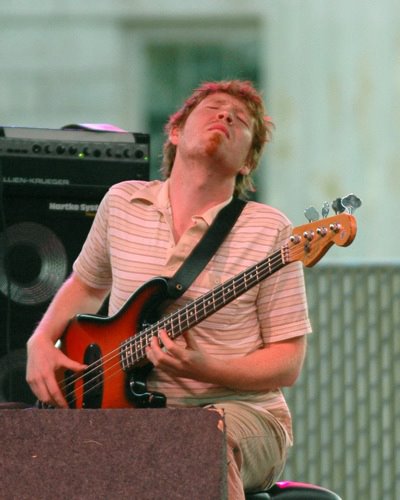
Reed Mathis; Electric Bass
Jason Smart; drums

Ok, ok, so jazz is a serious business. But every once in a while, I need to listen to something that lightens the mood somewhat. And here are a trio who are capable of doing just that. There really is nothing like listening to a bunch of guys having fun up there on stage to make you feel good.


It’s worth spending a few minutes pointing out where this recording came from. This most generous group has made several complete live shows available for download on the internet in a variety of formats (I chose the ‘mp3 VBR’ option which is a nice compromise between size and fidelity and took half an hour or so to download on my 1Mb connection), at http://www.archive.org/audio - just type 'Jacob Fred' into the search box to access a selection of live recordings. I was attracted in by the cover versions; ‘Happiness Is A Warm Gun’ was a recent free mp3 on allaboutjazz.com, and to be honest it’s been crying out for a jazz treatment for a very long time. They’re just as accomplished putting a new spin onto pop material such as the above and Bjork’s ‘Isobel’ as they are at classic jazz like John Coltrane’s exquisite ‘Naima’.

There’s so much more to this group than quirky covers, though. Their own material really does match up to the covers. Their style is firmly rooted in jazz, being improvisational throughout, but also brings in elements of other musics. Much of this recording is funky, and at times you could even say it rocks out - especially on the bass solos - I never knew the bass guitar could be played so high, and so well. The occasional use of harmonica, and the exaggerated sense of space in some pieces (‘The Slip’, for example) suggests a dub influence. These guys really are all over the musical map.

It’s a simple enough set-up. Electric piano, electric bass, drums. They’re not afraid to use a few effects either, the dirty piano solo on ‘Halliburton Breakdown’ being a case in point. The music is always funky, though at times the playing can be quite free - not dissonant, but just heading out where it wants to go, unencumbered by convention.

Take a look at their official website.

Sunday, November 06, 2005

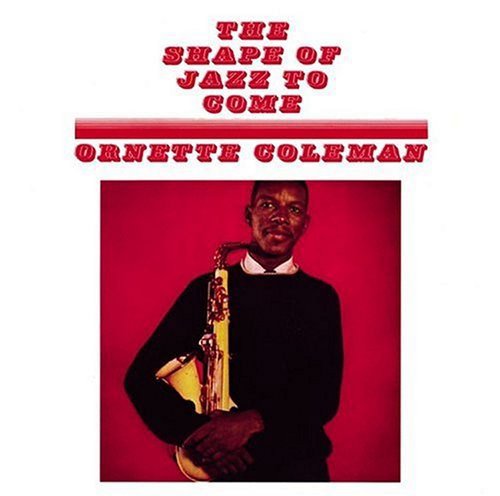
The Shape Of Jazz To Come


ORNETTE COLEMAN
The Shape Of Jazz To Come

Atlantic 8122-72398-2

Stereo


Recorded 22nd May 1959

1. Lonely Woman

2. Eventually

3. Peace

4. Focus On Sanity

5. Congeniality

6. Chronology


Personnel


ORNETTE COLEMAN; alto saxophone
DON CHERRY; trumpet
CHARLIE HADEN; bass
BILLY HIGGINS; drums

This is an album that can rightly claim to be one of the finest sessions of avant-garde jazz ever recorded. What makes this all the more remarkable is that it was one of the first. Featuring sidemen who would become major figures in free jazz in later years, this 1959 LP really does live up to its title as “The Shape Of Jazz To Come”.

Retrospectively, knowing what came after this, the impact of a recording such as this is bound to be lessened somewhat. Critics of the time lambasted Coleman for being unable to play, not realising that the dissonances and odd harmonic effects achieved here were entirely intentional and nothing to do with poor technique. This was, at the time, new music, and if the intervening years have lessened its impact somewhat, it’s still easy to hear how different it was from conventional hard-bop of the time.

The opening “Lonely Woman” is a fine example of what was going on here. The track is built around a haunting theme taken in (almost) unison by Coleman and Cherry. At times they peel off and head in different harmonic directions, creating strange dissonances. Cherry occasionally lags slightly behind, giving each note additional impact. These techniques have the effect of enhancing the emotional impact of the piece, to the point that you are taken inside the head of this imaginary, lonely woman.

When Coleman solos, he does so in a direction that he establishes himself. There is no need for him to follow a set harmonic path as in bop-based forms, so his playing is an organic outgrowth of the theme. This has the effect of making his playing seem logical, even in the absence of structure – this gives the whole piece a satisfying feel.

Everyone has a job to do. This is not like hard-bop, where the soloists did all the hard work with the rhythm section trailing in their wake. Haden and Higgins both have important roles to play here – this is clear from the introduction to the piece in which they set out their own themes. These may differ from those of the horns, but still play an important supporting role, and make sense in the context of the whole piece.

Ornette solos a couple of times between statements of the theme, and while Cherry’s playing is excellent in support of that theme, sadly there’s no solo space for him here.

Everyone gets solo space later on, though, with Haden particularly being in stellar form. Don Cherry’s contribution is undeniably important, but it would be several years before he reached his peak, with albums like 1966’s ‘Symphony for Improvisers’. The form of the pieces stays the same, though, with a unison statement of the theme followed by solos and a return to the theme one or more times. The tempo varies – some tracks are taken at breathtaking speed – especially ‘Eventually’, the end result being an album that swings hard and is really quite accessible for a so-called ‘free jazz’ recording.

Saturday, November 05, 2005

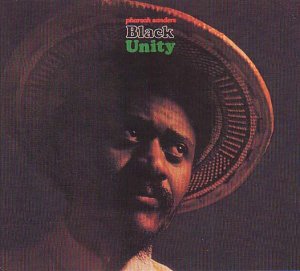
Pharoah Sanders - Black Unity


PHAROAH SANDERS
Black Unity
impulse! AS-9219
Stereo

Recorded November 24th, 1971

1. Black Unity

Personnel

PHAROAH SANDERS
; tenor saxophone, balaphone
HANNIBAL MARVIN PETERSON
; trumpet
CARLOS GARNETT; tenor saxophone
JOE BONNER; piano
CECIL McBEE, STANLEY CLARKE; bass
NORMAN CONNORS, BILLY HART; drums
LAWRENCE KILLIAN; congas, talking drums, balaphone

November 5th. Guy Fawkes night, firework night, whatever you want to call it. So some real fireworks are called for...

How about this for fireworks. By 1971 Pharoah Sanders had already releaed a string of groundbreaking albums, chiefly 1970's 'Karma', containing the masterful "The Creator Has A Master Plan", possibly his best (and best known) work. Pharoah wasn't ready to stop there though, and in 1971 returned with this free jazz masterpiece. Comprising a single eponymous track, "Black Unity" weighs in at a mighty 37:21. Nowadays we are lucky to be able to listen to the whole thing as a continuous piece; presumably on it's release the music would have been split across 2 sides of an LP.

In common with much of the free jazz of the era, this music has a groove. The opening bass riff, played on two instruments, gives a feeling of great propulsion, while at the same time carrying the tune and being funky as hell. The rest of the rhythm section soon joins in, carrying forward the opening bass theme with stabs on the piano and a frenzy of percussion - remember this session featured 2 drummers and a percussionist, so straight away you can tell that rhythm is going to be a priority here.

The whole thing builds slowly, reaching something of a climax in Pharoah's first big wig-out at around the 8-minute mark. Sanders has a sound which is unique amongst saxophonists, and his ability on this album to blow well outwith the confines of the instrument is simply startling. This show of musical freedom just gets the rest of the band started, and off they all go, chasing the Pharoah down the road like their lives depended on it. The quality of the playing is remarkable, the level of invention by each player simply stunning.

It's not an easy ride - although it starts out funky, the playing becomes freer as the piece develops - everybody lifts ideas and plays off everyone else, giving a spontaneous, organic feel to proceedings. The theme is never far away, though, and returns on the two basses from time to time to pull everything back together. Also appearing towards the end is an echo of the theme from "A Love Supreme" (as featured in "The Creator Has A Master Plan"), demonstrating not only Pharoah's respect for his old boss, but also his view, echoed in the sleevenote, that all music is one.


Links

This site has a comprehensive Sanders discography

Friday, November 04, 2005

Caption Competition


It's Albert Ayler playing the bagpipes.

Surely you can come up with a better caption than that. If so, then leave it as a comment below. There may be a prize if they're good enough... now don't all rush at once!

Wondering what this is all about? Read my review of Albert's mighty "Music is the Healing Force of the Universe".

Free America


As the previous posts have demonstrated, France was a thriving home for the American free jazz scene in the late 1960's and early 1970's. Several artists recorded sessions for the BYG Actuel series, and yet more were involved with Free America, who have recently been subject to a reissue program, all with lovingly reproduced sleeves, such as the in the above picture. Click on the title above to go to the official site which features some excellent videos - footage of civil rights demonstrations and Vietnam set to a honking free jazz soundtrack.

Also worth a read are the reviews of these albums at allaboutjazz.com, which are split into 3 parts - part 1, part 2 and part 3. The albums are further discussed in these two threads from the allaboutjazz forums - here and here.

Thursday, November 03, 2005

Archie Shepp - Paris 1969, part 3


ARCHIE SHEPP

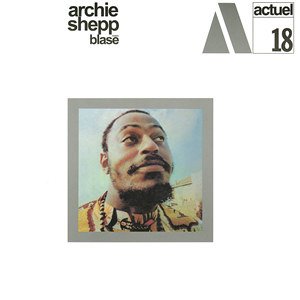
Blasé

BYG Actuel 18

Recorded 16th August 1969

  1. My Angel
  2. Blasé
  3. There is a Balm in Gilead
  4. Sophisticated Lady
  5. Touareg

Personnel

ARCHIE SHEPP; tenor saxophone

JEANNE LEE; vocals

LESTER BOWIE; trumpet, flugelhorn

CHICAGO BEAU; JULIO FINN; harmonica

DAVE BURRELL; piano

MALACHI FAVORS; bass

PHILLY JOE JONES; drums

The final of Archie Shepp’s August 1969 Paris sessions is as intriguing as the first two (producing “Yasmina, a Black Woman” and “Poem for Malcolm” respectively). This session takes another stylistic turn, being much more laid back than either of the others – the calm after the storm of the 12th and 14th. It’s very much a Sunday morning, compared to he frenetic Friday and Saturday nights of the previous two recordings.

For a start, this is a much more song-based album than either of it’s immediate predecessors, the vocalist taking a leading role on most of the album’s 5 tracks. The opening “My Angel” features some fine harmonica playing as well as another of the rhythm section’s fine circular grooves underpinning the dual soloists of Lee and Shepp. The title track follows, again featuring a hypnotic, repeated figure with soloing on top, but this time the tempo is much slower, and the key minor and melancholy. Although often regarded as a firebrand, Shepp’s playing in the opening of this track is full of emotion, even if the tone is sometimes harsh.

“There is a Balm in Gilead” continues the mood with a fine vocal performance and more impassioned tenor playing. “Sophisticated Lady” is indeed that – a nice piece of vocal jazz that, dissonant piano introduction aside – it would not be out of place entertaining guests at an upmarket hotel. It’s just a bit too nice – you expect more passion from an Archie Shepp record, and there’s little of that on display here. Those looking for passion would be well advised to head straight to the closing “Touareg” which invokes well the spirit of the previous 2 sessions with some fine free blowing from Shepp.

3 days, 3 remarkable sessions, 3 very differing styles, but the one constant running through all of these recordings is the sense of spontaneity created by all of these different musicians coming together. More than anything else, these sides show that there need be no stylistic rules in music, if it feels and sounds good, then it is good, no matter what style it’s in.

Wednesday, November 02, 2005


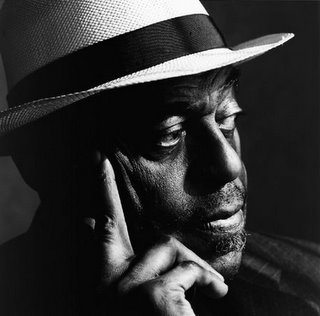
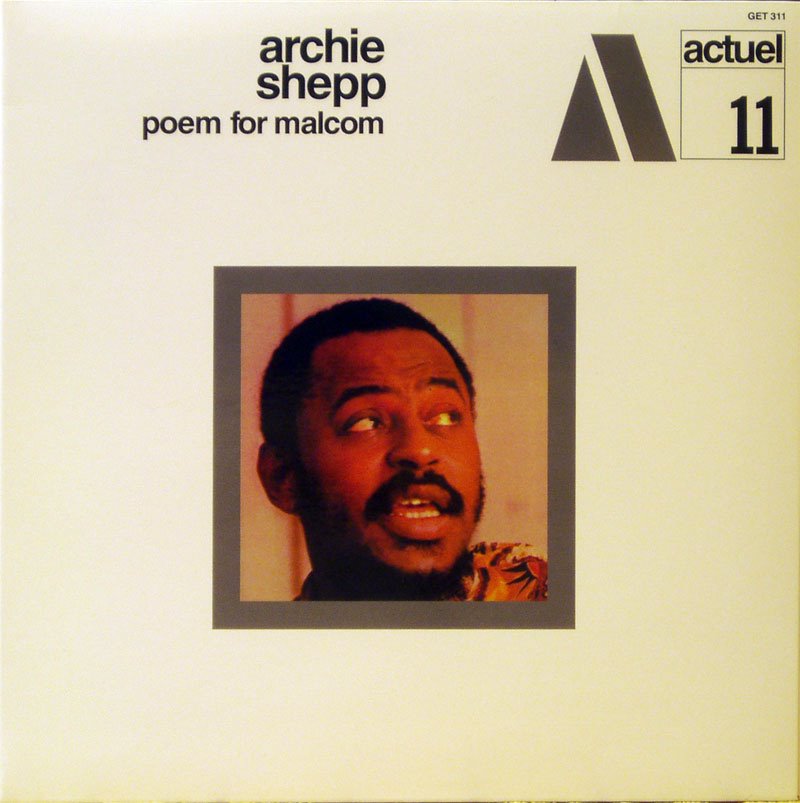
A great picture of Archie, from the inner sleeve of 'Poem for Malcolm'

Archie Shepp - Paris 1969, part 2


ARCHIE SHEPP

Poem for Malcolm

BYG Actuel 11

Recorded 14th August 1969

Side One

  1. Mama Rose – Poem for Malcolm

Side Two

  1. Rain Forest – Oleo

Personnel

Side 1;

Archie Shepp (soprano sax, voice), Burton Greene (piano), Alan Silva (bass), Claude Delcloo (drums), Philly Joe Jones (tympani)

Side 2;

Grachan Moncur III (trombone), Archie Shepp (tenor sax, piano), Hank Mobley (tenor Sax), Vince Benedetti (piano), Malachi Favors (bass), Philly Joe Jones (drums)

This is the second of Archie Shepp’s 3 sessions recorded in Paris in August 1969 (the others being the 12th August session that produced “Yasmina, a Black Woman” and one on the 16th August, producing the album “Blasé”).

It’s very different in style to either of the other two sessions. Where Yasmina is groove and hard-bop based and Blasé has the song-based format that would later be developed on albums like “Attica Blues” and “The Cry of my People”, this LP is very much a vehicle for the group’s free jazz tendencies, featuring as it does two extended pieces of free blowing.

Side one serves as a backdrop for Shepp’s poetry, his passionate delivery fitting in well with the tumultuous musical backdrop. You can imagine, listening to this, how traditional jazz critics would dismiss this as a lot of nonsense – indeed, allmusic.com don’t even bother to review it before giving out a humble 2 star rating. But this is a far better record than that rating might suggest – the conviction with which it is played carries it through, the whole being greater, perhaps, than the sum of the parts, which is so often the case with this style of jazz.

Side two finds Miles Davis’ “Oleo” being transformed from it’s highly bop-influenced original into an extended vehicle for Shepp’s blowing which captivates the listener for the first ten minutes or so before a thunderous drum roll announces the increase to a rapid tempo and the introduction of the band. Special mention must be made here of the trumpet playing, which is more than a match for the furious percussion and has a wonderful full sound that survives intact through the murk of the poor recording quality. This serves as a jumping off point for a few short Shepp explorations, but by this stage in the piece his major work is over and he leaves the floor to the sidemen who ably fill the remaining minutes, before a second drum solo at the 17 minute mark announces a shift to a more conventional post-bop ending in which the ghost of Miles’ original can vaguely be discerned rising up through the storm to take over the closing theme.

This is an exciting listen and a must for any Shepp fan or lover of avant-garde jazz.


Tuesday, November 01, 2005

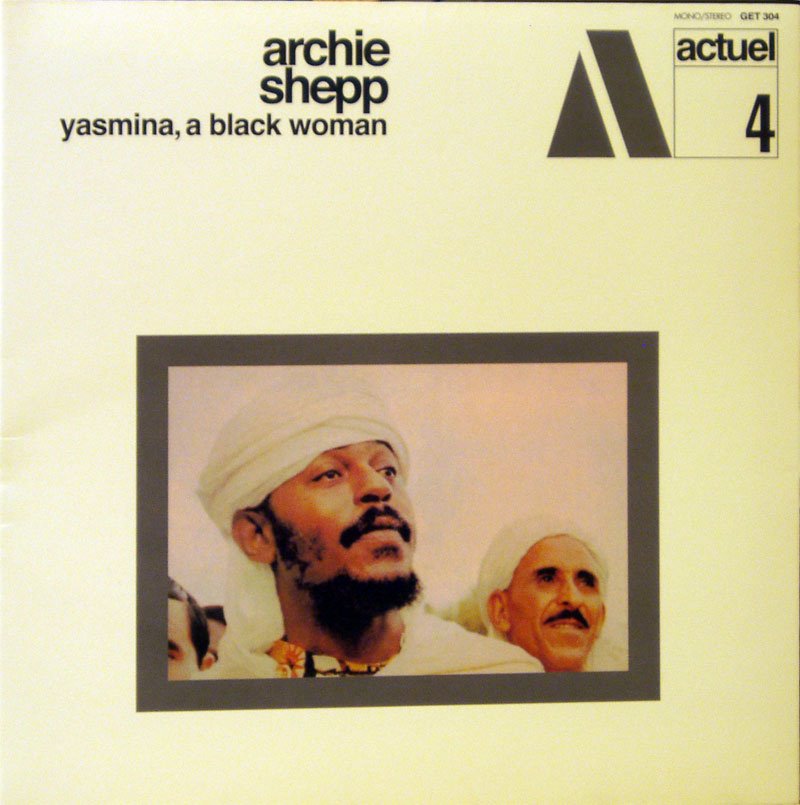
Archie Shepp - Paris 1969, part 1


ARCHIE SHEPP

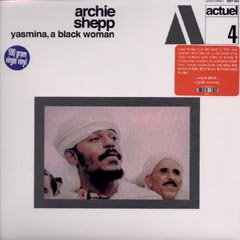
Yasmina, A Black Woman

BYG Actuel 4

Recorded 12th August, 1969

Side One

  1. Yasmina, A Black Woman

Side Two

  1. Sonny’s Back
  2. Body and Soul

Personnel

1st tune;

Clifford Thornton (cornet), Lester Bowie (trumpet), Arthur Jones (alto sax), Archie Shepp (tenor sax, voice), Roscoe Mitchell (bass sax), Dave Burrell (piano), Malachi Favors and Earl Freeman (basses), Philly Joe Jones (drums), Sunny Murray (drums), Art Taylor (rhythm logs), Laurence Deveraux (balafon)

2nd tune;

Archie Shepp and Hank Mobley (tenor saxes), Dave Burrell (piano), Malachi Favors (bass), Philly Joe Jones (drums)

3rd tune;

Archie Shepp (tenor sax), Dave Burrell (piano), Malachi Favors (bass), Philly Joe Jones (drums)

Archie Shepp was a very busy man in August 1969. He recorded 3 sessions for the French BYG label in that month, each only a few days apart – this one, a 14th August session which resulted in the album “Poem for Malcolm” and another on 16th August which led to “Blasé”. 1969 was a fertile time for free jazz, with many of it’s players decamping to Paris and recording for BYG or other labels such as Free America.

This particular session was the result of collaboration between Shepp’s current band and members of the Art Ensemble of Chicago (as represented by Lester Bowie, Roscoe Mitchell and Malachi Favors). There were numerous other big names involved – not all of them people you’d normally associate with free jazz – Hank Mobley and Philly Joe Jones to name two.

Side one is entirely taken up by the 20-minute plus “Yasmina”, an exercise in groove-based improvisation that both Shepp and the members of the Art Ensemble were to repeat later in their careers. This is one funky piece of free jazz – there’s a fair bit of blowing going on over the top, but the rhythm section keeps a solid groove going – a circular piano line anchoring the whole thing down whilst the soloists set off on their flights. The whole thing is pretty effective, with only the slightly shoddy audio quality letting it down.

On a different tack entirely, side two’s opener, “Sonny’s Back”, starts out in a pretty standard hard bop inspired vein, perhaps to accommodate Hank Mobley, heard here on tenor trading lines with Shepp. Despite the band taking the whole thing fairly straight (well, relatively straight – this is Archie Shepp, after all) there is some nice playing here, and a palpable sense of enjoyment in the ecstatic shouts of the rhythm section. The closing “Body and Soul” is taken at a more sedate tempo and is a lovely example of Shepp playing it sweet.

Although they all have their merits, this is probably my favourite of the three Paris sessions, with some great playing and a real sense, in “Yasmina” of the sort of places the jazz avant-garde was headed in the next few years. Shepp’s own exploration of the groove-based extended blowout surely reached it’s peak in 1975’s “Hipnosis” from the “A Sea Of Faces” LP, a 26 minute free improvisation perched on top of the most hypnotic groove on the planet.

My copy of this recording is a one of a reissue of several albums from the BYG Actuel series - a complete list of this series can be found here.