Friday, November 04, 2005

Caption Competition


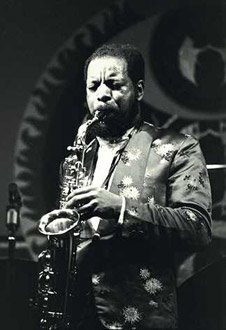
It's Albert Ayler playing the bagpipes.

Surely you can come up with a better caption than that. If so, then leave it as a comment below. There may be a prize if they're good enough... now don't all rush at once!

Wondering what this is all about? Read my review of Albert's mighty "Music is the Healing Force of the Universe".

Free America


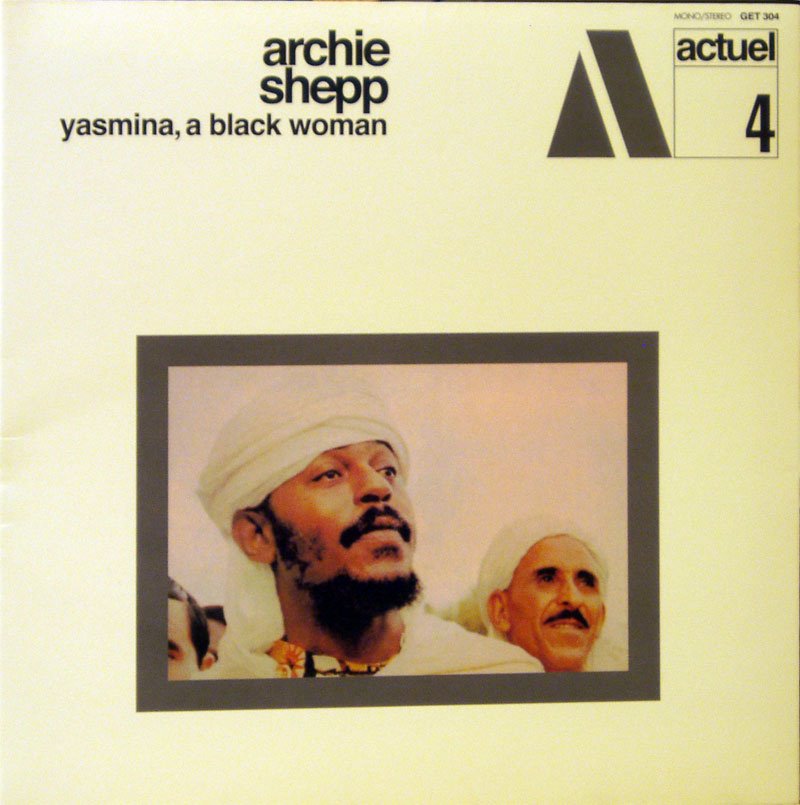
As the previous posts have demonstrated, France was a thriving home for the American free jazz scene in the late 1960's and early 1970's. Several artists recorded sessions for the BYG Actuel series, and yet more were involved with Free America, who have recently been subject to a reissue program, all with lovingly reproduced sleeves, such as the in the above picture. Click on the title above to go to the official site which features some excellent videos - footage of civil rights demonstrations and Vietnam set to a honking free jazz soundtrack.

Also worth a read are the reviews of these albums at allaboutjazz.com, which are split into 3 parts - part 1, part 2 and part 3. The albums are further discussed in these two threads from the allaboutjazz forums - here and here.

Thursday, November 03, 2005

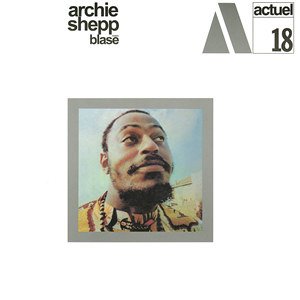
Archie Shepp - Paris 1969, part 3


ARCHIE SHEPP

Blasé

BYG Actuel 18

Recorded 16th August 1969

  1. My Angel
  2. Blasé
  3. There is a Balm in Gilead
  4. Sophisticated Lady
  5. Touareg

Personnel

ARCHIE SHEPP; tenor saxophone

JEANNE LEE; vocals

LESTER BOWIE; trumpet, flugelhorn

CHICAGO BEAU; JULIO FINN; harmonica

DAVE BURRELL; piano

MALACHI FAVORS; bass

PHILLY JOE JONES; drums

The final of Archie Shepp’s August 1969 Paris sessions is as intriguing as the first two (producing “Yasmina, a Black Woman” and “Poem for Malcolm” respectively). This session takes another stylistic turn, being much more laid back than either of the others – the calm after the storm of the 12th and 14th. It’s very much a Sunday morning, compared to he frenetic Friday and Saturday nights of the previous two recordings.

For a start, this is a much more song-based album than either of it’s immediate predecessors, the vocalist taking a leading role on most of the album’s 5 tracks. The opening “My Angel” features some fine harmonica playing as well as another of the rhythm section’s fine circular grooves underpinning the dual soloists of Lee and Shepp. The title track follows, again featuring a hypnotic, repeated figure with soloing on top, but this time the tempo is much slower, and the key minor and melancholy. Although often regarded as a firebrand, Shepp’s playing in the opening of this track is full of emotion, even if the tone is sometimes harsh.

“There is a Balm in Gilead” continues the mood with a fine vocal performance and more impassioned tenor playing. “Sophisticated Lady” is indeed that – a nice piece of vocal jazz that, dissonant piano introduction aside – it would not be out of place entertaining guests at an upmarket hotel. It’s just a bit too nice – you expect more passion from an Archie Shepp record, and there’s little of that on display here. Those looking for passion would be well advised to head straight to the closing “Touareg” which invokes well the spirit of the previous 2 sessions with some fine free blowing from Shepp.

3 days, 3 remarkable sessions, 3 very differing styles, but the one constant running through all of these recordings is the sense of spontaneity created by all of these different musicians coming together. More than anything else, these sides show that there need be no stylistic rules in music, if it feels and sounds good, then it is good, no matter what style it’s in.

Wednesday, November 02, 2005


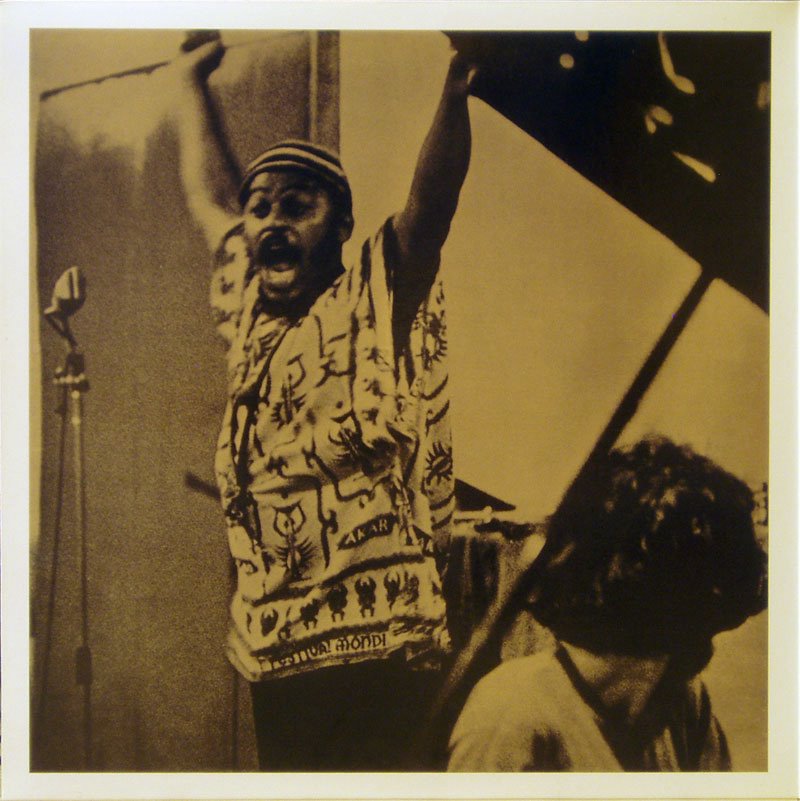
A great picture of Archie, from the inner sleeve of 'Poem for Malcolm'

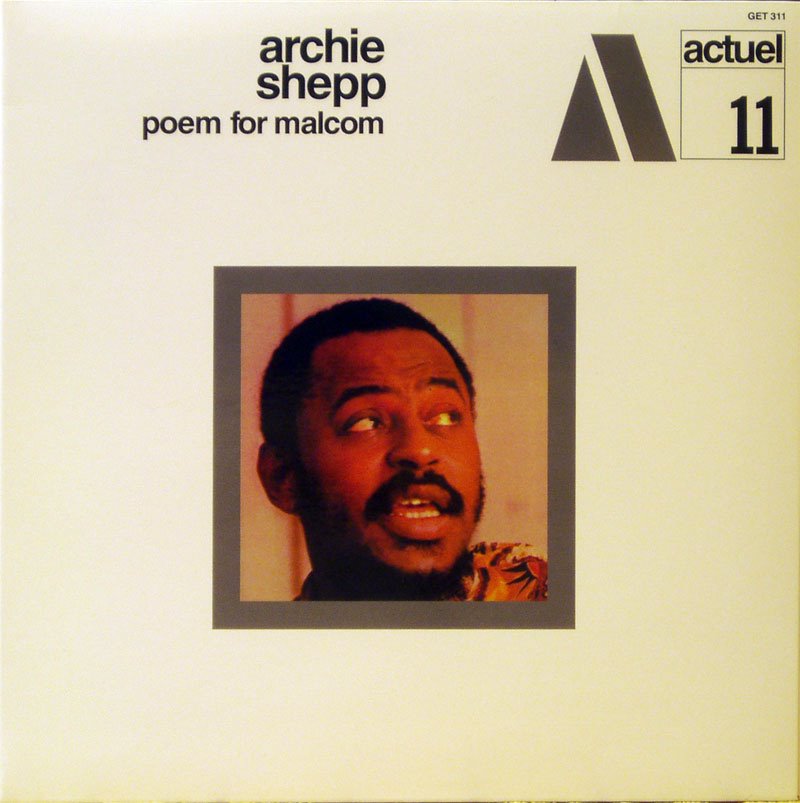
Archie Shepp - Paris 1969, part 2


ARCHIE SHEPP

Poem for Malcolm

BYG Actuel 11

Recorded 14th August 1969

Side One

  1. Mama Rose – Poem for Malcolm

Side Two

  1. Rain Forest – Oleo

Personnel

Side 1;

Archie Shepp (soprano sax, voice), Burton Greene (piano), Alan Silva (bass), Claude Delcloo (drums), Philly Joe Jones (tympani)

Side 2;

Grachan Moncur III (trombone), Archie Shepp (tenor sax, piano), Hank Mobley (tenor Sax), Vince Benedetti (piano), Malachi Favors (bass), Philly Joe Jones (drums)

This is the second of Archie Shepp’s 3 sessions recorded in Paris in August 1969 (the others being the 12th August session that produced “Yasmina, a Black Woman” and one on the 16th August, producing the album “Blasé”).

It’s very different in style to either of the other two sessions. Where Yasmina is groove and hard-bop based and Blasé has the song-based format that would later be developed on albums like “Attica Blues” and “The Cry of my People”, this LP is very much a vehicle for the group’s free jazz tendencies, featuring as it does two extended pieces of free blowing.

Side one serves as a backdrop for Shepp’s poetry, his passionate delivery fitting in well with the tumultuous musical backdrop. You can imagine, listening to this, how traditional jazz critics would dismiss this as a lot of nonsense – indeed, allmusic.com don’t even bother to review it before giving out a humble 2 star rating. But this is a far better record than that rating might suggest – the conviction with which it is played carries it through, the whole being greater, perhaps, than the sum of the parts, which is so often the case with this style of jazz.

Side two finds Miles Davis’ “Oleo” being transformed from it’s highly bop-influenced original into an extended vehicle for Shepp’s blowing which captivates the listener for the first ten minutes or so before a thunderous drum roll announces the increase to a rapid tempo and the introduction of the band. Special mention must be made here of the trumpet playing, which is more than a match for the furious percussion and has a wonderful full sound that survives intact through the murk of the poor recording quality. This serves as a jumping off point for a few short Shepp explorations, but by this stage in the piece his major work is over and he leaves the floor to the sidemen who ably fill the remaining minutes, before a second drum solo at the 17 minute mark announces a shift to a more conventional post-bop ending in which the ghost of Miles’ original can vaguely be discerned rising up through the storm to take over the closing theme.

This is an exciting listen and a must for any Shepp fan or lover of avant-garde jazz.


Tuesday, November 01, 2005

Archie Shepp - Paris 1969, part 1


ARCHIE SHEPP

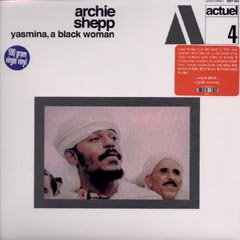
Yasmina, A Black Woman

BYG Actuel 4

Recorded 12th August, 1969

Side One

  1. Yasmina, A Black Woman

Side Two

  1. Sonny’s Back
  2. Body and Soul

Personnel

1st tune;

Clifford Thornton (cornet), Lester Bowie (trumpet), Arthur Jones (alto sax), Archie Shepp (tenor sax, voice), Roscoe Mitchell (bass sax), Dave Burrell (piano), Malachi Favors and Earl Freeman (basses), Philly Joe Jones (drums), Sunny Murray (drums), Art Taylor (rhythm logs), Laurence Deveraux (balafon)

2nd tune;

Archie Shepp and Hank Mobley (tenor saxes), Dave Burrell (piano), Malachi Favors (bass), Philly Joe Jones (drums)

3rd tune;

Archie Shepp (tenor sax), Dave Burrell (piano), Malachi Favors (bass), Philly Joe Jones (drums)

Archie Shepp was a very busy man in August 1969. He recorded 3 sessions for the French BYG label in that month, each only a few days apart – this one, a 14th August session which resulted in the album “Poem for Malcolm” and another on 16th August which led to “Blasé”. 1969 was a fertile time for free jazz, with many of it’s players decamping to Paris and recording for BYG or other labels such as Free America.

This particular session was the result of collaboration between Shepp’s current band and members of the Art Ensemble of Chicago (as represented by Lester Bowie, Roscoe Mitchell and Malachi Favors). There were numerous other big names involved – not all of them people you’d normally associate with free jazz – Hank Mobley and Philly Joe Jones to name two.

Side one is entirely taken up by the 20-minute plus “Yasmina”, an exercise in groove-based improvisation that both Shepp and the members of the Art Ensemble were to repeat later in their careers. This is one funky piece of free jazz – there’s a fair bit of blowing going on over the top, but the rhythm section keeps a solid groove going – a circular piano line anchoring the whole thing down whilst the soloists set off on their flights. The whole thing is pretty effective, with only the slightly shoddy audio quality letting it down.

On a different tack entirely, side two’s opener, “Sonny’s Back”, starts out in a pretty standard hard bop inspired vein, perhaps to accommodate Hank Mobley, heard here on tenor trading lines with Shepp. Despite the band taking the whole thing fairly straight (well, relatively straight – this is Archie Shepp, after all) there is some nice playing here, and a palpable sense of enjoyment in the ecstatic shouts of the rhythm section. The closing “Body and Soul” is taken at a more sedate tempo and is a lovely example of Shepp playing it sweet.

Although they all have their merits, this is probably my favourite of the three Paris sessions, with some great playing and a real sense, in “Yasmina” of the sort of places the jazz avant-garde was headed in the next few years. Shepp’s own exploration of the groove-based extended blowout surely reached it’s peak in 1975’s “Hipnosis” from the “A Sea Of Faces” LP, a 26 minute free improvisation perched on top of the most hypnotic groove on the planet.

My copy of this recording is a one of a reissue of several albums from the BYG Actuel series - a complete list of this series can be found here.


Monday, October 31, 2005

Jazz Blogs, part 2

I've been nosing about on the web again, looking for other Jazz related sites and blogs which take my fancy, so here's a few...

Recorda-Me

One man's attempt to review his entire record collection, starting with Archie Shepp. Good choice. Check it out and give some feedback - us amateur reviewers thrive on it!

Attic Beats

A podcast, not really jazz, but with an Archie Shepp edition (that man again, I just can't get enough Archie) featuring some very tasty tracks, especially "Yasmina". Go get it.

Street Knowledge

Not just jazz again, but a very nice mp3 blog featuring "conscious" artists of all genres.

How far out is too far out?

Good question. Click on the title above to read a nicely argued piece from allaboutjazz.com about the problems facing the jazz avant-garde. Basically, it's saying that we all need to respect each other's musical taste a bit more - hardly rocket science, but it needs to be said.


Picture of Ornette Coleman, a free jazz saxophonist of some reknown.

Sunday, October 30, 2005

Sheer Madness

ALBERT AYLER
Music is the Healing Force of the Universe
impulse! AS-9191
Stereo

Recorded 1969

1. Music is the Healing Force of the Universe
2. Masonic Inborn, part 1
3. A Man is Like a Tree
4. Oh! The Love of Life
5. Island Harvest
6. Drudgery

Personnel

Albert Ayler Tenor Saxophone, bagpipes, Vocal
Bobby Few Piano
Henry Vestine Guitar
Bill Folwell Bass
Stafford James Bass
Muhammad Ali Drums
Mary Maria Vocal


OK, so there is some pretty crazy music out there, but this must take some sort of prize for being as mad as they come. From one of Ayler's final sessions before his untimely death in 1970, this is apparently a move from Free Jazz into something inflenced by R&B (according to the sleevenote). On what planet, exactly, are the bagpipes considered central to R&B? When did you last hear an R&B record with no discernible rhythm or melody? With a mad woman spouting mystical poetry over the top of it all? To be fair, the final track, 'Drudgery' actually does pay a passing resemblance to an R&B 45, but it's only passing.

This record is, though, rather more than the sum of it's parts. Ayler's playing is fascinating throughout, especially so on 'Masonic Inborn part 1', the track featuring the bagpipes playing a circular 'theme' - well, going through similar intervals in a similar way, at least. The drumming is also worth a mention - basically each track is treated by the drummer as an ectended solo spot, but it still all fits in and works with the other players. I am continually overawed by how these guys do it. And then, just when you think it couldn't get any odder, 'Island Harvest' kicks in with it's infectious (infectious - not a word normally associated with free jazz) calypso groove.

There are few words to describe a record as strange, as alien as this. So i won't attempt to find any. Just listen to it. The official impulse! site has a few sound clips which are reccomended listening for all of you with open ears.

Saturday, October 29, 2005

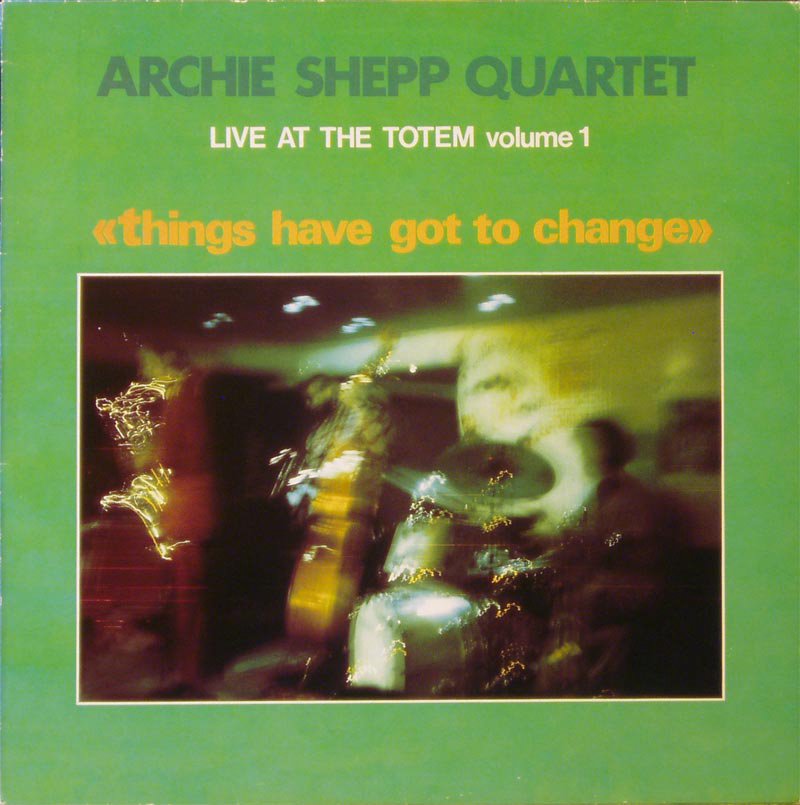
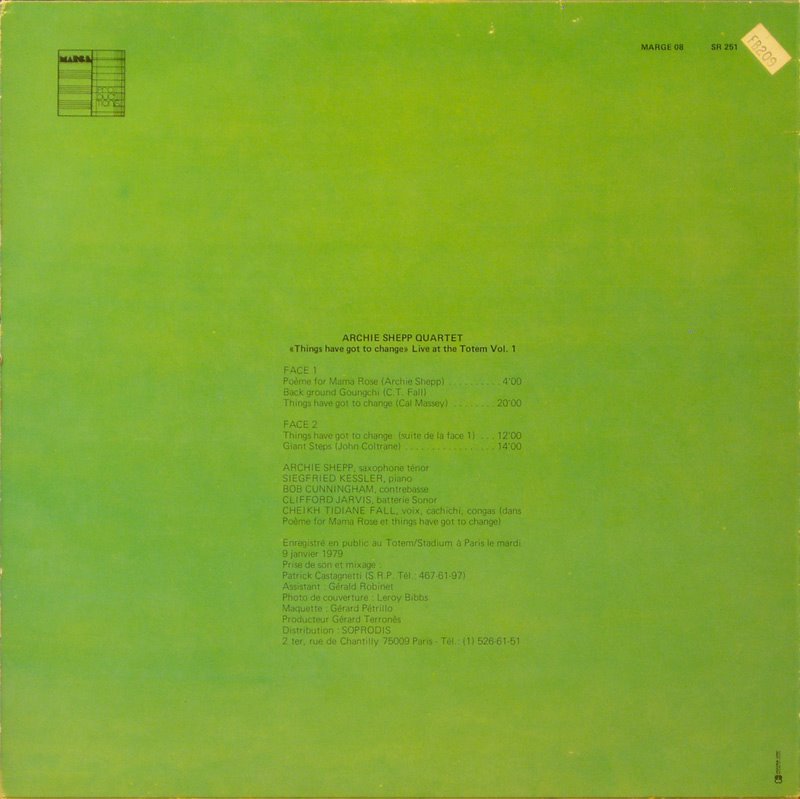
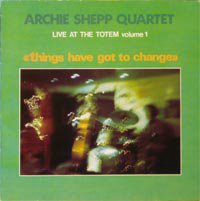
Archie Shepp - Things Have Got To Change


ARCHIE SHEPP QUARTET
Things Have Got To Change: Live at the Totem Vol. 1
Marge Productions MARGE 08

Recorded 9th January 1979

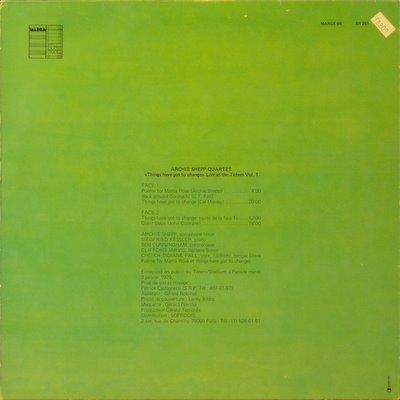
Side One

1. Poem For Mama Rose
2. Things Have Got To Change

Side Two

1. Things Have Got To Change (continues from side 1)
2. Giant Steps

Personnel

ARCHIE SHEPP; tenor saxophone
SIEGFRIED KESSLER; piano
BOB CUNNINGHAM; drums
CLIFFORD JARVIS; drums
CHEIK TIDIANE FALL; vocal, congas

I know I’ve only just done an Archie Shepp record, but it’s really got me listening to him, so here’s another with a Coltrane connection, featuring as it does a reading of ‘Giant Steps’.

First, though, is the ‘Poem for Mama Rose’, one of his many spoken word introductions, accompanied by some groovy percussion from the band, before launching into the massive ‘Things Have Got To Change’. I say massive, because weighing in at over half an hour in length, it’s split across the two sides of this LP.

In style, the playing is not far from his late 60’s free jazz days. It’s laid out in the standard theme-solos-theme pattern, and is very much in tempo, but there any comparison to traditional hard bop fails. This is inventive, innovative, searching music. Shepp sounds as if he’s trying to reach as yet undiscovered places on his saxophone, blowing out with everything he can muster, producing sounds that are alternately sweet and melodic, then harsh and atonal.

He’s playing as a quartet here, and perhaps it’s this as much as his sound and style here, but I’m very much reminded of John Coltrane’s classic 1960’s quartet. The rhythm section plays in a style very similar to that well-regarded combo. The piano accompaniment is spare; the bass ties everything down while fully exploring the harmonic possibilities of the tune, and the drums… Well, much could be said about the drums on this track. I don’t think I’ve ever heard a drummer keep a sense of forward propulsion while exploring his kit in quite so flamboyant a manner. Yes, it’s all in tempo, but every bar is different rhythmically. You might say that could be too much, and overwhelm the soloist, but Shepp responds with more invention of his own, and the two create a positive spiral which leads the listener to a peak of enjoyment. This tenor/drums interplay, that makes this disc such an exciting listen, is another aspect that reminds me of Coltrane – I’m thinking, of course, of the 60’s quartet again and the wonderful support Trane received from the great Elvin Jones. It’s often been said that Archie owed a great deal to John Coltrane, and I do wonder if he was conscious of this in his choice of a quartet for this date – surely he must have been to choose a tune like ‘Giant Steps’.

After 16 minutes (what energy Shepp has, playing at the relentless tempo of this piece for such a time), Shepp lays out and lets the pianist have a say. The piano playing, whilst supportive to Shepp (although the drummer steals the show, as far as the sidemen go, as mentioned above), is less good solo. The playing is interesting, and has some interesting sounding moments, with dissonancies and a little atonality, but doesn’t really sound like it’s connected to the rest of the band somehow, a fact picked up on by Shepp who returns a few minutes later (after turning the record over – a masterstroke of timing – if it had to be turned over at all, in the middle of that piano solo was the place to do it) and has to fight with the piano for a short time before it gets back to it’s subservient role. The sax, after it’s short break gives us more of the same – short lyrical bursts of the theme in typical hard bop fashion combined with moments of free expression and supporting drumming of great excitement.
With such excitement being generated by the drummer, it comes as no surprise that his solo, about 5 ½ minutes into the second part, is outstanding. It never ceases to amaze me how these drummers can simultaneously keep time but yet explore the outer reaches of their kit. I’m also continually amazed at how many sounds they can produce from only a few drums.

The tune soon ends, but there’s no respite as the band launch straight into ‘Giant Steps’, taken a shade faster than the Coltrane original. As soon as the tenor starts to solo, you know you’re dealing with Coltrane’s sonic heir. It may as well be JC playing, such is the speed and precision of what’s being put down here. The fine interplay between sax and drums is evident again here, with solid support from the bass. Once again, though, the piano lets the side down, though you do tend to ignore it and focus on the swirling horn lines when you’re listening. And on they go, swirling, darting and diving all over the map, with occasional breaths for air in the form of a statement of the theme.

Then, when you didn’t think it could get any better… the piano solo here is simply a work of genius. What this pianist was doing the rest of the time I have no idea, but here he plays with great invention and is both adventurous and controlled in his harmonics at the same time. The track soon winds up, though not until Archie and the drummer get to trade lines in a thrilling face-off of the albums’ two outstanding players.

I presume there’s a volume 2 of this release – but where to find it I have no idea. In the 5 years I’ve owned this LP I’ve yet to come across it’s twin. It’s on an obscure, presumably French label, it may even be a bootleg (the excellent sound quality rather mitigates against that). Maybe someday… and if anyone has any information they could share about this pair of recordings, then please leave a comment.

Friday, October 28, 2005

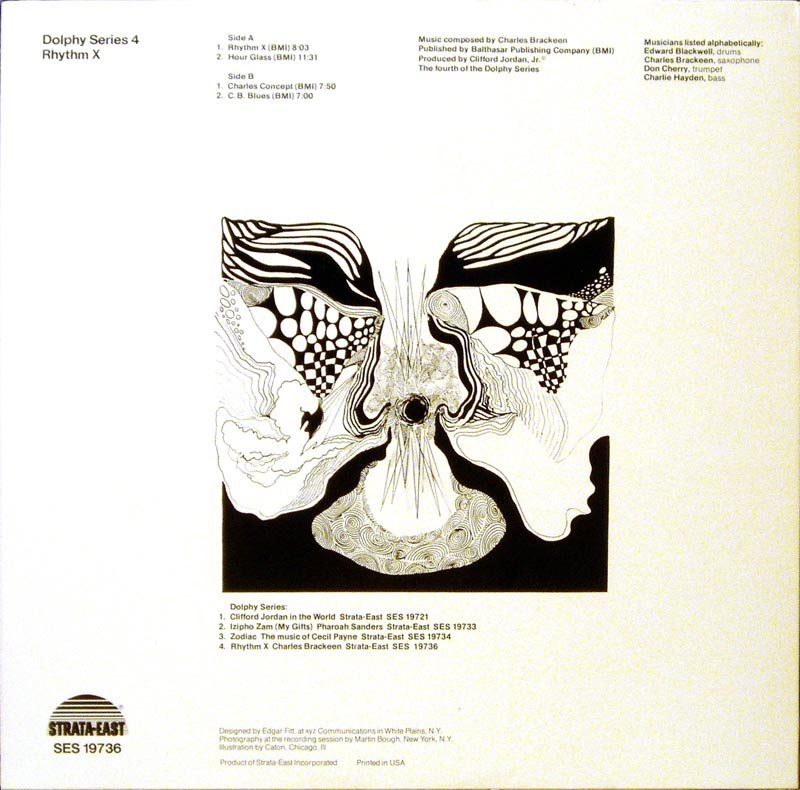
The Music of Charles Brackeen


CHARLES BRACKEEN
Rhythm X

Strata East SES 19736

Dolphy Series 4


Recorded January 1968

Side One

1. Rhythm X 8:03
2. Hour Glass 11:31

Side Two

1. Charles Concept 7:50
2. C.B. Blues 7:00

Personnel

EDWARD BLACKWELL; drums
CHARLES BRACKEEN; saxophone
DON CHERRY; trumpet
CHARLIE HADEN; bass

This is an intriguing LP by an obscure sax player. He may be obscure, but he certainly can play. This LP pairs him up with what is basically Ornette Coleman’s rhythm section in a recording of 4 Brackeen compositions. As you might expect from the personnel, the mood is one of freedom, but the pieces are in tempo, and ‘Rhythm X’ in particular could even be said to have a groove – think of Pharoah Sander’s ‘Black Unity’. Unfortunately, the quality of the sound is not as good as it could be – the horns, and even the bass come through well, but Blackwell sounds like he’s playing a couple of old tea chests. It’s a testament to the quality of his playing that he still manages to mesmerise with his solo towards the end of the first track.

The playing is uniformly excellent. Cherry, Blackwell and Haden’s credentials are already well established, and Brackeen is more than a match for them. Amazingly, despite such quality playing, Brackeen didn’t record a session under his own name again until 1987! He was, however, married to post-bop pianist Joanne Brackeen, who was much more prolific throughout the 1970’s, 80’s and 90’s.

The design and artwork is also excellent – the front sleeve depicts the personnel during the recording of the album, while the rear sleeve contains an uncredited abstract drawing that I assume is the work of Brackeen. The LP itself is a reissue of the original 1968 set, and is part of the ‘Dolphy Series’ – anything carrying the name of that outsanding musician must be worth a listen. The other albums in the Dolphy series are;

1. Clifford Jordan – In The World Strata-East SES 19721
2. Pharoah Sanders – Izipho Zam (My Gifts) Strata-East SES 19733
3. Zodiac – The Music of Cecil Payne Strata-East SES 19734

On the basis of this one, I’d highly recommend anyone with a passing interest in avant-garde jazz to go out and get hold of them all.

Monday, October 24, 2005

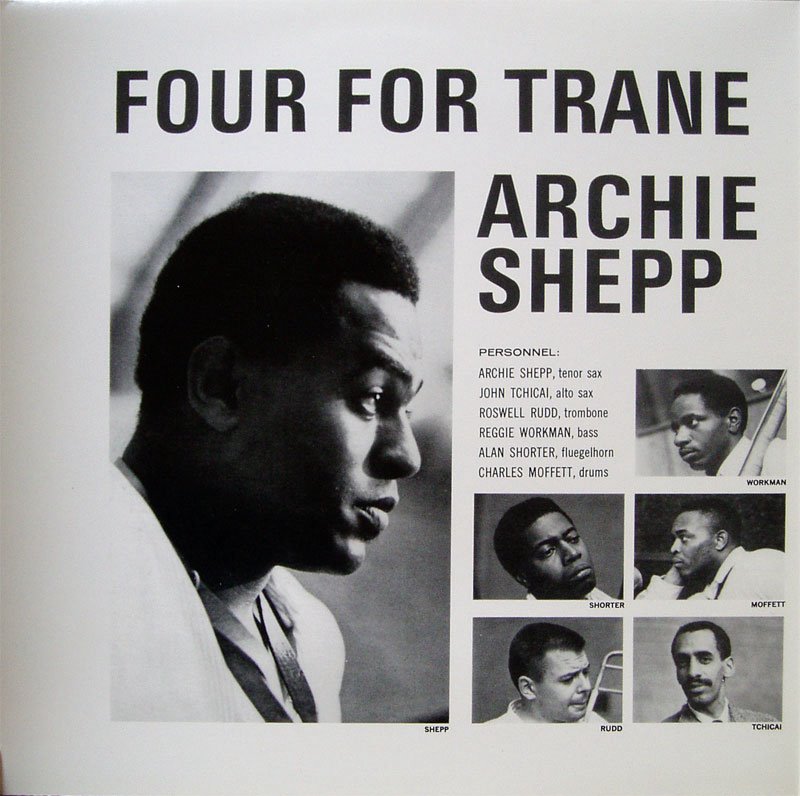
Archie Shepp - Four For Trane


Archie Shepp

Four for Trane

Impulse! A-71

Stereo

1964

Side 1

  1. Syeeda’s Song Flute
  2. Mr. Syms

Side 2

  1. Cousin Mary
  2. Naima
  3. Rufus (Swung his face at last to the wind, then his neck snapped)

Personnel

ARCHIE SHEPP; tenor sax

JOHN TCHICAI; alto sax

ALAN SHORTER; trumpet

ROSWELL RUDD; trombone

REGGIE WORKMAN; bass

CHARLES MOFFETT; drums

Around this time, after some of the great tenor players that had come up over the preceding few years – figures like Coltrane, Rollins, Coleman – there was much talk of the ‘new’ thing, played by the ‘new’ tenors, the leading light of which was Archie Shepp. He had already made a splash with the New York Contemporary Five, playing in the emerging free jazz style as inspired by the likes of Ornette Coleman, Albert Ayler and Cecil Taylor. As a mark of respect from one of the new players to the leading member of the ‘old’ guard (and the guy who got him a contract with impulse!, no doubt), Archie Shepp went into the studio and cut stellar versions of four classic Coltrane tunes.

I say classic – they all dated from only a few years previously, 3 of the 4 cuts being from Trane’s classic ‘Giant Steps’, with the other being slightly later. And what tracks they are, too. “Syeeda’s Song Flute”. “Mr. Syms”. “Cousin Mary”. “Naima”. All arranged for a larger band with 4 times as many horns as Coltrane intended. ‘Naima’ is the standout track. What was a tender ballad in Coltrane’s hands – a reverential description of the love for his (then) wife – here becomes a spiky, angular exploration of sound. The famous opening theme is taken apart note by note and passed around the band in carefree form, in what is probably the most thrilling opening theme on the album. This is what happens when you take a solo saxophone line and split it between several horn players, and the result is electrifying.

This track is also a highlight for Shepp’s outstanding tenor playing, his sometimes abrasive tone softening during a solo section where the whole band lays out and gives Archie some room to breathe. Ah yes, to breathe. This is such a beautifully produced record that you can actually hear him breathing between phrases, and it just fits into the mood of the piece so well. And then, after the mood has become hushed, the track fades into a false ending and the band come back, playing at a much faster tempo, with a superlative trombone solo by Rudd, before heading back to the theme. This track ranks as one of the finest jazz recordings made, in my opinion – an already excellent track in Coltrane’s hands, given new vigour and an excellent arrangement by some of Jazz’s leading young players.

The other pieces are typically interpreted loosely by Shepp; 'Syeeda's Song Flute', in particular, keeps the tune and style of the original, but dispenses with Trane's smooth sound and introduces a much harsher tone. Indeed, Shepp was once described as 'a sheep in wolf's clothing', and this labum does much to prove that statement - despite his aggressive tone, he can play tunefully, and beatifully at some points.

The closing ‘Rufus’ is a Shepp original, and is a fine example of the freer style of the ‘New Thing’ that he was such a leading proponent of at the time.

The other players on the album are in good form too. Alan Shorter (Wayne's brother) more than keeps up his end on trumpet, while Roswell Rudd is always good value on trombone. The rhythm section is both propulsive and explorative, a quality often to be heard in Reggie Workman's recordings. Charles Moffett is a fine drummer - also reccomended is his work with Ornette Coleman on the live "At the Golden Circle, Stockholm" albums.


Links

Here's a link to an interview with Archie about music in general, which is well worth a read.
Archie Shepp's Official Site

Friday, October 21, 2005

Awards Night 1

Well, it's been almost 2 weeks (discounting the holiday). To tell you the truth I never thought i'd get this far. So, to mark the "occasion" here's the first of (possibly) many Daily Jazz Awards.

1. The 'Better Than It Has Any Right To Be' Award

Awarded for excellence against the odds, be they old age, dodgy sleeve art, or bringing out a record in the 1980's - or in this case, all 3.

And the winner is...

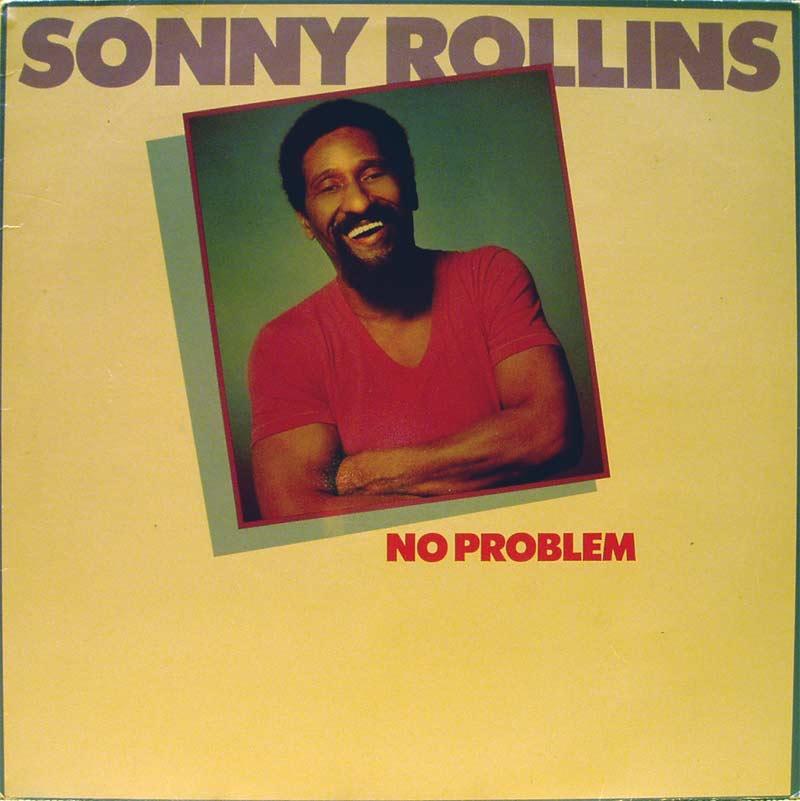
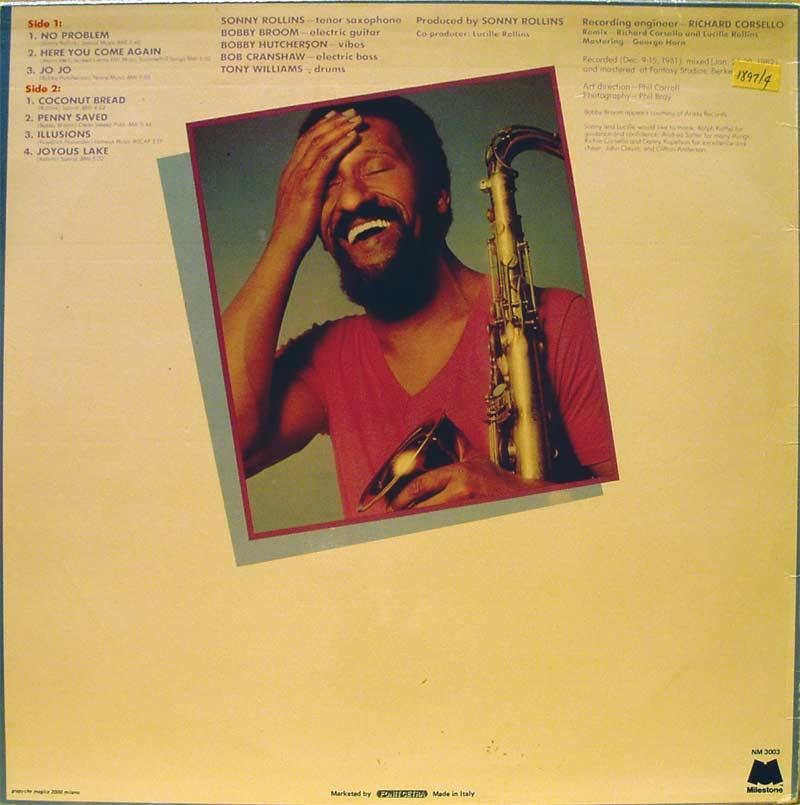
SONNY ROLLINS
NO PROBLEM

Milestone NM 3003

Stereo

Recorded Dec. 9-15, 1981

The 1980's. Not a good time for production. Not tractors, or cans of beans, but musical production. But occasionally the early electronic tools of the trade were put to good use, as in this really rather good set from 1981. It had to be worth a punt, featuring Bobby Hutcherson on vibes and Tony Williams on drums along with Sonny. The great thing is that the big man's tone has survived completely unscathed amongst the calypso rhythms and casio keyboards. There's even some decent soloing from the whole band. There's not a duff track on it, unbelievably. And the best thing - the mood of the whole set is so upbeat that you just can't help but fall in love with it. I mean, look at Sonny's face on the sleeve. This is music that makes you happy, and sometimes that's all you need.

Runner up...

Special mention has to go to Buddy Rich for the superlative "Three Day Sucker" - see this post.

Thursday, October 20, 2005

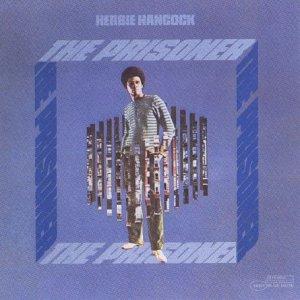
Herbie Hancock - The Prisoner


Herbie hancock
The prisoner

Blue note
BST-84321

Recorded at Rudy Van Gelder, April 18,21 & 23, 1969

1. I Have A Dream (Hancock)
2. The Prisoner (Hancock)
3. Firewater (*) (Williams)
4. He Who Lives In Fear (Hancock)
5. Promise of the Sun (*) (Hancock)

Personnel

JOHNNY COLES, flugelhorn
JOE HENDERSON, tenor sax and alto flute
GARNETT BROWN, trombone
HERBIE HANCOCK, piano and electric piano
BUSTER WILLIAMS, bass
ALBERT "TOOTIE" HEATH, drums
HUBERT LAWS, flute
JEROME RICHARDSON, bass clarinet (and flute on (*))
ROMEO PENQUE (*), bass clarinet
TONY STUDD, bass trombone
JACK JEFFERS (*), bass trombone

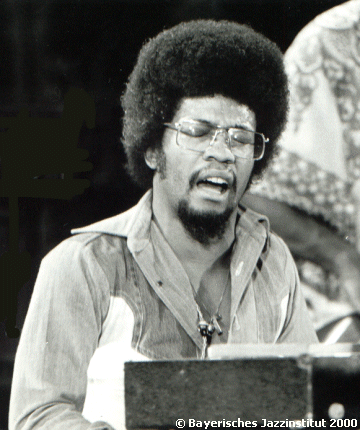
Herbie hancock is one of the great names of jazz. Indeed, he still plays very well from what I’ve heard. But most of the attention is lavished on two periods in his enormously varied career – his early Blue Note sides (My Point Of View, Empyrean Isles, et al.) and the 70’s funk gems like Headhunters and Thrust. Great albums all, but much of his career gets unfairly overlooked, and there are a few 'lost' Hancock albums, like this one. It’s not really had much of a life, being briefly issued on cd in the 80’s before vanishing and reappearing in the 1990’s. It’s a beautifully produced Rudy Van Gelder recording and is now available as one of Blue Note’s desirable RVG editions (mine's a 1990's reissue - with japanese sleevenotes, so i've had to put in more work than usual finding out about this LP).

The music is some of Hancock’s finest. It's post-bop, but much more melodic than what he had just been doing with Miles (he'd just left the great 60's quintet). It also gives a nod towards the sort of funk he’d be plying in the mid 70’s as well as introducing the space (the space – sometimes it’s the bits you don’t hear that mark out a great herbie hancock record) that would feature in his recordings with the Mwandishi band in the coming years.

Undoubtedly the stand out track is the opener, “I have a dream”. As the title suggests, it’s a tribute piece to Martin Luther King. Instead of raw anger turned into raw emotion (see Archie Shepp’s ‘Attica Blues’), this is contemplative music that suggests Dr. King’s love of peaceful protest. Herbie really stretches out over the tracks 10 minutes, playing some fine melodic lines with a feeling of great reverence. His large band also contributes some excellent supportive play – the rhythms are continually inventive whilst remaining in an addictive groove, and the soloing of Joe Henderson and Johnny Coles is every bit as good as Herbie’s.


The rest of the album struggles to live up to the opener, sadly, but sounds fantastic throughout due to the lovely warm production that so well suits the meditative mood of much of the music. It’s as if the band had pulled out “I have a dream” and were so in awe of it that they tried to repeat it’s success – and of course that never works out well. Not that the other tracks are bad, mind you, just not as good. Special mention for the bass clarinet playing on “Firewater” – well played, and what a great sounding instrument. You just know that a guy called Romeo Penque is going to be able to play great jazz. Nice ensemble playing on this track, too.

Where did Herbie go next? Big funk, briefly (fat albert rotunda) then off to the stratosphere with the Mwandishi band and all the Dr. Patrick Gleason influenced electronics. But this album captures him beautifully when his music was still purely jazz, while still showing his ability to pioneer new sounds.

Herbie Hancock Links

Herbie at Blue Note Records
Official Site
Wilson & Alroy's Record Reviews - with mini reviews of lots of his albums
Herbie at Verve Records
Wikipedia article on Herb, with a good discography

Wednesday, October 19, 2005

Jazz Blogs

I've been nosing around on the net tonight, looking for other jazz blogs, and here for your delectation are some of the finest...

Jazz and Conversation

Generally, this doesn't look all that great. It seems to be a radio station, and they've got an article on Jamie Cullum, for goodness' sake. But they do redeem themselves by featuring mp3 downloads, and a track off the newly discovered Monk-Trane live recording that's now available.

Soul Sides

Not strictly jazz, but this mp3 blog seems to be a labour of love from someone who deeply loves his funky music. Files are only available for 10 days from posting, so get there quickly! I can particularly reccomend Charles Kynard's Soul Reggae.

Funky 16 Corners

Not really jazz either, but funkier than a mosquito's tweeter. Check out King Curtis' take on Whole Lotta Love!

Wattstax

Another recently started jazz/funk/soul blog by the look of it, not so many mp3's on this one but still worth a look especially if you're looking for reviews of obscure records.

There'll be more of this as I find it.

Honouring the Pharoah

Some good stuff on allaboutjazz.com tonight. Just found this piece, a review of Pharoah Sanders' 1969 classic, Karma. Wish I could write about jazz like that... just gotta keep practicing.

The article is the latest in a series, reassessing, an occasional feature taking a look at classic recordings. Have a look through the others. Especially the piece about Archie Shepp's "Attica Blues" (which I'm listening to right now - awesome).

Nearly Free Jazz

OK, so the link to the mp3 seems to be broken. Must have been popular. I'll try again tomorrow, and remember, you heard about it here first.

Free Jazz

No, not that free jazz. I don't mean crazy time signatures and odd men with beards being out of tune. No, free, as in gratis. The good people at allaboutjazz.com are, starting today, going to make a track available for download every day, for absolutely nothing.

Freedom starts here...

I'm off to download mine, i'll be back in a minute to warn you off if it's a dog.

Tuesday, October 18, 2005

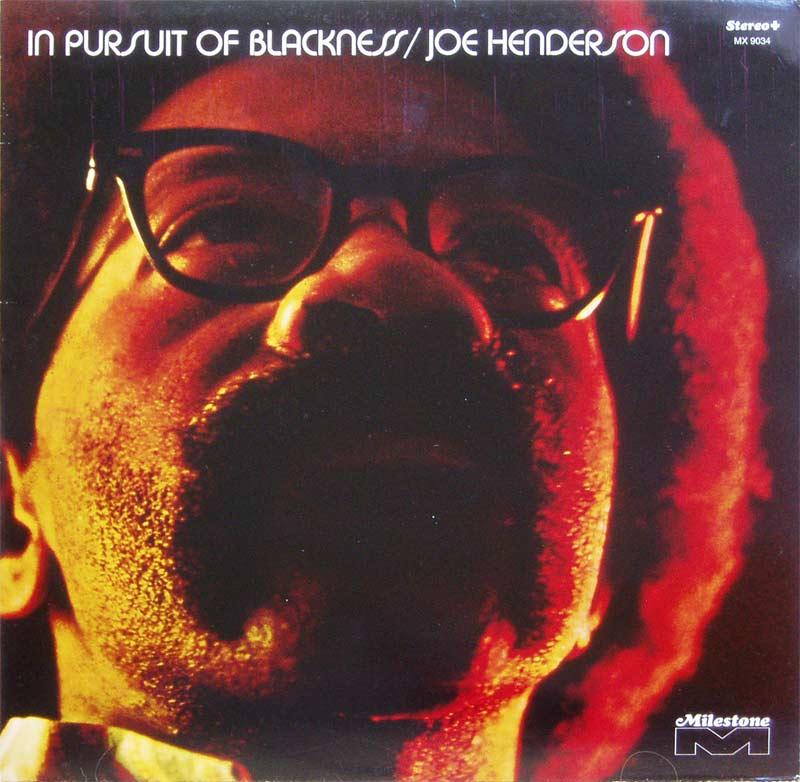
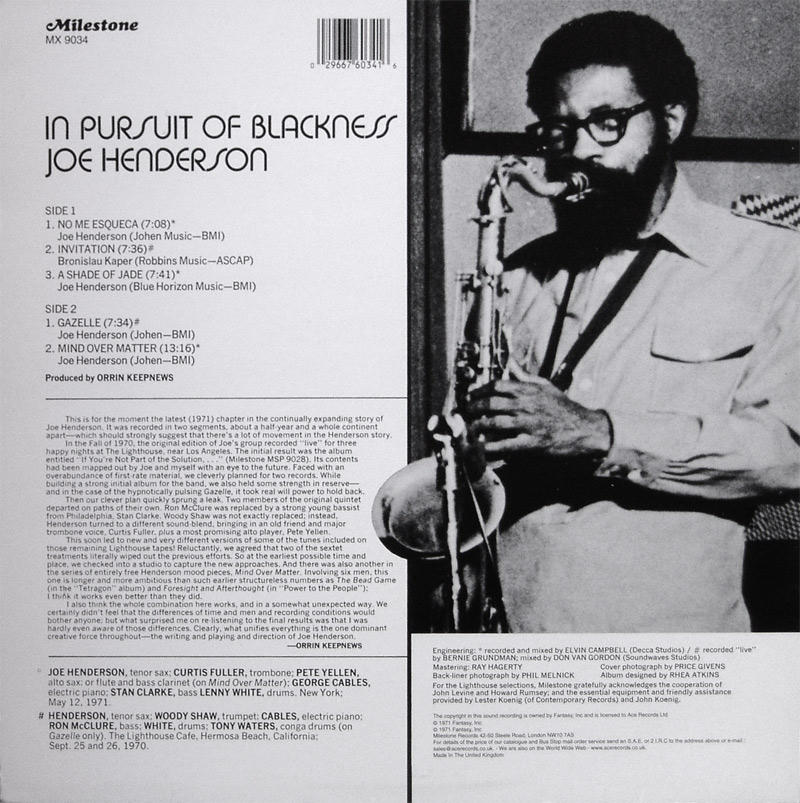
Joe Henderson - In Pursuit of Blackness


Joe Henderson
In Pursuit Of Blackness
Milestone MX 9034
Stereo

Recorded 1970-1971

Side One

1. No Me Esqueca (*)
2. Invitation (#)
3. A Shade of Jade (*)

Side Two

1. Gazelle (#)
2. Mind Over Matter (*)

(*) Recorded and mixed by ELVIN CAMPBELL
(#) Recorded Live by BERNIE GRUNDMAN

Personnel

*
JOE HENDERSON; tenor sax
CURTIS FULLER; trombone
PETE YELLEN; alto sax (flute & bass clarinet on 'Mind over Matter')
GEORGE CABLES; electric piano
STAN CLARKE; bass
LENNY WHITE; drums

#
JOE HENDERSON; tenor sax
WOODY SHAW; trumpet
GEORGE CABLES; electric piano
RON McLURE; bass
LENNY WHITE; drums
TONY WATERS; conga drums (on 'gazelle' only)

Joe Henderson was one of the great tenor sax players. He cut his teeth in the 1960's playing with the likes of Horace Silver and Herbie Hancock, and as a sideman on literally dozens of Blue Note sessions. He also had a great quintet around 1970, featuring the players listed above. He was certainly becoming politicised at that time (like many other artists of that era) with album titles like this, as well as "Power To The People" and "If You're Not Part Of The Problem...". Unlike some of the more radical players of the time (i'm thinking principally of Archie Shepp here) he didn't head out in a totally free direction, but stayed playing the kind of post-bop sound which made it's first appearance in the music of the great Miles Davis quintet of the late 1960's (circa "Filles de Kilimanjaro").

This album is very much in that vein. It features a number of studio recordings from 1971 (*) as well as a couple of tracks recorded live at the Lighthouse Cafe, Hermosa Beach, California (#) in 1970 (other tracks from this engagement feature on "If You're Not Part Of The Problem..."). Right from the off, with the latin flavoured 'No Me Esqueca' the band are in great form, particularly Joe. He has a great tone, second only to Sonny Rollins in my view, with a big warm sound that fools you by not playing it straight but heading off at all angles. Cables is in excellent form too, with some great supporting play. Unfortunately the momentum is not really continued over into 'Invitation', one of the live tracks. It sounds a little as if the band were taking a breather from something particularly intense. They don't seem to be inhabiting the same universe, never mind stage. Still, 'A Shade of Jade' makes up for it with a strong showing from all concerned.

'Gazelle' kicks off side 2 in fine style - it might be another live track but it leaves the previous live outing in the dust with some of the best playing by the rhythm section on the album. And then comes 'Mind Over Matter'. Oh yes. Some startling free improvisation by the whole band. Yellen conjures up the spirit of Eric Dolphy with his fine bass clarinet and flute playing - the low, rich tone of the clarinet trading lines with Henderson's tenor in the closing passage is one of the finest moments on this excellent album.

Fantasy Jazz now own the rights to the Milestone records back catalogue, and can be found on the web if you want to (and you should) head out and buy a copy of this fantastic album.


Monday, October 17, 2005

The Not-Quite Daily Jazz

The astute amongst you (you? are there any of you out there? Leave a comment or send an email) will have noticed that the 'daily' jazz hasn't been daily for a while - well, my enthusiasm for the project hasn't dwindled, it's just that i've been off on holiday in the lovely town of Bath. It's always fun going away as you get the opportunity to pick up records you might not normally see, so thanks to Bath's record shops for the following;

JOHN COLTRANE - The Complete Mainstream 1958 Sessions

A set of recordings that Coltrane made in 1958 with a group comprising Wilbur Harden, Tommy Flanagan, Curtis Fuller, Louis Haynes and Art Taylor. Fantastic playing from Trane throughout. Really shows how he'd moved on in a couple of years from the next one...

JOHN COLTRANE - Tranesition - the complete Paul Chambers Sessions

This is exactly what it says, a complete set of Coltrane sessions from 1956 with the common thread of Paul Chambers on bass and Philly Joe Jones on drums. Think 'Blue Train' and you wouldn't be far off.

CECIL TAYLOR - Hard Drivin' Jazz

More late 1950's sessions featuring Cecil Taylor, before he went totally out to lunch. Has the added bonus of featuring John Coltrane on tenor in the first set.

CECIL TAYLOR - Conquistador!

Cecil after going out to lunch, from the late 60's. Sounds a lot like Don Cherry's 'Symphony for Improvisers' played on the piano.

ALICE COLTRANE - Transfiguration

An interesting (and very free) live set from 1976 with Roy Haynes and Reggie Workman (i think). Great organ sound, she really does sound like no one else.

THE ANDREW HILL JAZZPAR OCTET +1 - The Day The World Stood Still

A 2003 recording of Andrew Hill's band playing live at an awards ceremony (he had just won some sort of 'lifetime achievement' award). He really does give the band lots of room to stretch out and the whole thing comes across as sounding fresh and modern. 'Progressive' in the very best sense of the word.

Time permitting, look out for extended reviews of the above albums (and more) soon.